Drain Flies: How to Find the Source and Get Rid of Them
What are the tiny fuzzy flies around my drains, and how do I get rid of them for good?
Short answer
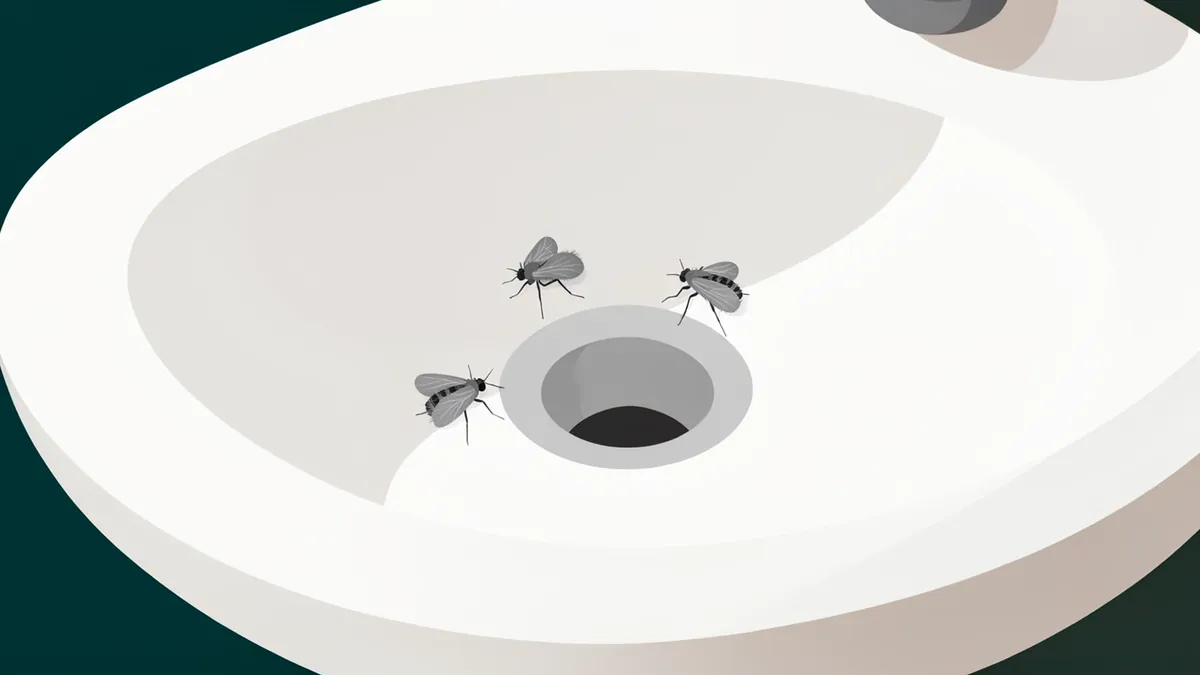
Drain flies, also called moth flies, breed in the slimy film that coats the inside of drains, overflows and other wet spots, so sprays that kill the adults only buy time. Find the drain they come from with tape or a cup, scrub the slime out with a stiff brush, and call a plumber if flies keep coming after every drain is clean.
On this page
Small, fuzzy flies resting on a bathroom wall or hovering over a sink are usually drain flies, also called moth flies. A few after a vacation are nothing to worry about. Flies that keep turning up week after week are different: something in the house is raising a new batch every couple of weeks, and that something is almost always a drain.
The fix is mostly cleaning, not spraying. The steps below follow university extension fact sheets on drain flies: confirm what you have, find the exact drain, remove the slime the larvae live in, and recognize when the real source is a broken pipe.
How to recognize drain flies
Drain flies are small, roughly 1/16 to 1/4 inch long, and yellowish, brown or black. Their bodies and wings are hairy, and at rest they hold their wings like a roof over the body, which is why they look like tiny moths (Clemson HGIC). Other clues:
- They sit more than they fly. They rest on walls and make short, hopping flights when disturbed (University of Kentucky). Virginia Tech notes they are weak, erratic fliers that become more active at night, hovering over drains (Virginia Tech).
- They turn to dust when swatted. Their wings are covered with scales, so a swatted fly disappears in a puff of fine dust (Kentucky).
- The larvae are thin and wormlike. Clemson describes them as long, skinny and legless, 1/8 to 3/8 inch, often with a darker head and tail. They live in the slime inside drains and are seldom seen.
Drain flies don't bite or damage plumbing (Virginia Tech). Clemson calls them generally harmless, though they may carry bacteria from where they breed to places people use, and UF/IFAS says large infestations, which are uncommon in homes, can cause breathing problems from inhaled scales (UF/IFAS).
Where drain flies breed
The larvae live in the gelatinous, sludgy film of organic matter that builds up on the sides of drains and overflow pipes, feeding on the decaying material and bacteria in it (Virginia Tech). Kentucky says they can develop almost anywhere water collects for a week or more. Common spots:
- seldom-used sinks, tubs, showers, and floor drains in basements or garages;
- the bowl and tank of a toilet that isn't flushed often;
- the overflow opening of a sink or tub;
- the drip pan under a refrigerator and the condensate pans of air conditioners, dehumidifiers and dishwashers;
- outdoors, clogged gutters and low, wet spots where an air conditioner drains (Kentucky), plus moist, shady places such as thick mulch or under potted plants (Clemson).
The source is usually close by. Because drain flies fly poorly, UF/IFAS says the breeding site is usually the nearest drain, and Clemson notes most infestations start in the building where the adults are found. They also multiply quickly: Kentucky puts the life cycle at about 10 to 15 days at 70 degrees Fahrenheit, and development can continue all year indoors.
Virginia Tech sums it up: drain flies in the house usually mean a slow or clogged drain that needs cleaning. After a trip, Kentucky notes, they usually disappear once water moves through the toilets and drain traps again.
Find the source: the tape test
Don't guess which drain it is. Test them, following Virginia Tech's and Kentucky's methods:
- List the candidates. Note every drain, overflow, rarely flushed toilet and drip pan in the rooms where you see flies.
- Cover each opening in the evening. Put clear tape over the drain, sticky side down, or turn a clear plastic cup lightly coated with petroleum jelly or vegetable oil upside down over it. For an overflow, Penn State suggests taping a plastic bag over the opening (Penn State Extension).
- Check in the morning. Flies stuck to the tape or trapped in the cup mean that drain is breeding them. UF/IFAS suggests leaving tape in place for 24 hours, and Iowa State says flies collect under taped-down plastic film within a day or two (Iowa State).
- Widen the search if nothing turns up. Kentucky suggests leaving the cups for several days, then expanding the search, including outdoor sources if the flies don't seem to be coming from inside.
Clean the breeding site
The extension fact sheets agree on the main fix: physically remove the slime. Iowa State calls cleaning the inside of the drain pipe the only effective way to get rid of flies developing in a drain. For each drain that caught flies:
- Pull the stopper or strainer and clean it.
- Scrub the inside of the drain with a long, stiff drain brush until the slime and sludge are gone. Penn State mentions a stiff wire brush or steam cleaning.
- Scrub the overflow opening as well, since the film also builds up in overflow pipes (Virginia Tech).
- Clear a slow drain. Virginia Tech says the trap sometimes has to come off for cleaning, and hair clogs in showers may need a plumber's snake. Our guide to unclogging a drain yourself walks through cleaning a P-trap and using an auger.
- Rinse with hot tap water. Virginia Tech and Kentucky say hot water gives only short-term control, killing larvae on the surface of the film. Skip boiling water if your drain pipes are plastic; the unclogging guide explains why.
- Consider an enzyme or bacterial drain product afterward. Utah State suggests an enzyme drain cleanser to keep drains free of the film (Utah State). Follow the label.
Then deal with the other wet spots: run water in seldom-used drains and flush rarely used toilets, clean appliance drip pans thoroughly, and clear clogged gutters.
Why sprays and bleach fall short
A fly spray will kill the adults you can see; Clemson notes any aerosol insecticide kills them easily. But new adults keep emerging from the film, so Iowa State says household insecticides help only very briefly unless the source of the larvae is removed. Other shortcuts fail too:
- The larvae are sheltered. Utah State says they hide behind the scum, which makes boiling water, pesticides and other chemicals ineffective.
- They're hard to drown. Kentucky and Virginia Tech note the larvae can trap air bubbles and stay underwater for a day or more.
- Bleach and vinegar don't reach them. Virginia Tech says either may kill a few larvae on the surface but won't penetrate the film, and either can damage pipes if not properly diluted. Iowa State sees no benefit from bleach or ammonia. Never combine bleach and ammonia: Virginia Tech warns the mix releases toxic gases.
- Insecticide doesn't belong in a drain. Kentucky and Virginia Tech both say never to pour insecticides down drains.
If you'd rather hire help, Penn State notes that most pest management companies offer drain treatments with bacteria or enzymes. In Georgia, anyone providing pest management services must hold a valid license, and the Georgia Department of Agriculture links a search for licensed structural pest control companies.
When drain flies point to a broken pipe or sewer problem
If every drain has been scrubbed and tests clean but the flies keep coming, the source may be somewhere you can't reach. Clemson says hard-to-control infestations can mean broken pipes or moisture problems you can't easily find or repair, and suggests consulting a plumber or pest control operator. Signs to watch for:
- Flies coming from the floor, not a drain. Utah State says drain flies can breed around broken pipes or drains beneath slabs or in crawl spaces and get into the house through floor cracks. Its advice is to fix the moisture problem and seal the openings.
- A sewer smell along with the flies. Work through the sewer gas smell checklist, which covers slimy sink overflows and leaks you can't see.
- Soggy, smelly ground over a septic drain field. That's a septic problem in its own right; see septic drain field failure.
To look for a break in the drain lines, a plumber can run a camera through them; our guide to sewer camera inspections explains what the video can show.
Next step
Tonight, tape over every drain in the rooms where you see the flies, and check in the morning. Scrub out each drain that catches flies, then test again a few days later. If clean drains still produce flies, call a licensed plumber to look for a leak or broken pipe. This guide is general information, not medical or pest-control advice; see a doctor if you feel ill, and turn to a licensed plumber or pest control company for an infestation you can't trace.
Sources
- Virginia Cooperative Extension (Virginia Tech): Drain Fly (ENTO-414NP)
- University of Kentucky Department of Entomology: ENTFACT-615: Drain Flies or Moth Flies
- Clemson Cooperative Extension, Home & Garden Information Center: Moth Flies (Drain Flies): Identification, Life Cycle & Control (HGIC 2436)
- University of Florida IFAS Extension: Drain Fly Psychoda spp. (EENY-716/IN1226)
- Utah State University Extension: Drain (Moth) Fly
- Iowa State University Extension and Outreach: Moth Fly
- Penn State Extension: Moth Flies in the Home
- Georgia Department of Agriculture: Structural Pest Control
Guides that pick up where this one stops.
How to Unclog a Drain Yourself: A Safe, Step-by-Step Guide
Step by step: choose the right plunger, pull hair from tub drains, clean a P-trap, use a hand or toilet auger, skip boiling water, and know when to stop.
Sewer Gas Smell in the House: Causes and What to Do
What a sewer or rotten-egg smell at home usually means, how to rule out a gas leak first, and a checklist of likely causes, from dry drain traps to septic.
Sewer Camera Inspection: What It Shows and What to Ask For
What a sewer camera inspection shows and misses, how a sonde marks the problem spot, what NASSCO defect codes mean, and what to get in writing.