Cobb County Sewer and Drain Guide for Homeowners
Sewer provider: Cobb County Water System · Cobb County
At a glance
Cobb County Water System provides public sewer across much of Cobb, including unincorporated areas and the cities of Mableton, Kennesaw, Acworth and Powder Springs. County code makes you responsible for the service line from your house to the county's service lateral, and a backup in your home or street goes to the Water System's emergency dispatch line.
On this page
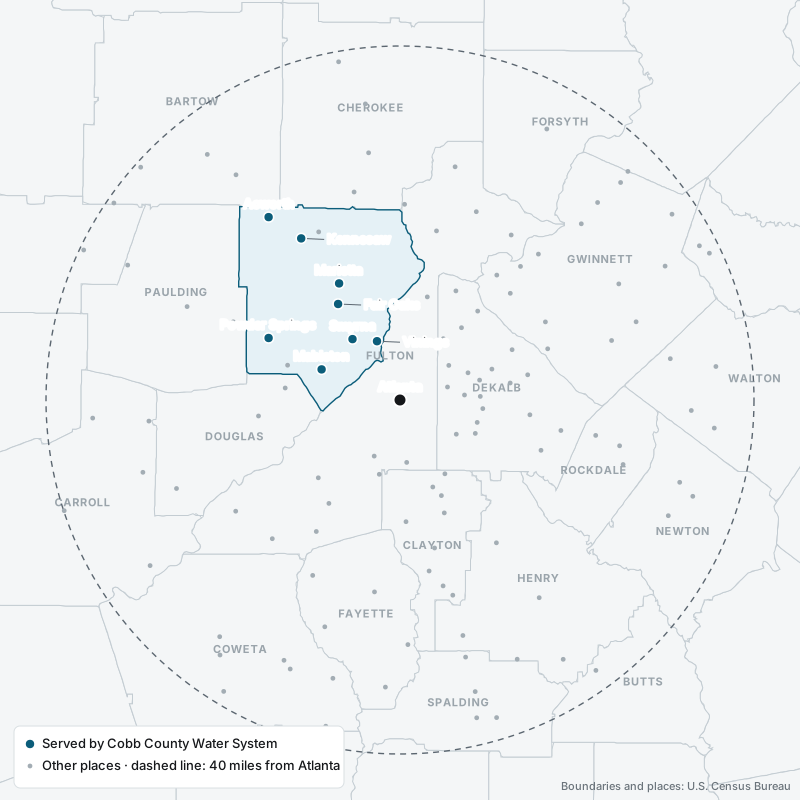
Cobb County Water System (CCWS) serves about 160,000 sewer customers across the county and treats their wastewater at four water reclamation facilities (CCWS). Not every Cobb address is on its sewer, though. Marietta, Smyrna and Austell run city systems in at least part of their territory (see the Marietta, Smyrna and Austell pages), so the utility named on your bill decides which rules apply to your line.
Who provides sewer service here
CCWS owns and maintains more than 2,600 miles of sewer collection mains, from 8 to 72 inches across, plus 46 miles of force mains, and some parts of the collection system have been in service for more than 80 years. Crews inspect the pipes with closed-circuit TV cameras and schedule rehabilitation where they find broken pipes, offset joints, roots or bad service connections (CCWS maintenance).
If your water and sewer bill comes from Cobb County Water System, this page applies; if it comes from a city utility, use that city's page instead. Not sure whether your address is inside a city at all? Cobb's residential permitting page links a county map that shows the jurisdiction for any address (Cobb County). The table at the end lists the cities and communities in this directory where CCWS provides sewer, with a note on how each is served.
Where your responsibility ends
Cobb's code makes property owners responsible for building and maintaining the service line from the house to the point where it connects with the county's service lateral. Any pump or other device that moves sewage from a building into the county system is also the owner's to repair and maintain (Cobb Code § 122-153(b)). That covers grinder pumps and ejector pumps in low-lying homes.
The Water System's own FAQ says the county manages the public sewer lines and homeowners are responsible for the sewer pipes within their property (CCWS maintenance). The main exception is a county line that crosses your lot. When a permanent easement has been granted to Cobb and construction is finished, the county owns and maintains the line inside that easement, and the easement documents are attached to the property records. CCWS suggests checking your plat or deed for an easement that names Cobb County (Pipe Ownership), and it says it can check whether county lines, including any in an easement on your property, are contributing to a problem (CCWS maintenance).
How Cobb's split compares with other Georgia utilities is covered in who is responsible for the sewer line, and finding your sewer cleanout explains the access point a plumber will look for. This page is general information, not legal advice; CCWS and a licensed plumber can tell you how the rule applies to your lot.
If sewage backs up
The Water System's pages list an emergency response and dispatch number and say to call it only for a sewer backup in a home or street, or a broken water line (Pipe Ownership). The regular customer service call center keeps weekday business hours with a midday break, so the dispatch line is the one to use for a backup. For an overflow you see outdoors, CCWS also takes reports through an online sewage overflow form (CCWS report forms).
If drains run slowly or back up after the county has worked on a nearby sewer line, CCWS asks you not to add more water to the plumbing and to report it to emergency dispatch, because more repairs may be needed. Its FAQ also says the county doesn't compensate customers for service interruptions during routine or emergency maintenance (CCWS maintenance).
For the first hour of a backup inside the house, follow what to do in a sewer backup; for damage and coverage questions, see sewer backup insurance in Georgia.
Repairs, permits and inspections
In unincorporated Cobb, the county's Community Development Agency issues permits and enforces the building codes (Cobb County). Cities issue their own permits; the table below names the office for each place.
Cobb has a specific procedure for a new or replacement sewer line on private property. The plumbing permit must be marked for sewer installation by a state-licensed master plumber, and the line is approved either with a notarized sewer approval affidavit or by a county inspector looking at the pipe before it is covered. If the plumber chooses the visual inspection, the trench must stay shored or sloped under OSHA rules and Cobb's trenching ordinance for as long as it is open (Cobb sewer approval form).
Homeowners can pull a county permit only for work they do themselves on the home they live in. If you hire a contractor, the contractor must apply (Cobb County). For checking a plumber's license and comparing quotes, see how to hire a drain cleaning company in Georgia.
Before anyone digs, Georgia 811 asks for a free locate request at least three business days ahead, and state law requires one before digging with mechanized equipment (Georgia 811; Georgia dig law). The same law has the sewer utility help locate a lateral only up to the edge of the public right-of-way, so finding the rest of your line is up to you and your plumber.
Grease, wipes and rainwater
Grease causes most of the county's sewer blockages: CCWS says 85 percent of Cobb's sewer blockages are grease-related and happen in residential areas, and it asks residents to let grease harden and scrape it into the trash, wipe pans before washing, and use sink strainers (CCWS FOG). It also names wipes: most residential overflows and blockages come from grease and "flushable" wipes, and only toilet paper and human waste should be flushed (CCWS report forms).
Rainwater has to stay out of the sewer. Cobb's code bars connecting roof drainage, basement drainage, groundwater, or subsurface or yard drainage to the wastewater system unless no storm sewer or other reasonable alternative exists and a discharge permit allows it (Cobb Code § 122-181(a)(15)). Everyone using the county system must also keep infiltration and inflow down, including by using watertight pipe in the private parts of the sewer (§ 122-153(f)). For a fuller list of what to keep out of drains, see what not to flush or pour.
Septic homes in this area
Septic systems are still allowed in parts of Cobb. County code permits septic tanks on residential lots of at least 80,000 square feet when other code conditions are met, and a home that used septic before sewer reached it may stay on septic as long as the system works properly. For a single-family home, sewer counts as available when the main floor can drain by gravity to a sewer in a public right-of-way or easement that borders, touches or crosses the lot (§ 122-153(b)).
Georgia's Department of Public Health sends septic record requests, inspections and other local questions to the county environmental health office (Georgia DPH). In Cobb that is the environmental health division of Cobb & Douglas Public Health, which lists state-certified septic pumpers and installers and points out that a septic system, unlike public sewer, must be maintained by the property owner (Cobb & Douglas Public Health). On a septic lot, Cobb's permit checklists for additions, renovations and similar projects ask for an environmental health approval stamp (Cobb County). If you aren't sure which system you have, see septic or sewer: how to tell.
Cities and communities served
The table lists each place in this directory where CCWS provides public sewer to all or part of the community, with the office that issues plumbing permits there. Where a city also runs its own system, the note says how to tell which one serves you.
| City or community | Sewer service | Plumbing permits | Local note |
|---|---|---|---|
| Mableton | Yes | City of Mableton Building Division | Mableton has issued its own building and plumbing permits since March 1, 2025, and sends development plans to Cobb County Water System for water and sewer review. |
| Powder Springs | Yes | City of Powder Springs Community Development | The city's Water web page forwards to Cobb County Water System, and city code adopts Cobb's water and wastewater systems code. |
| Kennesaw | Yes | City of Kennesaw Building Services | Kennesaw's development code applies Cobb County Water System rules and requires CCWS approval of water and sanitary sewer systems. |
| Acworth | Yes | City of Acworth Development Department | Acworth sold its water and sewer system to Cobb County in 1987, and city code adopts Cobb's water and wastewater code. |
| Smyrna | Part of the area | City of Smyrna Community Development | The City of Smyrna provides sewer only in certain areas; city code names the county water system as the other provider. Check your bill. |
| Marietta | Part of the area | City of Marietta Building Division | City code names Marietta Water or Cobb County Water System as the sewer utility, depending on location. Check which utility bills you. |
| Vinings | Yes | Cobb County Community Development (Development & Inspections) | — |
| Fair Oaks | Yes | Cobb County Community Development (Development & Inspections) | — |
Next step
Find your latest water and sewer bill. If it comes from Cobb County Water System and sewage is backing up, call the emergency dispatch number listed on the Water System's pages; if you are planning work near the street, check your plat or deed for a county sewer easement before you hire anyone to dig.
Provider rules change. Every statement above links to the provider's own page or ordinance as checked in October 2026 — if a source and this page disagree, the source wins. All places within 40 miles of Atlanta and their providers are listed in the metro Atlanta sewer directory.
Sources
- Cobb County Water System: Sewer Infrastructure Maintenance (Collection)
- Cobb County Water System: Pipe Ownership
- Cobb County Water System: Water System Contact Us & Report Forms
- Cobb County Water System: Fat Oil & Grease (FOG)
- Cobb County Code of Ordinances (Municode): Division 5, General Use of Public Water and Wastewater Facilities (Secs. 122-151 to 122-155)
- Cobb County Code of Ordinances (Municode): Sec. 122-181. General sewer use requirements
- Cobb County Community Development: Residential Permitting
- Cobb County Community Development, Development & Inspections: Sewer Approval Affidavit and Procedures for Sewer Approval on Private Property
- Cobb & Douglas Public Health: Septic Systems
- Georgia Department of Public Health: Onsite Sewage / Septic Systems
- Georgia 811: The 811 Process
- Georgia 811: Georgia Underground Facility Protection Act (O.C.G.A. Title 25, Chapter 9)