Fulton County Sewer and Drain Guide for Homeowners
Sewer provider: Fulton County Department of Public Works · Fulton County
At a glance
Fulton County's Department of Public Works runs the public sewer in the north Fulton cities and the City of South Fulton, but your service lateral, including any part under the street, is your responsibility. In a backup, call the county's north or south Fulton sewer line; the county helps clear the right-of-way section only in an emergency, at your expense.
On this page
In Fulton County, the utility that sends your water bill and the agency that runs your sewer are often different. The county supplies drinking water only north of the Chattahoochee River (Emergency Repairs), so in Sandy Springs and the City of South Fulton the water comes from Atlanta while the county runs the sewer. Either way, the county's rule on the pipe from your house to the street is the same.
Who provides sewer service here
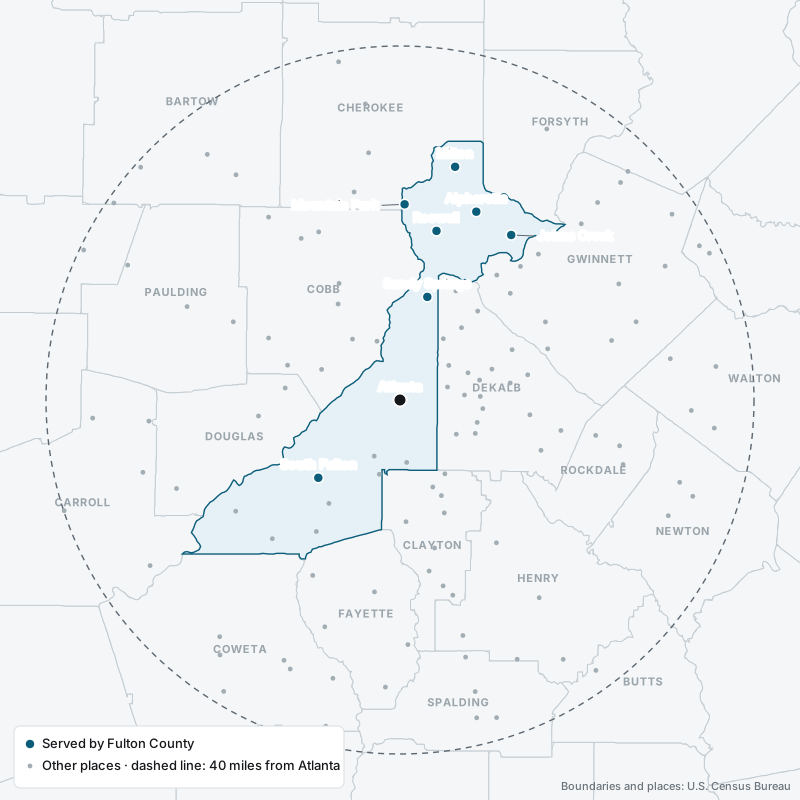
Fulton County's Department of Public Works provides drinking water and wastewater service in the north Fulton cities and wastewater service in many south Fulton cities (Public Works). Because the county's drinking water stops at the river, the split varies by city:
- Alpharetta, Johns Creek, Milton and Roswell: the county's 2026 water quality report names these four as the cities it serves with water (2026 report), and county sewer serves them where lines exist. Roswell's own water plant serves part of that city, but Fulton County handles all sewer lines there (Roswell).
- Sandy Springs: the Atlanta Department of Watershed Management supplies water and handles billing for water and sewer, while Fulton County maintains the sewer system (Sandy Springs).
- South Fulton: a 2021 county study says the county manages the city's entire sewer system (capacity study), and drinking water there comes from the City of Atlanta (Emergency Repairs).
Other south Fulton cities own their own sewer lines, according to the county's 2021 study (capacity study). Since September 16, 2022, the county hasn't permitted or inspected sewer projects that connect inside Atlanta, College Park, East Point, Fairburn, Palmetto or Tyrone, and in Union City it acts only with a letter from the city (Permitting Process). See the East Point and Union City pages or the local directory.
To check your address, use the county's Sewer Service Lookup map. County rates combine a bi-monthly service charge with a volume charge for each utility, so sewer shows up as its own charges on a county bill (rates), and a county "water only" account means you don't get county sewer (Water Services). If you've been billed for sewer but aren't connected, the code allows a refund, up to four years back, with a licensed plumber's written certificate (§ 82-152).
Where your responsibility ends
Fulton County's code makes the building sewer, or sewer service lateral, the owner's responsibility all the way to its connection with the public sewer, and says it isn't part of the system the county operates (§ 82-195). The county's lateral flyer adds that this holds even when the blockage is in a public road right-of-way or a sewer easement (flyer). The lateral begins where the building drain ends, five feet outside the inner face of the building wall (§ 82-107).
Repairs inside the right-of-way or a county easement are different from repairs in your yard. Only the county or a county-approved contractor may do them, the owner pays, and the flyer says the owner must pay the stipulated fee before work starts; the county never repairs laterals outside the right-of-way or easement (flyer).
For new or rebuilt connections, the county wants a cleanout at the edge of the right-of-way or county easement on your side, 6-inch pipe from the main to that first cleanout, cleanouts no more than 70 feet apart, and no structure within 5 feet of a cleanout (lateral requirements). Every building needs its own lateral, with a narrow exception for a rear building on an interior lot, and a building drain too low for gravity flow must be pumped up to the lateral (§ 82-195).
If sewage backs up
The county's Emergency Repairs page lists separate sanitary sewer lines for north and south Fulton, covering customer service and after-hours calls, and asks callers for their name, phone number, the location and a description of the problem (Emergency Repairs). Sandy Springs residents with blockages are also told to contact Fulton County sewer services (Sandy Springs).
Don't expect the county to clear your lateral for free. It will help remove a blockage in the right-of-way or easement only when there is a serious threat to public health, your own plumber is present, and you sign a release holding the county harmless (flyer). The code limits that help to laterals with a cleanout at the edge of the right-of-way or easement and puts the cost on the owner (§ 82-195). The county's Risk Management division administers its property and general liability claims (Risk Management); the county doesn't publish a separate process for sewer backup damage, so the sewer backup insurance guide is worth reading before you file anything.
The sewer backup guide covers safety and cleanup while you wait.
Repairs, permits and inspections
Plumbing permits come from your city:
- Sandy Springs: a plumbing permit is required for residential plumbing projects, though not for simple repairs such as unclogging a sink; owners may pull permits for their own permanent residence (Sandy Springs).
- Roswell: the Building Division (Roswell).
- Alpharetta: Community Development's Construction and Inspections staff (Alpharetta).
- Johns Creek: the city's building official (Johns Creek).
- Milton: the Community Development Department (Milton).
- Mountain Park: the city's building official (§ 101-7).
- South Fulton: the city's Development Services division (South Fulton).
The county adds its own sewer permit. Connections are allowed only at a county-approved point, and the county inspects and supervises the connection (§ 82-195). For a lateral connection, the plumber must call the county inspector at least three days before installation, and the county permit doesn't replace the city's or state's approval for work in the right-of-way (lateral requirements). Not sure whether your lot has a tap? The county's connection flowchart says to ask sewer operations for a field check (flowchart).
Georgia 811 asks for a free locate request at least three business days before any digging, and state law requires one before digging with powered equipment (Georgia 811; law).
Grease, wipes and rainwater
The county tells households to pour used cooking oil into a can, let it cool and put it in the trash, and says wipes, paper towels and hygiene products are often at the center of sewer clogs and backups; its rule is that only pee, poop and toilet paper get flushed (Pollution Prevention). Grease interceptors aren't required for homes (§ 82-238); the county's permit program covers restaurants and other commercial kitchens (Commercial Pretreatment).
Clean water stays out of the sanitary sewer. The code bans connecting roof downspouts, exterior foundation drains, areaway drains and other sources of runoff or groundwater to a building sewer or drain (§ 82-195), and its sewer-use rules prohibit discharging stormwater, roof runoff, subsurface drainage or swimming pool drainage unless the director authorizes it (§ 82-237). See what not to flush or pour.
Septic homes in this area
Parts of Fulton County have no public sewer. The Fulton County Board of Health's environmental health program permits and inspects septic systems, with offices at 10 Park Place in Atlanta, the College Park Regional Health Center and the North Fulton Regional Health Center (Board of Health). The county recommends servicing a septic system every three to five years (Pollution Prevention).
Septic is common in a few places. The county's 2024 master plan says septic serves all of Milton outside areas such as Crabapple, Milton Lakes, Deerfield and Bethany, and describes a northwest Roswell area as having septic tanks only (master plan). The 2021 south Fulton study found Chattahoochee Hills unsewered (capacity study), and properties in the Etowah River basin generally may not connect to the county system (§ 82-255).
Where sewer is available, the county can require a home to connect within 90 days of notice (§ 82-193); where it isn't, or septic tanks have failed, homeowners can petition the county to extend sewer to their homes (Establish New Services). See septic or sewer: how to tell.
Cities and communities served
County sewer serves Sandy Springs, Roswell, Alpharetta, Johns Creek and South Fulton, plus parts of Milton and Mountain Park (Public Works; master plan; Mountain Park § 62-112). The table shows the permit office for each.
| City or community | Sewer service | Plumbing permits | Local note |
|---|---|---|---|
| Sandy Springs | Yes | City of Sandy Springs Community Development, Building Division | Fulton County maintains the sewer, but the City of Atlanta supplies water and bills for both water and sewer, according to the city. |
| Roswell | Yes | City of Roswell Community Development, Building Division | Roswell's own water plant serves only part of the city; Fulton County handles all sewer lines. The county's master plan lists a northwest neighborhood with septic tanks only. |
| Alpharetta | Yes | City of Alpharetta Community Development, Construction and Inspections | The city sends residents to Fulton County's bill-payment page for water and sewer billing. |
| Johns Creek | Yes | City of Johns Creek building official (Community Development) | Some properties use septic systems, which the city says owners must maintain, repair or replace. |
| Milton | Part of the area | City of Milton Community Development Department | County sewer reaches only some areas, such as Crabapple, Milton Lakes, Deerfield and Bethany; the rest of Milton uses septic. No sewer charge on your bill usually means septic. |
| Mountain Park | Part of the area | City of Mountain Park building official | City code requires connecting when sewer lines are within 100 feet; otherwise a new septic tank needs county health department approval and a lot of at least 33,750 square feet. |
| South Fulton | Yes | City of South Fulton Development Services | A 2021 county study says Fulton County manages the city's entire sewer system, though some areas were unsewered; drinking water comes from the City of Atlanta. |
Next step
Look up your address on the county's Sewer Service Lookup map, then check whether your lateral has a cleanout at the edge of the right-of-way. Under the county code, emergency help with the stretch between that cleanout and the main is possible only where one exists, and the repair bill is yours either way.
Provider rules change. Every statement above links to the provider's own page or ordinance as checked in October 2026 — if a source and this page disagree, the source wins. All places within 40 miles of Atlanta and their providers are listed in the metro Atlanta sewer directory.
Sources
- Fulton County Government: Public Works
- Fulton County Department of Public Works: Water and Sewer Service Laterals (flyer)
- Fulton County Code of Ordinances (Municode): Sec. 82-195. Sewer service laterals and building sewer connections
- Fulton County Government: Emergency Repairs
- Fulton County Department of Public Works: Requirements for Lateral Connections to Existing Sewer Lines
- Fulton County Code of Ordinances (Municode): Sec. 82-237. General sewer use requirements
- Fulton County Government: Pollution Prevention
- Fulton County Board of Health: Well and Septic Inspection
- Fulton County Department of Public Works: Water Distribution System Master Plan (2024)
- Fulton County Department of Public Works: South Fulton Wastewater Capacity Study (2021)
- City of Sandy Springs: Utilities
- Fulton County Department of Public Works: Permitting Process