Why Is My Toilet Gurgling? What Each Pattern Means
Why is my toilet gurgling, and what does it mean?
Short answer
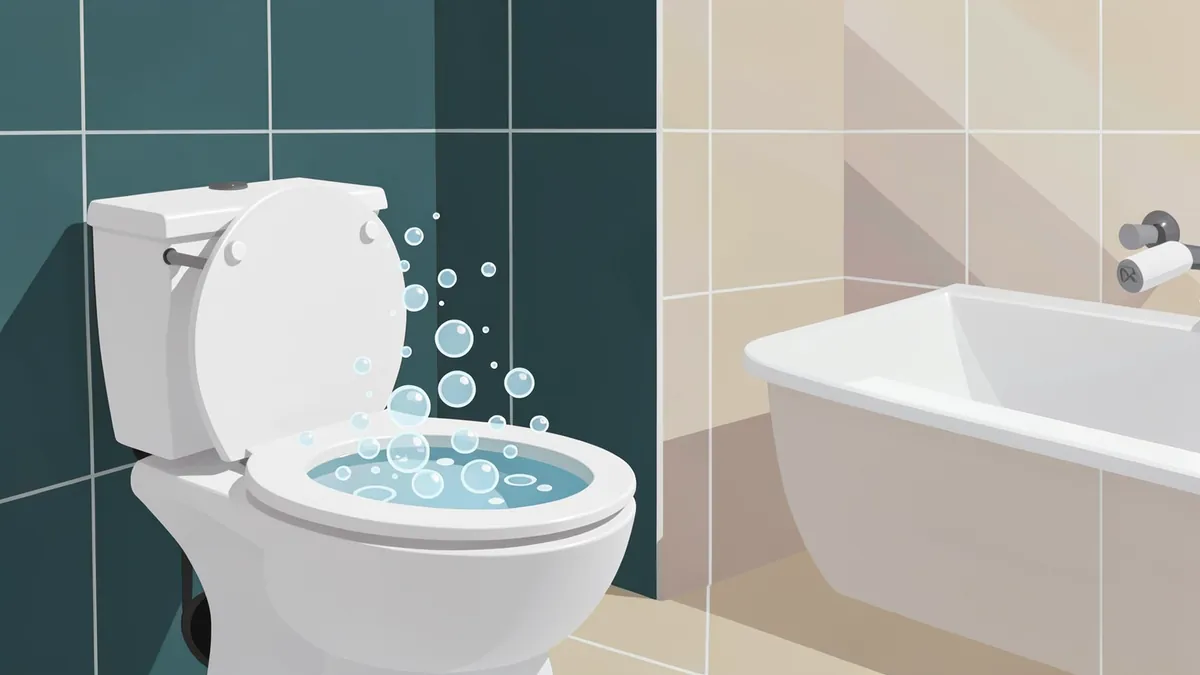
Gurgling is air being forced through the water in the toilet's trap, usually because a partial clog or a blocked or undersized vent is upsetting the pressure in the drain pipes. When it happens points to where the problem is: slow drains suggest a clog, while drains that run at normal speed but bubble or smell suggest the vent.
On this page
A toilet that gurgles on its own, or bubbles when someone drains the tub next to it, is telling you something about the pipes behind the wall. Usually the cause is ordinary: a partial clog, a vent that can't move enough air, or a sewer line that is running full. Now and then it is the first sign of a main line blockage or a failing septic system.
The most useful clue is the pattern. This checklist sorts gurgling by when it happens, explains what each pattern usually means, and lists safe checks to do before you call a plumber.
Why a toilet gurgles at all
Every toilet holds water in its built-in trap, and that water seal keeps sewer gas out of the room. The plumbing code's venting chapter explains that a drainage system depends on an open air path throughout, so waste and odors aren't blown back into fixtures and trap seals aren't siphoned out. Section 901.2 requires vent piping that lets air in and out so that no trap seal sees a pressure difference of more than 1 inch of water column (2024 IPC, Chapter 9).
When draining water can't get air through the vents, it pulls or pushes air through the nearest trap instead, and you hear it. HUD's residential inspection guide describes vents as equalizing pressure so trap seals aren't siphoned or blown out, and says a gurgling sound from a draining fixture usually indicates a venting problem (HUD). A partial clog can have a similar effect.
Match the pattern to the likely cause
| When it gurgles | Most likely cause | First step |
|---|---|---|
| When a nearby sink, tub or shower drains, and every drain runs at normal speed | A vent that isn't letting in enough air | Watch the bowl water (checks below) |
| When the washer empties or several fixtures run, and drains are slow | Partial blockage in the building drain or sewer line | Hold off on laundry; check for a main line clog |
| Right after a flush, and the bowl empties slowly | Partial clog in the toilet or its own drain | Plunge with a flange plunger |
| Only during heavy rain | Sewer main or your sewer line filling with stormwater | Go easy on water use until the rain passes |
| Along with a sewer smell | Trap seals being pulled, often a vent problem | Rule out a gas leak first |
| Suddenly, while crews work on the street sewer | The utility may be cleaning the main | Keep the lid down; refill traps afterward |
| On a septic system | A septic system that is failing | Call a septic contractor |
A neighbor fixture drains. The code lets the fixtures in one or two bathrooms on the same floor share a vent, a setup it calls wet venting (Section 912). When that shared vent is restricted, a tub draining next door can tug on the toilet's trap. If drains are also slow, suspect a partial clog in the shared branch instead.
The washer or several fixtures. HUD's guide suggests draining several fixtures at once and watching the lowest fixture in the house: water boiling up or backing up there points to a clogged main building drain, most often from tree roots. The guide to main sewer line clog signs walks through a safe version of that check.
Heavy rain. Gwinnett County's Department of Water Resources explains that storms affect the sewer system too: rain that gets into sewers takes up room meant for sewage, and when flow rises, sewage can back up at the manhole upstream of your house (Gwinnett DWR). See why drains back up when it rains.
Street sewer work. Gwinnett's crews clean sewer mains with high-pressure jetting, and the county says this can occasionally make toilets gurgle and, in very rare cases, splash. It advises keeping toilet lids closed during the work and running water in sinks, tubs and showers afterward if traps were pulled dry (Gwinnett DWR).
Septic homes. EPA lists gurgling sounds in the plumbing among the common signs of a failing septic system (EPA).
A sewer smell. HUD's guide notes that drains that have lost their water seal usually smell of sewer gas, and that a toilet's seal can be checked just by looking at the bowl. First make sure it isn't gas. Atlanta Gas Light adds an odorant that makes natural gas smell like rotten eggs, so the two are easy to confuse. If your home has gas service and you aren't sure what you smell, leave right away and warn others, avoid anything that could make a spark, and call 911 and the gas company once you are somewhere safe (Atlanta Gas Light). Then work through the sewer gas smell checklist.
When the vent is the problem
Georgia has adopted the 2024 International Plumbing Code with Georgia amendments. DCA's most recent announcement (December 2025) gives January 1, 2027 as its effective date, while an earlier DCA memo said January 1, 2026, so ask your city or county building department which edition it enforces (Georgia DCA). The sections below are from the 2024 edition.
- Blocked at the top. EPA notes that roof vents can become clogged with leaves and debris (EPA), and the code requires vents that end under a roof-mounted panel or through a side wall to be protected so birds and rodents can't get in or block them (Sections 903.1.3 and 903.1.4). Georgia's amendments to the 2024 edition set 6 inches as the minimum height for an open vent pipe above the roof (Georgia DCA).
- Too small or too long. A vent must be at least half the required diameter of the drain it serves and never smaller than 1 1/4 inches, and vents longer than 40 feet go up one pipe size (Section 906.2). If gurgling began after a remodel, ask the plumber who did the work to check the vent.
- Too far from the toilet. The model code lets a toilet's drain run any distance to its vent (Section 909.1). Georgia's amendments to the 2024 edition delete that exception, so in Georgia a toilet's distance to its vent is limited by the same table that applies to other fixtures (Georgia DCA).
- A smothered air admittance valve. Some vents end in an air admittance valve, a device that lets air into the drain pipes, instead of a pipe through the roof (Section 918.3). The code requires these valves to be accessible, at least 6 inches above any insulation, and installed where air can reach them, and it still requires at least one vent in every plumbing system to reach the open air (Sections 918.4, 918.5 and 918.7).
Checks you can do safely
None of these involve opening a pipe or climbing on the roof.
- Write down the pattern. For a day or two, note which fixture gurgles, when, and what else was running.
- Watch the bowl. Have someone fill the tub or a sink and let it drain while you watch the toilet. HUD's guide treats water moving more than about an inch in a trap while other fixtures drain as a sign of inadequate or obstructed venting.
- Watch the lowest drain. If water bubbles up or rises in a basement shower or floor drain while fixtures run, stop using water. That points to the main line rather than the vent.
- Plunge only a slow toilet. If the toilet itself empties slowly, use a flange plunger and don't keep flushing; how to unclog a drain yourself covers the technique.
- Refill the traps. After street sewer work, or if a seldom-used drain smells, run water into every sink, tub and shower.
- Find any air admittance valve. Make sure it isn't buried in insulation or sealed behind a panel.
Leave the roof and the vent stack to a plumber. HUD's guide describes peppermint-oil and smoke tests that reveal leaks in the drain and vent system, and says a plumber should perform them.
When to call, and whom
- A licensed plumber, if gurgling keeps happening, the bowl level drops, a smell comes with it, or it started after plumbing work.
- Right away, if sewage comes up anywhere in the house. Stop using water and follow the sewer backup steps.
- Your sewer utility, if neighbors have the same trouble, a manhole is overflowing, or gurgling that began during street work doesn't settle down. Its number is on your bill and website.
- A septic contractor, if your home is on septic.
This is general information, not plumbing advice; a licensed plumber can tell you what is happening in your system.
Next step
Before you call, note when the toilet gurgles and whether other drains are slow. Those two details help a plumber decide whether to look for a clog or check the vent first.
Sources
- Georgia Department of Community Affairs: Georgia State Amendments to the International Plumbing Code (2024 Edition)
- Georgia Department of Community Affairs: New Georgia Codes and Amendments - Effective January 1, 2027
- Gwinnett County Department of Water Resources: Maintaining our Infrastructure
- Gwinnett County Department of Water Resources: Sewer Lateral
- U.S. Department of Housing and Urban Development: Residential Rehabilitation Inspection Guide
- U.S. Environmental Protection Agency: Frequent Questions on Septic Systems
- International Code Council: Chapter 9 Vents, 2024 International Plumbing Code
- Atlanta Gas Light: Safety
Guides that pick up where this one stops.
Signs Your Main Sewer Line Is Clogged, Not Just One Drain
How to tell a main sewer line clog from one slow drain: the warning signs, what each means, a simple safe check, and when to call a plumber or your utility.
Sewer Gas Smell in the House: Causes and What to Do
What a sewer or rotten-egg smell at home usually means, how to rule out a gas leak first, and a checklist of likely causes, from dry drain traps to septic.
How to Unclog a Drain Yourself: A Safe, Step-by-Step Guide
Step by step: choose the right plunger, pull hair from tub drains, clean a P-trap, use a hand or toilet auger, skip boiling water, and know when to stop.