Carrollton Sewer and Drain Guide for Homeowners
Sewer provider: City of Carrollton · Carroll County
At a glance
The City of Carrollton runs its own sewer system: Public Works repairs sewer backups and maintains the lines, and the city's plant treats the wastewater. City code puts the cost of the building sewer from your house to the public sewer on the owner, and septic systems fall under Carroll County Environmental Health.
On this page
Carrollton runs its own sewer system and treatment plant (Wastewater Treatment), so city departments and the city code answer most sewer questions here. Septic systems are the exception: city code leaves those to the Carroll County health officer (§ 94-82).
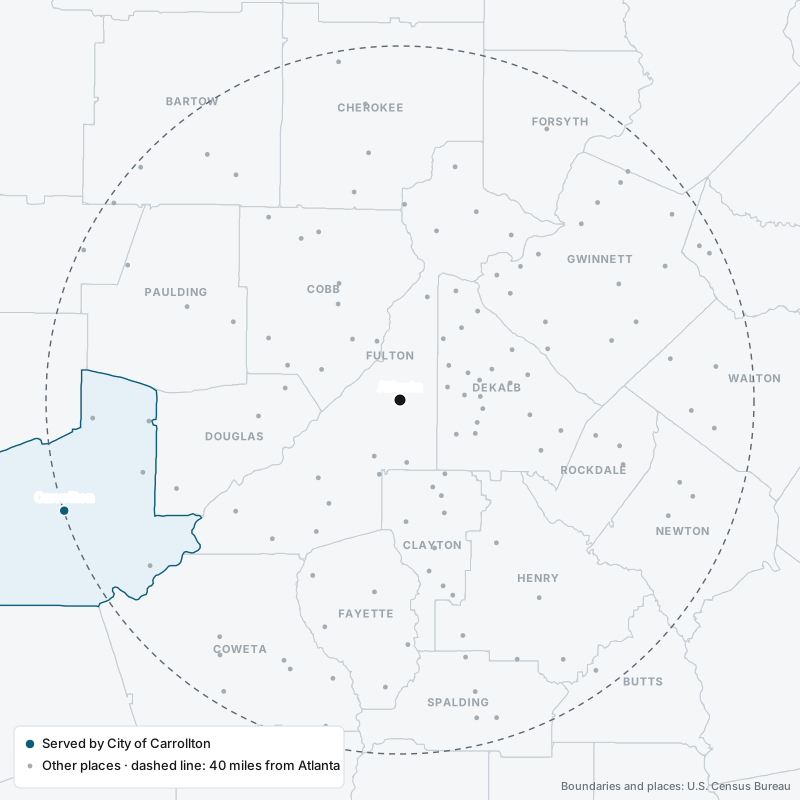
Who provides sewer service here
The City of Carrollton owns and operates a wastewater treatment plant rated at 7 million gallons per day, which treats an average of about 3.5 million gallons a day using mechanical pretreatment, solids dewatering and spray irrigation (Wastewater Treatment). The city's Public Works department installs water and sewer lines, repairs water leaks and sewer backups, makes water and sewer taps and maintains the system (Public Works).
To confirm you're on city sewer, look at your utility bill. The city's Utility Billing Department handles billing, payments and deposits for water, sewer and garbage service, and new accounts are opened online or at City Hall with a state-issued ID and a lease or proof of ownership (Utilities).
Outside the city, the picture changes. Carroll County's 2023 comprehensive plan lists Villa Rica, Temple, Carrollton, Bremen, Bowdon and the Fairfield Plantation development as the places with centralized sewer, and says wastewater elsewhere is handled almost entirely by septic tanks and other on-site systems (county plan).
Where your responsibility ends
Carrollton's code defines the building sewer, also called the house connection, as the pipe from your building drain to the public sewer, and the building drain as ending five feet outside the inner face of the building wall (§ 94-68). The owner pays all costs of installing and connecting that building sewer and must indemnify the city against any loss the installation causes (§ 94-83).
The same section adds rules that matter for older homes:
- Every building needs its own building sewer. A rear building on an interior lot may share the front building's line when no other route exists, but the city takes no responsibility for damage that shared connection causes.
- An old building sewer can serve a new building only after the city examines and tests it.
- A building drain too low for gravity flow must be pumped up by an approved means.
The city's pages don't spell out where its maintenance stops on an existing service line, so ask Public Works before you hire anyone to dig near the street. For how other Georgia providers draw that line, see who is responsible for the sewer line.
If sewage backs up
Sewer backups are on Public Works' list of duties (Public Works), and the city takes problem reports through its online Report a Problem form or through the departments listed in its directory. Ask Public Works whether the problem is in the city's lines before you pay a plumber to dig. The sewer backup guide covers what to do inside the house in the meantime, and main sewer line clog signs helps you tell a main-line blockage from a single slow drain.
Repairs, permits and inspections
The city issues building, electrical, HVAC, plumbing, gas and pool permits, and its permit page says every permit must be picked up in person by the state card holder, the person who holds the state trade license (Licenses & Permits). Community Development lists building permits among its services (Community Development).
Work on the sewer connection itself needs a separate building sewer permit. City code bars anyone from uncovering, connecting to or disturbing a public sewer without a written permit from the city's designated representative, charges a permit and inspection fee, requires notice when the building sewer is ready, and has the connection and testing done under the city's supervision (§ 94-83). Excavations must be barricaded and lit, and streets and sidewalks disturbed by the work must be restored to the city's satisfaction.
Before digging, Georgia 811 asks for a free locate request at least three business days ahead, and state law requires one before digging with powered equipment (Georgia 811; law).
Grease, wipes and rainwater
The city's wastewater department warns that fats, oils and grease clog pipes, create odors and can cause sewer backups. Its tips: wipe cooking oil, butter, sauces and dressings off pans with a paper towel before washing, and scrape leftover food into a food bin before dishes go in the sink or dishwasher (Wastewater Treatment). Wastewater staff also monitor food service discharges, and restaurants that use recycling grease bins must register them with the city (grease bins).
City code keeps clean water out of the sewer. It prohibits discharging stormwater, surface water, groundwater, roof runoff, subsurface drainage or swimming pool drainage to the public sewer without the city's authorization, along with grease above set limits (§ 94-81), and it bars connecting roof downspouts, foundation drains or areaway drains to a building drain that leads to the public sewer unless the city approves it in writing (§ 94-83). The what not to flush guide covers wipes and other problem items.
Septic homes in this area
City code bans septic tanks and other private wastewater facilities wherever public sewer is available (§ 94-82). An owner whose property abuts a street with a public sewer within 100 feet of the property line must connect within 30 days of official notice. Septic tank installations fall under the Carroll County health officer, each tank must be approved by a county health department inspector before use, and a city building permit for a home that needs a septic tank is issued subject to that approval.
Carroll County Environmental Health, part of District 4 Public Health, has its office at 423 College Street in Carrollton and posts the residential septic permit and repair permit applications (District 4). District 4's environmental health offices issue permits, inspect systems and investigate complaints (Wastewater Management), and its homeowner guide advises getting a copy of your system's inspection report from the county health department (guide). See septic or sewer: how to tell.
Cities and communities served
This page covers homes in the City of Carrollton. Villa Rica runs its own system (see the Villa Rica page), and the local directory lists the rest of Carroll County.
| City or community | Sewer service | Plumbing permits | Local note |
|---|---|---|---|
| Carrollton | Yes | City of Carrollton (building and trade permits) | City code bans septic tanks where public sewer is available and requires connecting within 30 days of notice when a sewer is within 100 feet of the property line. |
Next step
Before buying or renovating in Carrollton, check that the address pays a sewer charge to the city. If it doesn't, ask Carroll County Environmental Health for the septic system's permit and inspection records.
Provider rules change. Every statement above links to the provider's own page or ordinance as checked in October 2026 — if a source and this page disagree, the source wins. All places within 40 miles of Atlanta and their providers are listed in the metro Atlanta sewer directory.
Sources
- City of Carrollton: Wastewater Treatment
- City of Carrollton: Public Works
- City of Carrollton: Utilities
- City of Carrollton: Licenses & Permits
- City of Carrollton Code of Ordinances (Municode): Sec. 94-83. Building sewers and connections
- City of Carrollton Code of Ordinances (Municode): Sec. 94-82. Private wastewater disposal
- City of Carrollton Code of Ordinances (Municode): Sec. 94-81. Prohibited discharge standards
- District 4 Public Health: Carroll County (Environmental Health)
- District 4 Public Health: Wastewater Management
- Carroll County, Georgia: Comprehensive Plan Update 2023
- Georgia 811: The 811 Process