Covington Sewer and Drain Guide for Homeowners
Sewer provider: City of Covington Water Resources Department · Newton County
At a glance
The City of Covington runs its own sewer system through its Water Resources Department. City code makes each customer responsible for the sewer pipe from the house to the city street line or the city sewer main, whichever is nearer. For a problem, use the city's Report an Issue page or customer service line; licensed staff are on call around the clock.
On this page
Covington runs its own utilities, so inside the city the sewer under your street belongs to the city, not to Newton County. City code, not a county ordinance, decides where your part of the line ends.
Here is what the city publishes about its sewer system and rules, as checked in October 2026.
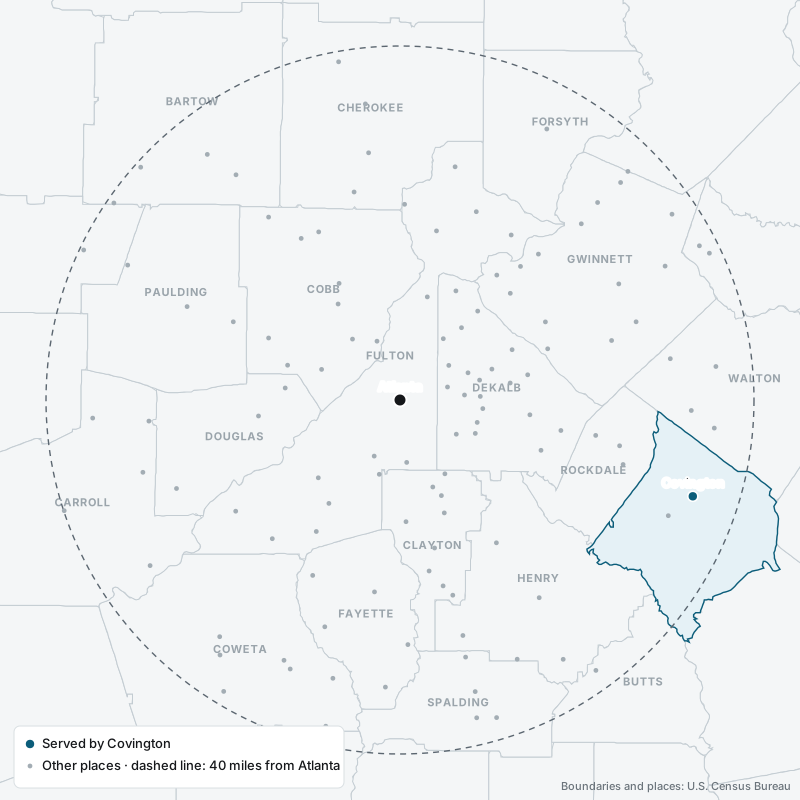
Who provides sewer service here
The City of Covington's Water Resources Department runs a sewer system that has operated since 1910 and includes more than 125 miles of sanitary sewer lines (Water/Sewer System). Wastewater goes to the city's Water Reclamation Facility, which Georgia EPD permits to treat up to 5.6 million gallons a day (Water Reclamation). The city provides electric, natural gas, water, sewer, garbage and stormwater service to customers in its jurisdiction, billed by the city's customer service department (Customer Service), so your city utility bill is the place to confirm you have city sewer.
City code applies its sewer rules to the city's sewer systems in adjacent unincorporated areas as well as inside city limits (Code § 13.16.300). Covington also treats part of neighboring Oxford's wastewater, but Oxford runs and bills its own sewer service (Oxford comprehensive plan).
Where your responsibility ends
City code requires every customer to maintain and keep clean the sewer pipes from their plumbing to the city street line or the city sewer main, whichever is nearer (Code § 13.16.070). When a home first connects, the owner builds the line from the house to the property line and applies to the city for the connection from the property line to the sewer in the street (Code § 13.16.140). Sewer lines built to become part of the city system must be installed to city specifications and become city property (Code § 13.16.100).
Two other provisions matter. The city's code treats the building drain as ending five feet outside the inner face of the building wall, where the building sewer begins (Code § 13.16.010). And where a building drain sits too low to flow by gravity to the public sewer, the sewage must be lifted by an approved pump (Code § 13.16.220); for the related protection against backflow, see backwater valves explained.
For how Covington compares with other Georgia providers, see who is responsible for your sewer line. This page is general information, not legal advice; the city's Water Resources Department or an attorney can tell you how the code applies to your property.
If sewage backs up
The city says qualified, state-licensed staff are on call 24 hours a day, seven days a week, for its water and sewer systems, and that its crews inspect sewer lines with a remote-controlled robotic camera (Water/Sewer System). To report a problem, use the city's Report an Issue page, which also lists the customer service number for reports that can't wait. The city doesn't publish a step-by-step backup procedure, so when you call, ask whether a crew will check the city main and the connection at the street before you hire a plumber.
Because Covington is also the natural gas utility, its report page reminds residents to call 911 for emergencies such as a natural gas leak (Report an Issue). If you notice a rotten-egg smell and aren't sure whether it's gas or sewer, the guide to sewer gas smells explains what to do. For safety and cleanup during a backup, see what to do when sewage backs up.
Repairs, permits and inspections
The city's Planning and Development Department reviews, permits and inspects all construction inside Covington city limits, and plumbing permits are among the permits it issues (Planning and Development). Uncovering, opening or connecting to a public sewer requires a written permit from the city's building and zoning office (Code § 13.16.190).
The city's water and sewer page also reminds residents to call 811 before digging (Water/Sewer System). Georgia 811 asks for a dig ticket at least three business days ahead, and state law requires one before digging with mechanized equipment (Georgia 811; O.C.G.A. Title 25, Ch. 9). For choosing a contractor, see how to hire a drain cleaning company in Georgia.
Grease, wipes and rainwater
Covington has run a fats, oils and grease program since September 1998, and its updated rules list 183 grease trap locations and require food businesses to pump or clean traps every three months or as needed, tracking the waste with manifests (FOG program). The city's grease page explains the reason: grease that goes down a drain can turn thick or solid as it cools in the sewer and cause blockages, backups and overflows, so wipe dishes, pots and pans before washing (FOG page).
City code forbids putting anything into a public sewer other than the waste it was built to carry (Code § 13.16.080). It also bars stormwater, surface water, groundwater, roof runoff and subsurface drainage from the sanitary sewer, and allows no new connections from roof drains or other sources of inflow (Code § 13.16.250; Code § 13.16.240). For household habits, see what not to flush or pour.
Septic homes in this area
Inside the city, a home on a septic tank must connect once sewer is reasonably available, which the code defines as any part of the property abutting a street or utility easement with a sewer line under it; if the owner hasn't connected within 90 days of the city's notice, the code directs the city to condemn the property and forbid occupancy (Code § 13.16.310). After connecting, the old septic tank must be abandoned and filled (Code § 13.16.170).
Septic permits in Newton County come from the county environmental health office of GNR Public Health, which has required a Level 3 soil report for new, repair and addition septic permits since February 7, 2022, and offers evaluations of existing systems (GNR Health).
Cities and communities served
This page covers the City of Covington. Neighboring Oxford and Porterdale run their own sewer lines (Oxford plan; Porterdale plan); both are listed in the local directory.
| City or community | Sewer service | Plumbing permits | Local note |
|---|---|---|---|
| Covington | Yes | City of Covington Planning and Development Department | City-owned sewer since 1910; customers maintain the pipe from their plumbing to the city street line or main, whichever is nearer (Code § 13.16.070). |
Next step
Before you pay for any work near the street, ask the Water Resources Department where the city street line falls at your address and whether the city will check its main first; note the date and the name of the person you spoke with.
Provider rules change. Every statement above links to the provider's own page or ordinance as checked in October 2026 — if a source and this page disagree, the source wins. All places within 40 miles of Atlanta and their providers are listed in the metro Atlanta sewer directory.
Sources
- City of Covington: Water/Sewer System
- City of Covington: Water Reclamation
- City of Covington: Customer Service
- City of Covington Code of Ordinances (Municode): 13.16.070 - Maintenance of pipes connected to sewer
- City of Covington Code of Ordinances (Municode): 13.16.140 - Installation of facilities and connection to public sewer after notice
- City of Covington Code of Ordinances (Municode): 13.16.250 - Prohibited discharge of surface and subsurface water into sanitary sewer
- City of Covington Code of Ordinances (Municode): 13.16.310 - Required use of municipal sewers and sanitary system
- City of Covington Water Resources Department: Fats, Oils, and Grease Program
- City of Covington: Planning and Development
- City of Covington: Report an Issue
- GNR Public Health (Gwinnett, Newton and Rockdale): Septic Systems
- City of Oxford: City of Oxford Comprehensive Plan 2023-2027