Paulding County Sewer and Drain Guide for Homeowners
Sewer provider: Paulding County Water System · Paulding County
At a glance
Paulding County Water System serves more than 60,000 customers and runs three water reclamation facilities for the sewered parts of the county, including parts of Hiram. County code makes the owner responsible for the sewer on their property up to the road right-of-way, and leaks or emergencies go to the Water System's 24-hour line.
On this page
Paulding County's water and sewer utility is a county department, the Paulding County Water System, and its customers have addresses in Dallas, Hiram, Acworth, Powder Springs, Rockmart and other towns. Because the county, the City of Dallas and private septic systems all handle sewage here, the first question for any Paulding homeowner is which of the three serves the house.
Who provides sewer service here
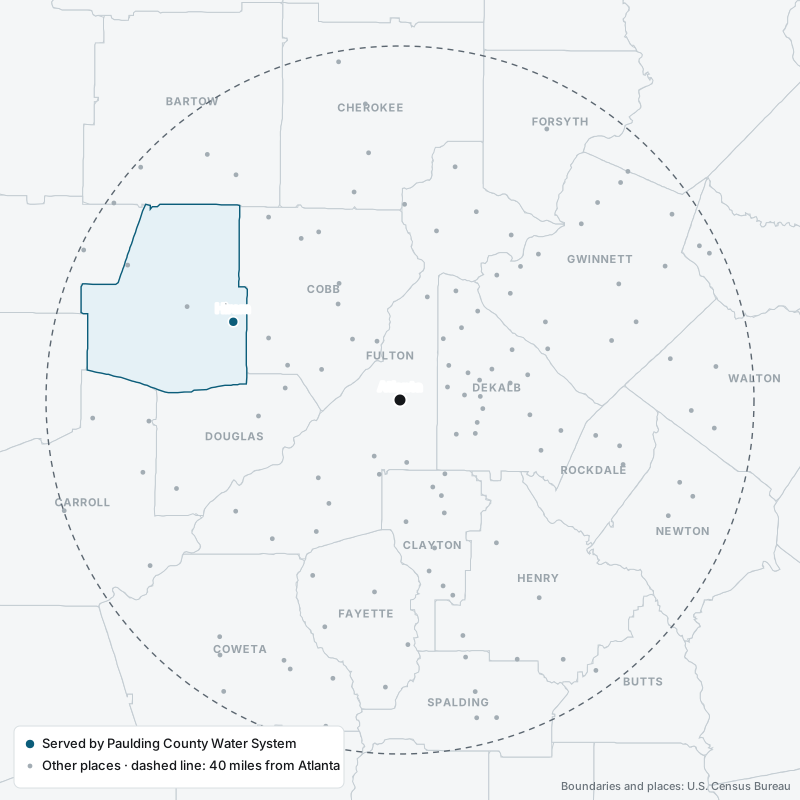
The Water System says it serves more than 60,000 customers with addresses in Acworth, Powder Springs, Dallas, Rockmart, Douglasville, Temple, Hiram and Villa Rica (Paulding County Water System). It buys water from the Cobb County-Marietta Water Authority and treats its own at the Richland Creek Reservoir, and it has three wastewater plants: one near Pumpkinvine Creek in the north of the county, one off Bill Carruth Parkway in the center and one off Highway 61 in the south (Paulding Water brochure). Its Waste Water Division operates the Pumpkinvine, Coppermine and Upper Sweetwater water reclamation facilities (Paulding Treatment & Laboratory Division).
In Hiram, the city's zoning code, for zoning purposes, treats sanitary sewer as available only inside the service areas mapped for the Coppermine and Pumpkinvine plants or the Sweetwater drainage basin, and only where a gravity connection with capacity is within 1,500 feet or a funded extension or development agreement provides one (Hiram Code § 210-80.14). The City of Hiram sells water at some addresses and sends others to Paulding County Water to start service (City of Hiram).
Dallas is a special case. The county bills for City of Dallas sewer in several places where it supplies the water, and it tells those customers to report a backup to the City of Dallas (Paulding Water brochure); see the Dallas page. Your bill shows whose sewer you have.
Where your responsibility ends
Paulding's code draws the line at the road right-of-way. The owner maintains and repairs all of the sewer on the owner's property, up to the right-of-way of the public road the sewer connects to; the county maintains and repairs the sewer beyond the property and in the public right-of-way. The owner must also build and maintain a cleanout on the property where it meets the right-of-way (Paulding Code §§ 66-104, 66-105).
The cost of putting in the building sewer and connecting it is the owner's, and the owner must cover the county for any loss or damage caused by the installation (Paulding Code § 66-93). Sewer cleanout location explains what that property-line cleanout looks like, and who is responsible for the sewer line compares other Georgia utilities. This page is general information, not legal advice; the Water System can confirm where the right-of-way line falls on your lot.
If sewage backs up
The Water System page lists a number for reporting a leak or emergency 24 hours a day (Paulding County Water System). The county's brochure names an operations manager for emergencies and leaks and says the customer service office is open weekdays from 8 a.m. to 4:45 p.m. (Paulding Water brochure). If your sewer is City of Dallas sewer, even with a county bill, call the city instead.
Until the county's crew has checked its side, follow what to do in a sewer backup inside the house; sewer backup insurance in Georgia covers the insurance side.
Repairs, permits and inspections
Paulding County's Building and Permitting Division issues building, electrical, heating and air-conditioning and plumbing permits for all uses, and its inspectors carry out the inspections for those permits (Paulding Building & Permitting). Hiram's building permit questions also go to the county, as the table notes.
County code adds sewer-specific steps. No one may uncover, alter or connect to a public sewer without a written permit from the director, and the permit applicant must tell the director when the building sewer is ready so the connection and testing can be done under the director's supervision (Paulding Code §§ 66-91, 66-99).
The county's maintenance starts at the right-of-way, so a dig there needs a Georgia 811 ticket first: Georgia 811 asks for a free request at least three business days ahead, and state law requires one before digging with mechanized equipment (Georgia 811; Georgia dig law). Under that law, the county helps designate laterals only out to the edge of the public right-of-way. How to hire a drain cleaning company in Georgia explains how to check a plumber's license.
Grease, wipes and rainwater
Paulding County Water calls fats, oils and grease the number one cause of sewer system blockages in metro Atlanta, explaining that grease sticks to the walls of household plumbing and the sewer and builds up until the pipe is blocked. For commercial kitchens, the county posts grease trap specifications and a pumping manifest form to return (Paulding FOG).
The code keeps rainwater out: no one may connect roof downspouts, foundation drains, areaway drains or other surface runoff or groundwater to a building sewer that drains to a public sanitary sewer. If a house sewer lets infiltration or inflow into the system, the county may require repairs, charge a higher sewer rate or require the house to disconnect (Paulding Code §§ 66-98, 66-103). Household tips are in what not to flush or pour.
Septic homes in this area
Septic permits, repairs and evaluations in Paulding go through Paulding County Environmental Health, one of Northwest Georgia Public Health's county offices (NW Georgia Public Health offices). The district's onsite sewage page says an existing septic system is evaluated before loan closings and refinancing, mobile home relocations, swimming pools and home or structure additions, and it posts the application for repairing or modifying a system (NW Georgia Public Health). For maintenance, see septic tank pumping in Georgia.
Cities and communities served
Among the places in this directory, Paulding County Water System sewer serves parts of Hiram. In Dallas the county bills some sewer customers, but the sewer itself belongs to the City of Dallas.
| City or community | Sewer service | Plumbing permits | Local note |
|---|---|---|---|
| Hiram | Part of the area | Paulding County Building and Permitting Division | Hiram's zoning code ties sewer availability to Paulding County's water reclamation service areas; the city sells water at some addresses and sends building-permit questions to Paulding County. |
Next step
Find the cleanout where your line meets the road right-of-way. If a plumber's camera shows the blockage beyond it, call the county's 24-hour line before paying for digging; under county code, that section is the county's to repair.
Provider rules change. Every statement above links to the provider's own page or ordinance as checked in October 2026 — if a source and this page disagree, the source wins. All places within 40 miles of Atlanta and their providers are listed in the metro Atlanta sewer directory.
Sources
- Paulding County Water System: Water System
- Paulding County Water System: Paulding County Water System brochure (2026)
- Paulding County Water System: Treatment & Laboratory Division
- Paulding County Water System: Backflow Prevention, Grease Traps & F.O.G.
- Paulding County Community Development: Building & Permitting Division
- Paulding County Code of Ordinances (Municode): Chapter 66, Article III, Division 2, Building Sewers and Connections (Secs. 66-91 to 66-106)
- City of Hiram Code of Ordinances (Municode): Sec. 210-80. RD Residential Duplex District (210-80.14, Sewer)
- City of Hiram: Utility Billing and Community Services
- Northwest Georgia Public Health: Land Use / Onsite Sewage
- Northwest Georgia Public Health: County Environmental Health Offices
- Georgia 811: The 811 Process
- Georgia 811: Georgia Underground Facility Protection Act (O.C.G.A. Title 25, Chapter 9)