Rome, GA Sewer Line and Drain Guide for Homeowners
Sewer provider: City of Rome Water & Sewer Division · Floyd County
At a glance
The City of Rome's Water & Sewer Division runs public sewer in Rome, and city code sets sewer charges for customers both inside and outside the city limits. Rome's code makes the occupants of a property keep their own sewer connection in good condition at their expense. For a sewer stop-up or an overflowing manhole, use the 24/7 emergency line on the division's page.
On this page
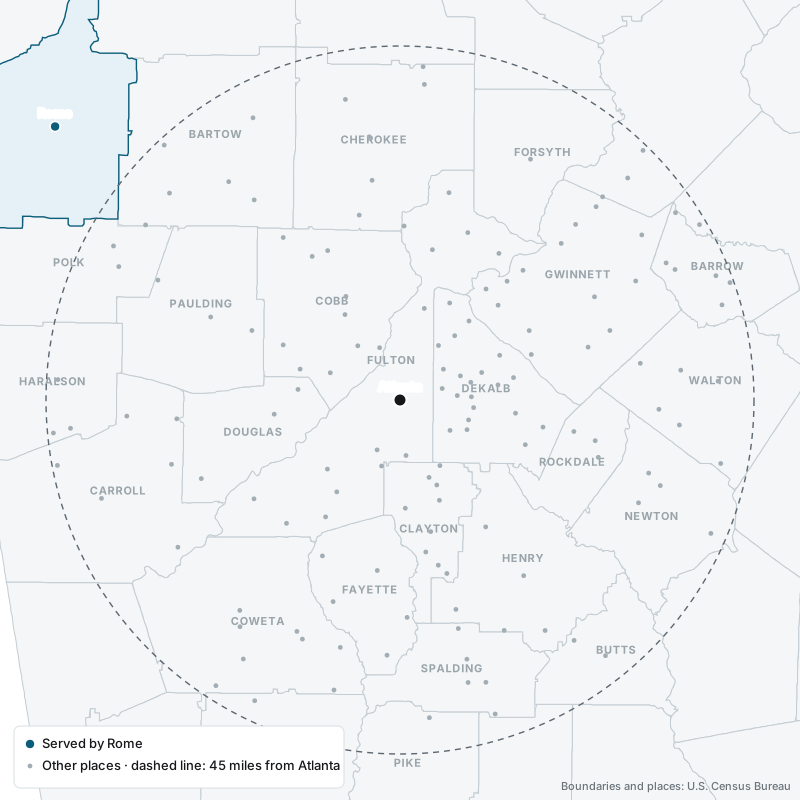
Rome is the farthest city from Atlanta in this directory, and its sewer works differently from the county systems closer in. Inside Rome, sewer service comes from the city's own Water & Sewer Division, and the rules a homeowner runs into are written in Chapter 22 of the Rome city code.
This page sorts out what the city publishes for households in and around Rome: how to tell whether you are a sewer customer, what the code says you maintain, how to report a backup, who issues plumbing permits, and where septic records are kept in Floyd County.
Who provides sewer service here
The City of Rome's Water & Sewer Division, based on Vaughn Road, handles water and sewer emergencies, and new connections to both systems are requested through its operations center (Water & Sewer Division). The division's service area is not limited to the city: Rome's code sets tap fees for connecting to city sewer lines inside and outside the city limits, and its sewer rate schedule covers use of city sewers "within and without the city" (Rome code, Secs. 22-331 and 22-335).
Your bill is the quickest check. Rome bills water, sewer and garbage charges together as one bill (Sec. 22-337), and the Water Billing office works out of City Hall at 601 Broad Street (Water Billing). One billing detail matters after a plumbing leak: once you show proof that the leak was repaired, the city adjusts only the sewer charge, and no more than twice for the same leak (Water Billing).
Floyd County runs a separate water department, and its page describes that job as supplying safe drinking water (Floyd County Water). A county water bill on its own therefore doesn't tell you where your wastewater goes; homes beyond the city's sewer lines rely on septic systems, covered below.
Where your responsibility ends
Rome's code defines the building sewer as the extension from the building drain to the public sewer or other place of disposal. The owner bears every cost of installing and connecting it and must indemnify the Water & Sewer Department against loss or damage the installation causes (Rome code, Secs. 22-74 and 22-153).
The plainest rule is in Sec. 22-334: the occupants of a property with a sewer connection are bound, at their own expense, to keep that connection in good condition, and failing to keep it in good order can be prosecuted (Rome code). Every building needs its own building sewer, except a rear building on an interior lot with no other route, and an old building sewer may serve a new building only after the city examines and tests it (Secs. 22-154 and 22-155).
The code does not say whether the city's maintenance starts at the property line, the right-of-way or the main. Before paying anyone to dig toward the street, ask the division to check its side of the line. The statewide responsibility guide shows how other Georgia providers draw that boundary.
If sewage backs up
The Water & Sewer Division takes water and sewer emergencies by phone around the clock and asks people not to report an emergency by email. Its list of emergencies includes a sewer stop-up and an overflowing sewer manhole (Water & Sewer Division), so a backup that may involve the public line goes there first.
If the blockage turns out to be in your own connection, Sec. 22-334 makes that your repair, so the next call is to a licensed plumber. For the safety steps inside the house while you wait, follow what to do in a sewer backup.
Repairs, permits and inspections
The Rome-Floyd County Building Inspection Department reviews, permits and inspects construction in the City of Rome, and its forms include a mechanical, electrical and plumbing permit application and a homeowner affidavit (Building Inspection). Its FAQ says a plumbing permit covers new installation, removal, alteration, repair or replacement of plumbing or drainage piping; permits are issued at 607 Broad Street on weekdays from 8 a.m. to 5 p.m., and the code list for the City of Rome and Floyd County includes the 2024 International Plumbing Code (Building Inspection FAQs).
Work that touches the public sewer needs city sign-off as well. Nobody may uncover, connect to, alter or disturb a public sewer without a written permit from the city manager, and the building sewer permit application is filed with the Water & Sewer Department. The connection is made under city supervision after the applicant reports the line ready, and trenches must be barricaded and lit, with streets and sidewalks restored to the department's satisfaction (Rome code, Secs. 22-151, 22-152, 22-160 and 22-161).
Outside the city limits, Floyd County's website sends visitors looking for building inspection to the same Rome-Floyd department page (Floyd County). Before a yard is opened, Georgia 811 asks for a free locate request at least three business days ahead (Georgia 811), and state law makes the request mandatory before digging with machinery. Under that law, the sewer owner only helps locate a lateral up to the edge of the public right-of-way (Georgia dig law, § 25-9-7).
Grease, wipes and rainwater
Rome's code bars connecting roof downspouts, exterior foundation drains, areaway drains or any other source of surface runoff or groundwater to a building sewer, and it bans stormwater, groundwater and roof runoff from sanitary sewers altogether (Rome code, Secs. 22-158 and 22-186).
The city manager can also bar discharges with more than 100 milligrams per liter of fats, wax, grease or oil, anything that turns viscous between 32 and 150 degrees Fahrenheit, and garbage that hasn't been properly shredded; a garbage grinder with a motor of three-quarters horsepower or more needs the city manager's review (Sec. 22-189). In its grease-trap section, the City Commission found that grease from food businesses strains the system and that the division spends equipment and labor unclogging manholes, pump stations and mains; homes are exempt from the interceptor rule (Sec. 22-193). For what to keep out of a household drain, see what not to flush or pour.
Septic homes in this area
Where no public sewer is available, Rome's code lets a building sewer run to a private sewage disposal system, but only under a written permit signed by the city manager, with the county health department's approval for any soil absorption field and an inspection before anything is covered (Rome code, Secs. 22-291 to 22-294). Once a public sewer within 100 feet of the property line becomes available, the owner must connect within 90 days of official notice and abandon and fill the old tank (Secs. 22-129 and 22-295).
Floyd County Environmental Health keeps its office at 16 East 12th Street in Rome and is open weekdays from 8 a.m. to 4:30 p.m. (Floyd County Environmental Health). The health district evaluates existing systems before home additions and loan closings and takes repair applications through the county office (Land Use / Onsite Sewage). For upkeep, see septic tank pumping in Georgia.
Claims and reimbursement
Rome's Risk Manager handles general liability claims against the city. To file one, you contact the Risk Manager for a claim form and guidance, and the city investigates each claim case by case to decide liability (Risk Management). This is general information, not legal advice; sewer backup insurance in Georgia explains how claims, deadlines and homeowners coverage fit together.
Cities and communities served
Of the places in this directory, Rome alone is served by the city's sewer. Because Rome's code also sets sewer charges for customers outside the city limits, a neighbor in unincorporated Floyd County should check the bill rather than assume septic; the local directory lists other places nearby.
| City or community | Sewer service | Plumbing permits | Local note |
|---|---|---|---|
| Rome | Yes | Rome-Floyd County Building Inspection Department | Sewer stop-ups and manhole overflows go to the Water & Sewer Division's 24/7 emergency line; city code makes occupants keep their sewer connection in good condition. |
Next step
Look at your next City of Rome bill. If it carries a sewer charge, save the Water & Sewer Division page with its 24/7 emergency line; if it doesn't, ask Floyd County Environmental Health for your home's septic permit record.
Provider rules change. Every statement above links to the provider's own page or ordinance as checked in October 2026 — if a source and this page disagree, the source wins. All places within 45 miles of Atlanta, plus Rome and their providers are listed in the metro Atlanta sewer directory.
Sources
- City of Rome: Water & Sewer Division
- City of Rome: Water Billing
- City of Rome (Municode): Code of Ordinances, Chapter 22, Article III: Sewage Collection, Treatment, and Disposal
- City of Rome (Municode): Code of Ordinances, Chapter 22, Article IV: Water and Sewer Rates
- Rome-Floyd County Building Inspection Department: Building Inspection
- City of Rome: Building Inspection FAQs
- City of Rome: Risk Management
- Floyd County Water Department: Water
- Northwest Georgia Public Health: Floyd County Environmental Health Department
- Northwest Georgia Public Health: Land Use / Onsite Sewage
- Georgia 811: The 811 Process
- Georgia 811: Georgia Dig Law (O.C.G.A. Title 25, Chapter 9)