Broken or Missing Sewer Cleanout Cap: Risks and Repairs
My sewer cleanout cap is broken or missing. What can go wrong, and how do I fix it?
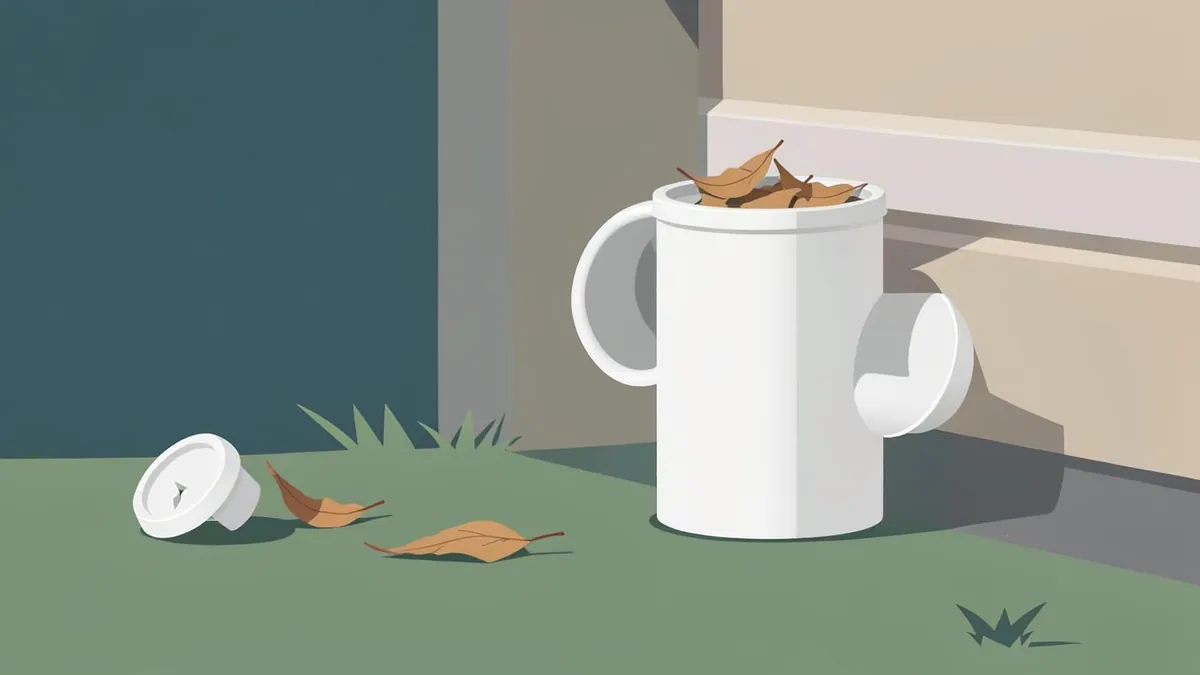
Short answer
An open cleanout lets rainwater, debris and small animals into your sewer line and sewer odors out, and sewage can spill from it if the line blocks. If nothing is backing up, a damaged cap can often be replaced with a plug that matches the pipe; a cracked pipe below it needs a plumber, and a cleanout at the street may be your sewer provider's to repair.
On this page
- Why a broken or missing cleanout cap matters
- Signs a cleanout cap needs attention
- How cleanout caps get broken or lost
- Which cleanout is it, and who fixes it?
- Repair options: a new cap, a new riser, or protection
- Safe checks and what not to do
- When to call a plumber or the utility
- Frequently asked questions
- Next step
A sewer cleanout cap is a small plastic or brass plug, so it's easy to ignore until a mower clips it, it cracks, or it never goes back on after a service call. Once it's damaged or gone, the cleanout is an open pipe running from your yard straight into the sewer line that carries everything your house drains.
This guide covers what an open cleanout lets in, the warning signs, which repairs a homeowner can make and which need a plumber, and who is responsible for a cleanout near the street. If you haven't found your cleanouts yet, start with how to find your sewer cleanout.
Why a broken or missing cleanout cap matters
The City of Valdosta's utilities department, which runs a "Cap the Cleanout" program, lists what a cap does (City of Valdosta):
- Rainwater. In a storm, an uncapped cleanout lets stormwater into the sewer, where it gets treated for no reason, strains the treatment plant and pipes, and raises costs.
- Debris. Leaves, mulch or soil that fall in can cause blockages and backups in your line or the city's.
- Small animals. The cap keeps rodents and other small animals out of the system.
- Odors. A capped cleanout helps keep sewer smells out of the yard.
Gwinnett County's Department of Water Resources (DWR) uses the term inflow for rain that runs quickly into the sewer through an opening or an improper connection, and says such water takes up room the pipes need for sewage and adds to treatment costs (Gwinnett DWR). Downspouts and sump pumps are kept off the sewer for the same reason; see storm drain vs. sanitary sewer.
The opening works in the other direction, too. When the line is blocked downstream, sewage can rise and come out of the cleanout, and Atlanta's 311 service lists waste overflowing from a sewer cleanout as a sewage spill to report right away (ATL311).
Signs a cleanout cap needs attention
Look for these when you walk past the cleanout:
- the cap is missing, cracked, chipped or loose, or you can see straight into the pipe;
- the cap or the top of the pipe is chewed by a mower or string trimmer, or the pipe is snapped or leaning at ground level;
- the cleanout has disappeared under mulch, soil or sod;
- a sewer smell hangs around the cleanout outdoors;
- smoke rises from it during a utility smoke test, or a notice arrives afterward.
Smoke testing is one way utilities find open cleanouts. When Valdosta smoke-tested its entire sewer system, missing cleanout caps led its list of places smoke typically appears, and by July 2017 cleanout repairs, at 288, were its largest group of completed fixes (City of Valdosta). Gwinnett DWR also smoke-tests and notifies owners of defects on their property (Gwinnett DWR).
How cleanout caps get broken or lost
Mowing and landscaping. Howard County, Maryland's public works department says cleanout caps are frequently damaged by lawn mowers or buried by landscaping work (Howard County). A cap that sits above the lawn or hides in a mulch bed is easy to hit.
Vehicles. Where a cleanout plug needs protection from the loads of vehicle traffic, the 2024 International Plumbing Code (IPC) calls for a cleanout assembly that meets the ASME A112.36.2M standard, and a cleanout in a floor or walkway without a trim cover gets a countersunk plug set flush with the surface (IPC 2024, Sections 708.1.11 and 708.1.11.2).
Removal. Caps come off for cleaning, inspections and backups, and sometimes they don't go back on. Valdosta's program page points residents to city ordinances covering the illegal removal of cleanout caps and the piping of stormwater (City of Valdosta).
The wrong part. A rag, a plastic bag or a loose-fitting cap isn't a plug. The IPC requires cleanout plugs of copper alloy, plastic or another approved material, and it limits copper-alloy (brass) plugs to metal piping systems (Section 708.1.7).
Which cleanout is it, and who fixes it?
Georgia's amendments to the plumbing code call for two cleanouts outside a typical house: one at or near the junction of the building drain and the building sewer, brought up to finished ground level, and another within 10 feet of the public right-of-way (Georgia amendments, Sections 708.1.2 and 708.1.3). Older lines may have only one, or none at the street; Gwinnett's written procedure has a separate path for laterals without a right-of-way cleanout (Gwinnett procedure).
Which one is damaged can decide who pays, and the answer depends on your sewer provider:
- Gwinnett County. The cleanout at the right-of-way is the county's to maintain, and the one closer to the house is part of the owner's lateral (Gwinnett DWR). County codes require the right-of-way cleanout to be capped, and plumbers hired by owners may not dig into the right-of-way, so report damage there to DWR (Gwinnett procedure).
- Clayton County Water Authority. Owners own the 4-inch private lateral up to its connection with the authority's system. The authority requires a cleanout near the right-of-way, asks owners to make sure the cap is in good condition and to repair or replace damaged cleanouts, and says its field staff can't work on private property (CCWA).
- Valdosta. The utilities department's program page gives residents do-it-yourself steps for adding or replacing a cap and invites questions about their cleanouts (City of Valdosta).
Other providers draw the line elsewhere. Check yours in who is responsible for your sewer line, which also links the site's metro Atlanta provider directory, before paying anyone to work near the street.
Repair options: a new cap, a new riser, or protection
Replacing the cap
When nothing is backing up, a cracked or missing cap is often a do-it-yourself fix. Valdosta's steps: work out whether you need a PVC or a brass cap, remove the damaged one, screw the new one on clockwise and tighten it with pliers, a pipe wrench or channel locks (City of Valdosta). Howard County notes that plumbing supply houses and hardware stores stock the parts (Howard County).
Match the old plug on two points. Material: plastic plugs must meet the standards for plastic pipe fittings, and brass plugs belong only on metal pipe (IPC Section 708.1.7). Size: a cleanout is generally the same size as the pipe it serves, up to 4 inches (Section 708.1.5), and the Gwinnett and Clayton County documents describe private laterals as typically 4-inch pipe. Taking the broken cap to the store is the easiest way to match the size and thread.
Replacing a cracked riser or fitting
If the pipe under the cap is cracked, snapped or loose in the ground, a new cap won't seal it. The damaged riser or fitting has to be replaced, which is work for a licensed plumber. The finished cleanout must still bring the top of the plug to or above grade (IPC Section 708.1.11). Before anyone digs, Georgia 811 asks for a free locate ticket at least three business days ahead (Georgia 811), and near the street your provider's rules come first.
Protecting it
Gwinnett's standard describes the street-side cleanout's plastic cap either reaching the ground surface or sitting under a plastic box set level with the ground (Gwinnett DWR). For a cleanout in a driveway, ask the plumber about a traffic-rated assembly (Section 708.1.11.2).
Code references are to the 2024 IPC. Georgia has adopted the 2024 IPC with Georgia amendments. The Department of Community Affairs' most recent announcement (December 2025) gives January 1, 2027 as its effective date, while an earlier DCA memo said January 1, 2026, so ask your city or county building department which edition it enforces (DCA). The 2018 edition has the same cleanout rules, with the subsections from the plug rule on numbered one lower (708.1.6 for plugs).
Safe checks and what not to do
When the drains are working normally, it's safe to check that the cap is there, whole and snug, and that the pipe is solid at ground level. Then avoid these mistakes:
- Don't open a cleanout while drains are slow or backing up. A blocked line can fill the cleanout pipe with sewage; the cleanout guide explains why to leave that to a plumber or the utility.
- Don't leave it open or improvise a cover. Only an approved plug counts (Section 708.1.7).
- Don't bury or seal it. A below-grade cleanout must be extended so the top of the plug is at or above grade, and plugs may not be covered with mortar, plaster or any other permanent material (Sections 708.1.11 and 708.1.11.1).
- Don't connect anything to it. The code prohibits using a threaded cleanout opening to add a fixture or extend piping unless another cleanout of equal size is installed (Section 708.1.12).
- Don't dig near the street before checking with your provider. Find out whose cleanout it is, and request a Georgia 811 ticket before any digging.
If sewage has spilled, keep people and pets away and see the sewer backup guide for cleanup safety; see a doctor if you feel ill after exposure. This is general information, not plumbing, legal or medical advice; a licensed plumber, your sewer provider or a doctor can advise on your situation.
When to call a plumber or the utility
Call a licensed plumber when:
- the pipe under the cap is cracked, broken below ground or leaning;
- the old plug is stuck or its threads are damaged;
- a new cap fits but the sewer smell, slow drains or gurgling continue;
- you can't find a cleanout, or the line has none near the house.
Call your sewer provider when the damaged cleanout is in the right-of-way and the provider maintains it, when a smoke-test notice names your property, or when sewage is coming out of a cleanout or manhole.
Emergency warning signs
- Sewage overflowing from a cleanout. Report it to your sewer provider as a spill; ATL311 sends a first responder within eight hours inside Atlanta (ATL311).
- Sewage coming up through floor drains, tubs or toilets. Stop using water and follow the sewer backup guide.
- A rotten-egg smell that could be natural gas. Treat it as a gas leak: leave the area, warn others, avoid anything that could make a spark, and once you're safely away call 911 and then the gas company (Atlanta Gas Light). For sewer odors, see sewer gas smell in the house.
Frequently asked questions
Can I replace a sewer cleanout cap myself?
Often, yes, if nothing is backing up and the pipe is sound; Valdosta publishes do-it-yourself steps. If the pipe under the cap is damaged, call a plumber.
What size cleanout cap do I need?
A cleanout generally matches the pipe it serves, up to 4 inches (IPC Section 708.1.5), and private laterals in Gwinnett and Clayton County are typically 4-inch pipe. Bring the old cap, and match the material too.
Who replaces a broken cleanout cap near the street?
It depends on your provider. Gwinnett County maintains the right-of-way cleanout, while the Clayton County Water Authority asks owners to keep their cleanout caps in good condition.
Can a missing cleanout cap cause a sewer smell?
It can; Valdosta lists odor control among the reasons to keep cleanouts capped. If the smell could be natural gas, leave and call 911 or the gas company from a safe place first.
Next step
Walk out to each cleanout this week, while the drains are working normally. Replace a cracked, loose or missing cap with a plug that matches the pipe; if the pipe itself is damaged or the cleanout sits at the street, call a licensed plumber or your sewer provider before doing anything else.
Sources
- International Code Council: Chapter 7 Sanitary Drainage - 2024 International Plumbing Code (IPC)
- Georgia Department of Community Affairs: Georgia State Amendments to the International Plumbing Code (2024 Edition)
- Georgia Department of Community Affairs: New Georgia Codes and Amendments - Effective January 1, 2027
- Gwinnett County Department of Water Resources: Sewer Lateral
- Gwinnett County Department of Water Resources: Standard Procedure for Clearing Sanitary Sewer Back-ups and Overflows
- Clayton County Water Authority: Preventing Costly Sewer Backups
- City of Valdosta Utilities Department: 'Cap The Cleanout' Program
- City of Valdosta Utilities Department: Smoke Testing Sanitary Sewer System
- Howard County (Maryland) Department of Public Works: Sewer Cleanout Cap Repair
- City of Atlanta ATL311: Customer Reporting a Possible Sewer Spill
- Georgia 811: The 811 Process
- Atlanta Gas Light: Safety
Guides that pick up where this one stops.

How to Find Your Sewer Cleanout (and What It's For)
What a sewer cleanout looks like, where to find one inside and outside a Georgia home, one-way vs. two-way types, and how to check it safely.
Who Is Responsible for Your Sewer Line in Georgia?
How Georgia sewer providers split the line between homeowner and utility, with a provider-by-provider table and steps to confirm the rule for your address.
Sewer Gas Smell in the House: Causes and What to Do
What a sewer or rotten-egg smell at home usually means, how to rule out a gas leak first, and a checklist of likely causes, from dry drain traps to septic.