Atlanta Sewer and Drain Guide for Homeowners
Sewer provider: City of Atlanta Department of Watershed Management · Fulton, DeKalb counties
At a glance
The City of Atlanta Department of Watershed Management runs the city's sewers, but ATL311 says the whole service lateral from your house to the city sewer is yours to maintain and repair. If sewage backs up, report it to ATL311 right away, at any hour; a city first responder is supposed to arrive within eight hours.
On this page
The city's own watershed department calls Atlanta's water and sewer infrastructure old (DWM), and parts of the sewer system still carry sewage and stormwater in the same pipe (ATL311). For a homeowner, the practical questions are narrower: which pipe is yours, who to call when a drain backs up, and what the city will and won't do on your lot.
Who provides sewer service here
The City of Atlanta Department of Watershed Management (DWM) runs the city's sewer system; its Office of Linear Infrastructure Operations maintains more than 1,500 miles of sanitary and combined sewers (DWM).
To confirm you are a DWM sewer customer, check your bill. DWM bills water and sewer monthly, and the sewer portion is based on the amount of water your household uses (billing; rates FAQ). If your home is outside the city limits, ATL311 refers you to the jurisdiction that serves your address (ATL311).
In 1999 the United States and Georgia reached a settlement with the city over water pollution violations throughout its sanitary sewer system, requiring corrective work (EPA). DWM's Clean Water Atlanta program now covers the projects required by two federal consent decrees and a state consent order (Clean Water Atlanta).
Where your responsibility ends
ATL311 describes the service lateral as the extension of your house's building sewer that connects the structure to the city sewer, and says the property owner is responsible for maintaining and repairing the entire lateral (ATL311). The city code's definitions point the same way: the "house connection" is the stretch of your line from the property line to the city's sewer in the street (§ 154-141). So a break under the sidewalk or street is still on your side of the line.
City crews can't work on private property without an easement, a recorded document granting access, which is why DWM researches easements when it handles a sewer problem on a lot (ATL311).
In new developments, the code has house connections extended one pipe joint, three feet, past the property side of the sidewalk, with a city-standard cleanout at the property line (§ 154-147). In homes built within about the last 45 years, ATL311 says the cleanout is usually near the front of the house where the drain exits, sometimes under the basement floor, and it can also be outside under a thin layer of soil (ATL311). The cleanout guide shows what to look for.
If sewage backs up
Report a backup to ATL311 right away. ATL311 takes these calls 24 hours a day, seven days a week, and says a first responder will be at the address within eight hours to investigate; if a backup is confirmed, containment can take four to eight hours, and resolving it fully, including repairs and restoring your property or the street, can take 30 to 45 days (ATL311). DWM ranks repair requests by public health and safety first, then environmental impact, then the severity of the problem (ATL311).
Write down the service request number the agent gives you. If the first responder decides the cause is on your property, DWM will advise you to contact a plumbing contractor, and that number is what DWM asks for if your plumber later points to the public sewer (ATL311). A sewer smell in or around the house gets the same eight-hour first response (ATL311). Restoration after a sewer repair generally takes up to 30 days once it begins (ATL311).
While you wait, the sewer backup guide covers safety and cleanup inside the house.
Repairs, permits and inspections
Inside the city, residential plumbing permits come from the Department of City Planning's Office of Buildings. ATL311 says a permit is required to install, repair or replace plumbing, applications are filed online through the city's Accela Citizen website, and homeowners may apply for their own permits (ATL311). For single-family homes, inspections may be done in person, by video or by third-party inspectors (ATL311).
Digging in the public right-of-way adds steps. The Atlanta Department of Transportation issues right-of-way permits for work on city streets and sidewalks, including sanitary sewer work (ATL311), and DWM's Environmental and Construction Enforcement Division inspects sewer tie-ins (ATL311). Building over, covering or filling over a city sewer requires the watershed commissioner's written permission (§ 154-151).
Georgia 811 asks everyone to request a free locate at least three business days before digging, and state law requires one before digging with powered equipment (Georgia 811; law). Its members mark only public lines, so your lateral needs a private locator, though the dig law has sewer owners help mark laterals up to the edge of the right-of-way (Georgia 811; O.C.G.A. § 25-9-7).
The city doesn't offer water or sewer service line warranties (ATL311). Low-income homeowners with a DWM account may qualify for the Care and Conserve Plumbing Repair Program, which funds non-profit partners to make plumbing repairs, including sewer fixes, at no cost; income and payment-history rules apply, and landlords and renters can't apply (DWM). For choosing a repair method, see sewer line repair options.
Grease, wipes and rainwater
DWM says grease from restaurants, schools, nursing homes, day cares and similar kitchens contributes to more than half of the blockages or overflows in the city's wastewater collection system, and its Grease Management Program permits and inspects those food service facilities (DWM). At home, DWM asks you never to pour grease into a sink or toilet, to scrape cooled grease and food scraps into a container or the trash, to keep food scraps out of the garbage disposal, and to use a sink strainer. ATL311 adds disposable diapers and baby wipes to the list of things that clog sewer lines (ATL311). The what not to flush guide has the full list.
Rainwater belongs out of the sanitary sewer. The city code says no drain for surface water may be connected to a sanitary sewer (§ 154-152), and its sewer-use rules list roof, basement, subsurface and yard drainage among prohibited discharges (§ 154-299). In the combined-sewer areas, ATL311 notes, a small portion of combined flow may go directly to streams in the heaviest rainfall (ATL311). If your drains act up mainly in storms, read why drains back up when it rains.
Septic homes in this area
Some homes in the city still use septic tanks, and ATL311 keeps a separate contact for septic and sewer billing questions (ATL311). ATL311 says septic permits are issued by the Fulton County health department and that a lot generally must be at least one acre to qualify for a private septic system. If a public sewer is within 200 feet of the property or 500 feet of the house, a septic tank isn't allowed and the home must connect, with the owner paying for any sewer extension; DWM's Site Development office explains the connection options (ATL311).
Georgia's Department of Public Health sends septic record requests, complaints and inspection questions to the county environmental health office, and its list includes separate Fulton and DeKalb County offices (DPH; office list). The city code also bans private systems that serve more than one lot, handle more than 2,000 gallons a day or move flow between parcels (§ 154-155). Not sure which you have? See septic or sewer: how to tell.
Claims and reimbursement
A damage claim against the City of Atlanta must be in writing and served on the mayor or the president of the Atlanta City Council within six months of the event (ATL311). The claim form asks for the specific dollar amount sought, the date, the location, the parties involved and a description; it must be delivered in person, by certified mail or by statutory overnight delivery, and a claims investigator then follows up (ATL311).
If your plumber says the backup may come from the public sewer, you can email DWM the plumber's invoice, with the inspection details, the problem area and your service request number, and DWM will inspect (ATL311). The article describes this as a way to get a DWM inspection; it doesn't say the city will pay the plumber's bill. This is general information, not legal advice; an attorney can tell you how the claim rules apply to your case, and the sewer backup insurance guide covers the insurance side.
Cities and communities served
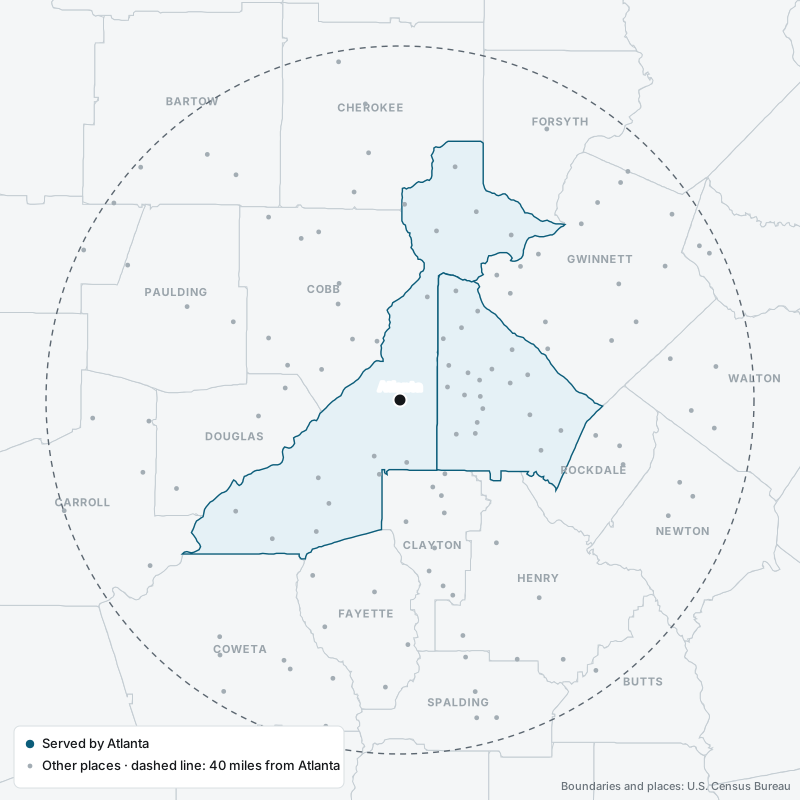
This page covers homes inside the City of Atlanta, where properties lie in either Fulton or DeKalb County (ATL311). For nearby cities, the local directory lists each place's sewer provider and permit office.
| City or community | Sewer service | Plumbing permits | Local note |
|---|---|---|---|
| Atlanta | Yes | City of Atlanta Department of City Planning, Office of Buildings | ATL311 says the owner maintains the entire sewer lateral to the city sewer. Report backups to ATL311 any hour; a first responder should arrive within eight hours. |
Next step
Find your cleanout before you need it. If sewage does back up, report it to ATL311 first and keep the service request number: it is the record DWM asks for if your plumber later points to the city's side.
Provider rules change. Every statement above links to the provider's own page or ordinance as checked in October 2026 — if a source and this page disagree, the source wins. All places within 40 miles of Atlanta and their providers are listed in the metro Atlanta sewer directory.
Sources
- City of Atlanta ATL311: What is a sewer service lateral?
- City of Atlanta ATL311: Customer Reporting a Possible Sewer Backup
- City of Atlanta ATL311: Plumbers Invoice for DWM Sewer Issue Inspection
- City of Atlanta ATL311: Submit a Claim for Damages with City of Atlanta
- City of Atlanta ATL311: Office of Buildings – Electrical, HVAC or Plumbing Permits
- City of Atlanta ATL311: How can I change over from a septic tank to city (public) sewer?
- City of Atlanta Code of Ordinances (Municode): Sec. 154-147. Design criteria
- City of Atlanta Code of Ordinances (Municode): Sec. 154-152. Connection of surface water drains to sanitary sewers
- City of Atlanta Department of Watershed Management: Grease Management
- City of Atlanta Department of Watershed Management: Care and Conserve Plumbing Repair Program
- City of Atlanta Department of Watershed Management: Clean Water Atlanta - Consent Decree
- Georgia 811: Have My Lines Been Marked?