Sewer Scope Before Buying a House in Georgia: Buyer's Guide
Should I get a sewer scope before buying a house in Georgia, and how do I use the results?
Short answer
A standard home inspection covers the plumbing inside the house, not the buried line to the public sewer, so a sewer scope is a separate service you arrange. Book it early in your contract's inspection or due-diligence period, get the full video and a written report, and turn any defect into a plumber's written estimate before you ask the seller for a repair or a price change.
On this page
You're under contract on a house, the inspector has been through it, and the report covers the roof, the wiring and every faucet. What it most likely leaves out is the buried pipe that carries the home's wastewater to the public sewer. If that line is cracked, full of roots or sagging, you want to know while you can still negotiate, not after the first backup.
A sewer scope is a video inspection of that pipe. It can show cracks, roots, offset joints, standing water, and broken or collapsed pipe. This guide covers the buyer's side in Georgia: why the standard inspection skips the line, when to schedule a scope, how to set it up with the seller, what to get from the inspector and how to use the results. How the camera works and how to read the video are covered in what a sewer camera inspection shows.
Why the home inspection stops at the foundation
Home inspectors work to written standards, and those of two national associations, ASHI and InterNACHI, both leave the yard line out. The American Society of Home Inspectors' standard has the inspector examine the interior drain, waste and vent system and doesn't require inspecting underground items or septic systems. It doesn't even require the inspector to determine whether the house is on a public sewer or a private system. ASHI's members approved a revised standard in January 2026, and the page says the posted version stays current until the new one takes effect.
The InterNACHI home inspection standard is similar: the inspector checks the drain, waste and vent system but isn't required to inspect underground utilities or septic systems. InterNACHI says a sewer scope isn't part of its home inspection standard, although many inspectors offer one as an extra service.
At least one Georgia utility tells buyers to fill that gap. Gwinnett County's sewer lateral page suggests that home buyers consider adding a lateral inspection to the home inspection, and that owners consider having the private lateral inspected by a licensed plumber. How much of the line becomes yours at closing depends on the sewer provider; see who is responsible for the sewer line in Georgia, or look up your provider in the metro Atlanta sewer directory.
When to schedule the scope
Schedule it inside the window your contract gives you for inspections. Georgia REALTORS' buyer guide lists a due diligence date among the terms an offer includes. Whatever your contract calls it, book the scope as soon as the contract is signed. If the video shows a problem, you still need time for a plumber to review it and write an estimate, and for you to negotiate, before the deadline passes.
First make sure the house is on public sewer at all. Because ASHI's standard doesn't require the inspector to tell you, check the listing and the seller's utility bills, or ask the provider; septic or sewer: how to tell walks through it. A sewer scope isn't a septic inspection: InterNACHI's scope standard runs the camera to the public or association tap or to the septic tank, and its protocol tells inspectors not to enter the tank.
Setting it up with the seller
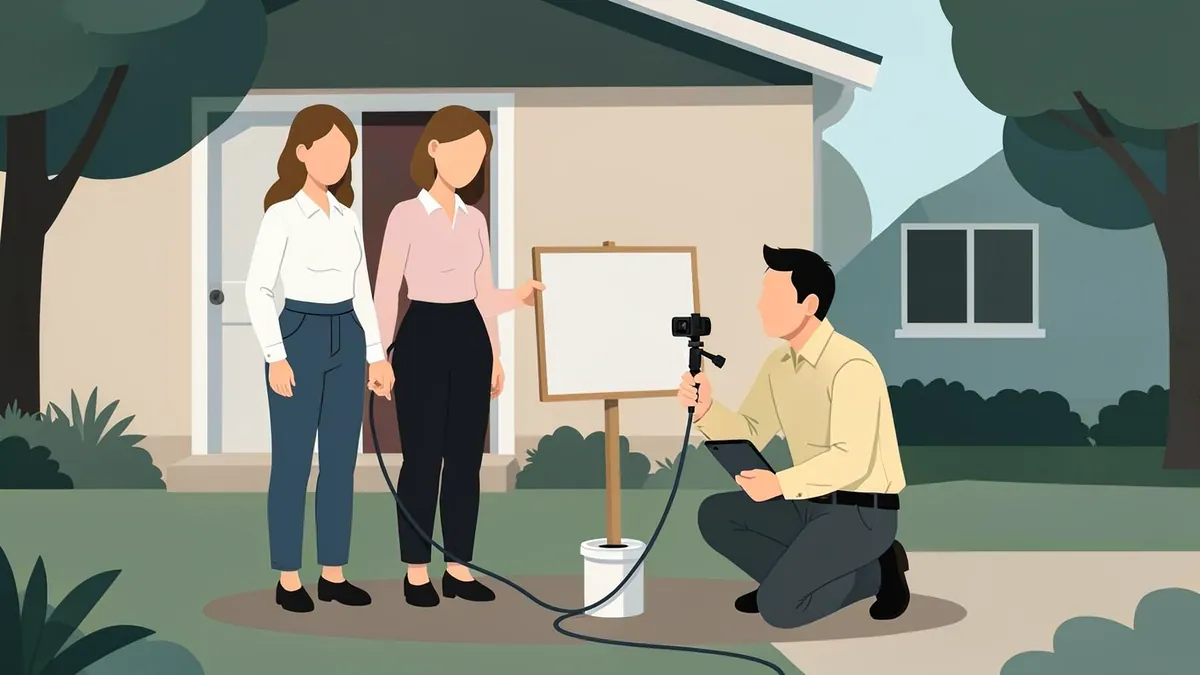
The house still belongs to the seller, so access goes through the agents. InterNACHI's guidance for inspectors says to notify the owner in writing ahead of time, describing the plan, including access to the cleanout and whether any toilets will be pulled, and to ask occupants not to run water while the camera is in the line.
Access can be a snag. InterNACHI's sewer scope standard doesn't require the inspector to pull a toilet, climb a roof to a vent that seems unsafe, or move belongings that block the way, and it says the report should note when no cleanout is visible or accessible. Ask the listing agent where the cleanout is before the appointment.
Before you book, ask the inspector:
- Which access point will be used, and will the camera run all the way to the connection with the public sewer?
- Will problem spots be located and marked on the ground? The standard doesn't require it, but it lets the client and inspector change the scope of work before the inspection.
- Will you get the whole video, and how soon?
What to get from the inspector
InterNACHI's scope standard calls for recording the entire inspection, giving the client the full video as a link or a copy, and reporting defects in writing. For a purchase, make sure you get:
- The complete video, start to finish.
- Proof it's this house. InterNACHI's protocol has the inspector record the access point and setup before the camera goes in, so there's no question whose line is on the video.
- A list of defects with their distance from the access point.
- What wasn't inspected, and why. The standard says the report should identify any part of the line that wasn't inspected and the reason.
- The pipe material, which the standard asks inspectors to describe when possible.
A scope report isn't a repair quote; the standard says inspectors aren't required to give repair or replacement cost estimates. If something shows up, have a licensed plumber review the video and give you a written estimate that names the repair method. Sewer line repair options explains the choices.
One finding calls for immediate action. Atlanta Gas Light warns that a gas pipe can be bored right through a sewer line, which it calls a cross bore. It says that if a natural gas pipe is found in your sewer line, all work should stop and the find should be reported to the gas utility as a natural gas emergency. It also discourages clearing a yard line with a rotary cutter before utilities are located and the line has been checked with a camera (Atlanta Gas Light). If the video shows a pipe or cable running through the sewer line, make sure the seller, both agents and any plumber know before anyone tries to clear it.
Using the findings in negotiations
Share the video, the report and the plumber's estimate with your agent. Depending on your contract, your options may include asking the seller to repair the line, asking for a lower price or another concession, or ending the contract within its terms. Your agent or a real estate attorney can tell you which options your contract allows and by when.
If the seller agrees to a repair, put the details in writing: who does the work (a licensed plumber), the method, whether the city or county requires a permit and final inspection, and a new camera video after the work so you can see the result. Keep copies of invoices and any workmanship warranty.
If the defect is near the street, find out whose pipe it is before anyone digs. Some Georgia providers maintain the section in the public right-of-way and others leave the whole line to the owner, so check who is responsible for the sewer line and call the provider.
Don't count on a warranty plan bought after closing to fix a defect you already know about. The plan terms reviewed in sewer line warranty plans exclude pre-existing conditions, and a defect your scope found is one you know about.
Georgia's brokerage law shows why your own inspection matters. A seller's broker must disclose adverse material facts about the property's physical condition that the broker actually knows and that a reasonably diligent inspection by the buyer couldn't reveal. The same section says the broker has no duty to go looking for defects, and that it doesn't limit any disclosure duty a seller has under other law or the buyer's own obligation to inspect (O.C.G.A. § 10-6A-5(b)). If the seller gave you a written property disclosure, compare what it says about the sewer, past backups and repairs with the video. This is general information, not legal advice; a Georgia real estate attorney can tell you how disclosure rules apply to your purchase.
Next step
As soon as your purchase contract is signed, book a sewer scope with a home inspector who offers them or with a licensed plumber, and ask for the full video and the written report well before your due-diligence deadline.
Sources
- American Society of Home Inspectors (ASHI): Standard of Practice
- International Association of Certified Home Inspectors (InterNACHI): Home Inspection Standards of Practice
- International Association of Certified Home Inspectors (InterNACHI): InterNACHI's Sewer Scope Inspection Standards of Practice
- International Association of Certified Home Inspectors (InterNACHI): Sewer Scope Inspections for Home Inspectors
- Gwinnett County Department of Water Resources: Sewer Lateral
- Georgia REALTORS (Rooted in Georgia consumer site): For Buyers
- FindLaw: Georgia Code Title 10. Commerce and Trade § 10-6A-5
- Atlanta Gas Light: Sewer Blockage Safety for Customers
Guides that pick up where this one stops.
Sewer Camera Inspection: What It Shows and What to Ask For
What a sewer camera inspection shows and misses, how a sonde marks the problem spot, what NASSCO defect codes mean, and what to get in writing.
Who Is Responsible for Your Sewer Line in Georgia?
How Georgia sewer providers split the line between homeowner and utility, with a provider-by-provider table and steps to confirm the rule for your address.
Sewer Line Repair: Spot Repair, Lining, Bursting or Replacement
How spot repair, cured-in-place lining, pipe bursting and open-trench replacement compare for a Georgia sewer line, plus permits, 811 and safety.