College Park Sewer and Drain Guide for Homeowners
Sewer provider: City of College Park Public Works, Water and Sewer Division · Fulton, Clayton counties
At a glance
The City of College Park provides sewer service within its city limits, in both Fulton and Clayton counties, through its Water and Sewer Division. City code puts the cost of the building sewer on the owner, and city inspectors, not contractors, inspect plumbing and sewer work.
On this page
College Park provides its own electricity, water, sewer, stormwater and sanitation services within its city limits (Customer Service), so sewer questions here go to the city. Fulton County, which runs sewer in much of south Fulton, has not permitted or inspected sewer projects that connect inside College Park since September 2022 (Fulton County).
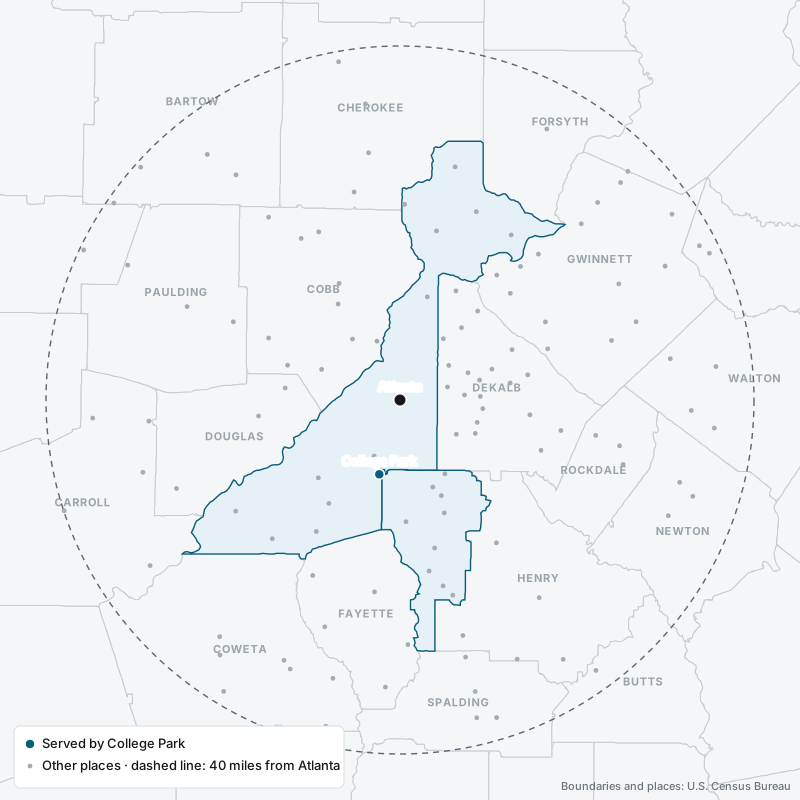
Who provides sewer service here
The Water and Sewer Division of College Park's Public Works Department operates and maintains the city's water distribution and wastewater collection systems, provides water meters, fire hydrants and water and sewer taps, and runs the city's wells, pumping stations and sanitary sewer lift station (Water & Sewer). The city's code also defines two sewerage districts: Morning Creek, covering part of the Fulton County side, and Clayton/Camp Creek, covering part of the city in Clayton County (§§ 10-51, 10-52).
Sewer is billed by the city. The Customer Service Department opens new utility accounts and offers a detailed billing format, with itemized charges, usage history and rate details, through its online portal (Customer Service). City code generally lets a property send to the city sewer only water the city itself delivered, unless it comes from a well on the property or the city has a written agreement with the other water supplier (§ 10-60).
Where your responsibility ends
College Park's code puts all costs of installing and connecting the building sewer on the owner, who must also indemnify the city against any loss the installation causes (§ 10-67). Other connection rules in the same article (Article IV):
- Where there is a sewer in the street, each building needs its own drainage system and its own sewer connection; a rear building on an interior lot may share the front building's line only with the plumbing inspector's permission (§ 10-66).
- An old building sewer may serve a new building only after the city examines and tests it (§ 10-69).
- A building drain too low for gravity flow must be pumped up to the building sewer (§ 10-71).
The city's pages don't publish where its maintenance ends on an existing service line. Because the Water and Sewer Division makes the sewer taps, ask it before you pay anyone to dig near the street. For how other Georgia providers split the line, see who is responsible for the sewer line.
If sewage backs up
On weekdays from 8 a.m. to 5 p.m., report problems to the Water and Sewer Division office. After office hours, on weekends and on holidays, the city sends reports to the Public Works Department office or its emergency dispatch line (Water & Sewer). Both numbers are on the Water & Sewer page; save them before you need them. The sewer backup guide covers safety and cleanup inside the house, and main sewer line clog signs helps you judge whether the problem is beyond one drain.
Repairs, permits and inspections
The Department of Building and Inspections issues building, electrical, HVAC, plumbing, roofing and sign permits, using the SagesGov system for online permitting, plan review and inspections (Building & Inspections). Under the city's plumbing code, the building official is in direct charge of all plumbing work in the city, a permit is required before installing, altering or repairing a plumbing system, and permitted work is inspected by the building official or authorized representatives (plumbing code). The code also opts out of the state-law provision that lets master plumbers or utility contractors self-inspect water and sewer projects (§ 5-127), so expect a city inspection.
Connecting to or disturbing a public sewer needs a separate written permit from the city's director, with a permit and inspection fee, and the connection is made under the director's supervision once the building sewer is ready (§§ 10-63, 10-64). Excavations must be barricaded and lit, and streets and sidewalks disturbed by the work restored to the city's satisfaction (§ 10-68).
Georgia 811 asks for a free locate request at least three business days before any digging, and state law requires one before digging with powered equipment (Georgia 811; law).
Grease, wipes and rainwater
College Park's code sends stormwater and other unpolluted drainage to storm sewers or approved natural outlets, specifically prohibits connecting roof downspouts, exterior foundation drains or areaway drains to the sanitary sewer, and bars discharging stormwater, groundwater, roof runoff or subsurface drainage into any sewer except limited storm runoff the director permits (§ 10-80). The Public Works Department adds that only stormwater belongs in storm drains and takes reports of illicit discharges (Public Works).
Grease interceptors are required where the city's director finds them necessary, but not for detached single-family homes (§ 10-84). For household habits that keep grease and wipes out of your own line, see what not to flush or pour.
Septic homes in this area
City code allows a septic tank only where sewer connection isn't available, and then only of a type approved by the state Department of Natural Resources; no building permit may be issued for a septic connection without the governing body's approval (§ 10-60). Private systems not approved by the county board of health must be abandoned, and the home connected within 90 days of official notice, when a serviceable sewer is within 100 feet of the property line.
Septic records and permits are kept by the county environmental health office, and Georgia's Department of Public Health lists separate offices for Fulton and Clayton counties (DPH office list). One of the Fulton County Board of Health's environmental health locations is the College Park Regional Health Center (Board of Health). See septic or sewer: how to tell.
Cities and communities served
This page covers homes inside College Park, in both Fulton and Clayton counties. Neighboring East Point and Hapeville run their own systems.
| City or community | Sewer service | Plumbing permits | Local note |
|---|---|---|---|
| College Park | Yes | City of College Park Department of Building and Inspections | The city provides sewer throughout its limits in Fulton and Clayton counties; report problems to the Water and Sewer Division on weekdays and to Public Works after hours. |
Next step
Copy the Water and Sewer Division's weekday number and the Public Works after-hours numbers from the city's Water & Sewer page into your phone, so you can reach the right office the moment a drain backs up.
Provider rules change. Every statement above links to the provider's own page or ordinance as checked in October 2026 — if a source and this page disagree, the source wins. All places within 40 miles of Atlanta and their providers are listed in the metro Atlanta sewer directory.
Sources
- City of College Park: Water & Sewer
- City of College Park: Customer Service
- City of College Park: Building & Inspections
- City of College Park Code of Ordinances (Municode): Article IV. Sewers; Wastewater Disposal (Chapter 10)
- City of College Park Code of Ordinances (Municode): Sec. 10-67. Performance of connection of building sewer to public sewer
- City of College Park Code of Ordinances (Municode): Sec. 10-80. Discharge of unpolluted water restricted
- City of College Park Code of Ordinances (Municode): Article VII. Plumbing Code (Chapter 5)
- City of College Park: Public Works
- Fulton County Department of Public Works: Permitting Process
- Georgia Department of Public Health: County Environmental Health Offices
- Georgia 811: The 811 Process