Ball Ground, GA Sewer Line and Drain Guide for Homeowners
Sewer provider: City of Ball Ground Water and Sewer Department · Cherokee County
At a glance
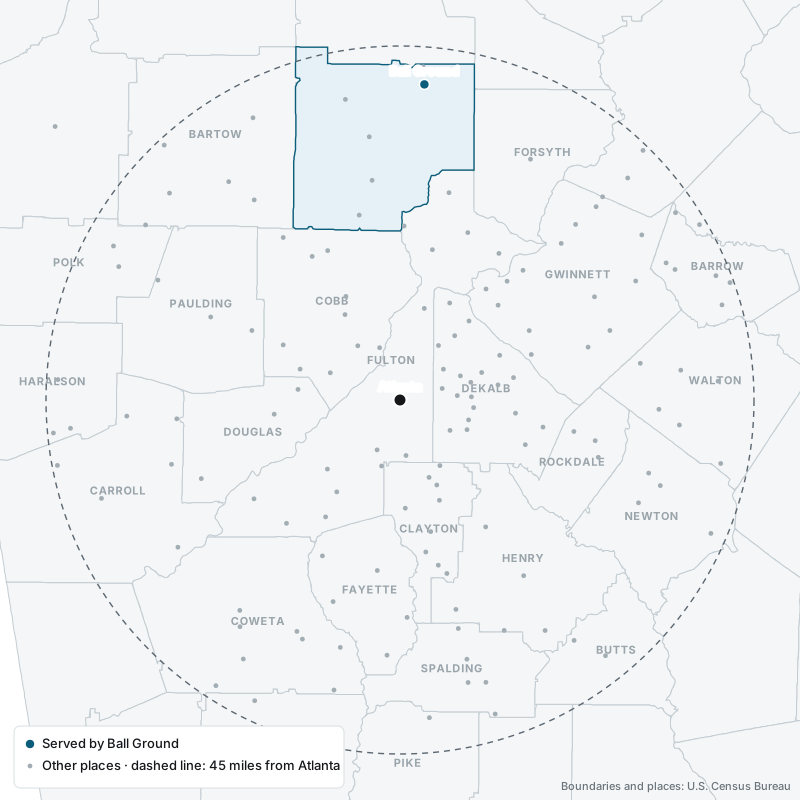
Ball Ground runs its own water and sewer system, serving about 1,300 households inside and outside the city limits, separate from the Cherokee County Water and Sewerage Authority. The city code makes the customer responsible for the service line connections between the house and the city sewer, and limits the city's responsibility to its own mains, pumps and tanks. After hours, the city sends emergencies to its police department or 911.
On this page
Ball Ground, in Cherokee County, runs its own water and sewer department. Its rules are short and practical, and one of them affects even homeowners who are building on septic, because the city wants every new home ready for a future sewer connection.
This page covers what the City of Ball Ground publishes for households: the system, the customer's part of the line, how to report problems, permits and inspections, what the sewer can't take, and the septic and dry-sewer rules.
Who provides sewer service here
The City of Ball Ground Water and Sewer Department serves about 1,300 households, both inside and outside the city limits. Its water comes from a single well built in 1938, the city keeps connections with the Cherokee County Water and Sewerage Authority as a backup water source, and new customers apply for water and sewer service online (Ball Ground Water & Sewer). The city's code describes the sewage collection and treatment system as owned and operated by the City of Ball Ground (Ball Ground code, Sec. 28-84).
Water and sewer bills are mailed on the last working day of each month and are due by the 15th (Ball Ground Water & Sewer). If your bill comes from the county authority instead, use the Cherokee County page.
Where your responsibility ends
Ball Ground's code puts the whole private connection on the customer. Each subscriber is responsible for installing the water service lines beyond the city's meter and for all service line connections between the building's wastewater system and the city sanitary sewer (Ball Ground code, Sec. 28-50). Customers also grant the city an easement for system equipment on their land and must repair or replace city equipment on their property if it is damaged or destroyed.
The city, for its part, maintains the main lines, pumping stations and tanks, and the code says it is not responsible for repairs to or damage to any property other than its own pumps, storage tanks, wet wells and water and sewer mains (Sec. 28-49). Read together, a clog or break in the line between your house and the city main is yours to fix. The statewide guide to sewer line responsibility shows where other providers stop.
If sewage backs up
The city takes non-emergency reports about water or sewer service through an online Report A Concern form or by phone to City Hall, and asks for specific details and the location. For an after-hours emergency, it directs residents to the Ball Ground Police Department or 911 (Report A Concern).
If the city finds its main is clear, Sec. 28-49 means the repair falls to you and a licensed plumber. While you wait, follow what to do in a sewer backup for safety inside the house.
Repairs, permits and inspections
The city issues building permits for residential and commercial construction inside the city limits, and permit packages are submitted by email with a checklist; incomplete submittals are rejected. Water and sewer capacity fees must be paid before a building permit is issued, and since October 11, 2024 the city has also collected development impact fees on permit applications (Building Permitting and Inspections).
Inspections are requested through City Hall, with next-day service attempted for requests made before 2 p.m. The required inspections include in-slab plumbing, where present, and the plumbing rough-in (Building Permitting and Inspections).
When a sewer repair means digging in the yard, Georgia 811 asks for a free locate ticket at least three business days ahead (Georgia 811). State law requires that ticket before mechanized excavation, and the sewer owner only helps locate laterals up to the edge of the public right-of-way (Georgia dig law).
Grease, wipes and rainwater
Ball Ground's sewer-use rules bar stormwater, surface water, groundwater, roof runoff, subsurface drainage, swimming pool drainage and condensate from the city system unless the city manager specifically authorizes them, and they cap animal or vegetable fats, oils and grease at 100 milligrams per liter (Ball Ground code, Sec. 28-84). Septic tank and grease trap waste may be discharged only at points the city manager designates.
Grease, oil and sand interceptors can be required for businesses but not for residential users (Sec. 28-84), so a home's protection is what goes down the drain; see what not to flush or pour.
Septic homes in this area
The city plans for sewer even where a home will start out on septic. If sanitary sewer is not available within 300 feet of the property line, a building permit applicant must show a septic permit from the Cherokee County Health Department first (Building Permitting and Inspections). The code also requires a dry sewer connection, built to the city engineer's specifications, for new homes and businesses and even for septic systems installed to serve existing buildings, so the property can later be tied into city sewer (Sec. 28-82).
Once city sewer is available within 200 feet of a home with indoor plumbing that can drain to it by gravity, the owner must connect within 90 days; an owner who doesn't is billed a monthly minimum sewer rate on the water bill, and the tap fee is waived for residents who connect within the first 90 days after service becomes available (Sec. 28-83). Cherokee County Environmental Health is at 1130 Bluffs Parkway in Canton (North Georgia Health District).
Cities and communities served
Ball Ground is the place in this directory on the city's system, which also reaches households just outside the limits. Nearby Nelson has no confirmed sewer provider; see the local directory.
| City or community | Sewer service | Plumbing permits | Local note |
|---|---|---|---|
| Ball Ground | Yes | City of Ball Ground Building Permitting and Inspections | The city system serves about 1,300 households inside and outside the limits; where sewer isn't within 300 feet, a county health department septic permit comes first. |
Next step
If you are building or replacing a septic system in or near Ball Ground, ask the city where your dry sewer stub should go so the future sewer connection lines up with its main.
Provider rules change. Every statement above links to the provider's own page or ordinance as checked in October 2026 — if a source and this page disagree, the source wins. All places within 45 miles of Atlanta, plus Rome and their providers are listed in the metro Atlanta sewer directory.
Sources
- City of Ball Ground: Water & Sewer
- City of Ball Ground: Building Permitting and Inspections
- City of Ball Ground: Report A Concern
- City of Ball Ground (Municode): Code of Ordinances, Chapter 28, Article II, Division 2: Rules and Restrictions
- City of Ball Ground (Municode): Code of Ordinances, Chapter 28, Article II, Division 3: Sewers
- North Georgia Health District: Cherokee County locations (Cherokee County Environmental Health)
- Georgia 811: The 811 Process
- Georgia 811: Georgia Dig Law (O.C.G.A. Title 25, Chapter 9)