Buford Sewer and Drain Guide for Homeowners
Sewer provider: City of Buford Sewer Department · Gwinnett, Hall counties
At a glance
In the areas it serves, the City of Buford, not Gwinnett County, runs the public sewer. Its ordinance puts the cost of installing a building sewer on the owner and lets the city order repairs when the line lets in rainwater or groundwater. In a backup, use the utility emergency lines on the city's Utilities page and ask which part of the line near the street the city maintains.
On this page
The City of Buford runs its own utilities, so the county rules on the Gwinnett County page don't automatically apply to a Buford sewer customer. Here the city's sewer-use ordinance and its sewer, planning and inspection offices set the rules for the line between your house and the public sewer.
This page covers what the city publishes for homeowners and renters: who is on city sewer, what the ordinance makes the owner responsible for, permits and inspections, what may go down the drain, and septic.
Who provides sewer service here
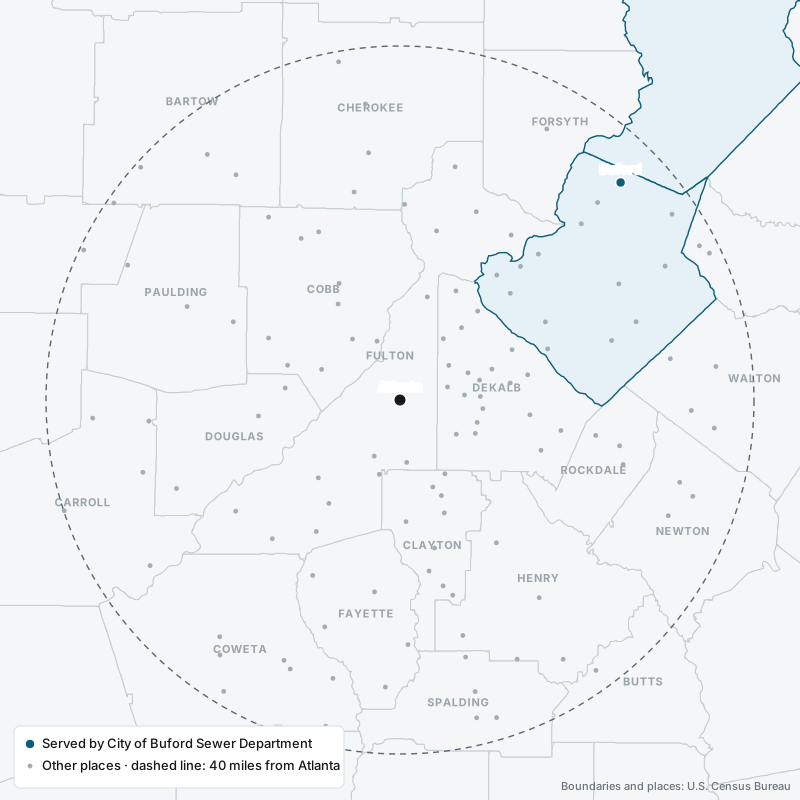
The City of Buford provides water, sewer, gas and electric service to various areas, with one customer service office for all four (City of Buford Utilities). Its Sewer Department works under a wastewater collection system permit issued by the state and enforces the city's grease rules (Sewer Department). The sewer-use ordinance also applies to customers outside the city limits who are connected to the city system (Buford Code, ch. 40, art. III).
Because the city serves "various areas," a Buford mailing address alone doesn't tell you who your sewer provider is. Check whether your city utility bill includes a sewer charge, or ask customer service. If you're buying a property, the city takes a utility letter of availability request, which asks whether utilities can serve the property and isn't an application for service (Utility Forms).
Where your responsibility ends
Buford's ordinance defines the building sewer, also called the house connection or service line, as the pipe from the building drain to the public sewer. The owner pays all costs of installing and connecting it and must protect the city against any loss the installation causes (Buford Code §§ 40-42, 40-45). Every building needs its own building sewer; where a rear building is allowed to share one with the building in front, the city takes no responsibility for damage from that arrangement.
If a building sewer lets in groundwater or rainwater, the ordinance lets the city require the owner to repair it, charge a sewer rate that covers the extra treatment cost, or require the owner to disconnect from the city system. New building sewers must be at least 4 inches in diameter, with the size and slope subject to the superintendent's approval (Buford Code § 40-45).
The ordinance doesn't say which section near the street the city maintains. Before paying for digging near the street, ask the Sewer Department where its responsibility starts at your address; the statewide guide to sewer line responsibility explains the common arrangements and the questions to ask.
If sewage backs up
The city's Utilities page lists emergency utility numbers for weekday business hours and a separate number for nights, weekends and holidays (City of Buford Utilities). If several drains back up at once or sewage is coming out of a manhole, call that line and ask the city to check its main before you hire a plumber.
The city doesn't publish a step-by-step backup procedure, so note who you spoke with and what the city found. For the first steps inside the house and cleanup safety, follow the sewer backup guide.
Repairs, permits and inspections
Permits in Buford come from the city, not the county. The Planning Department's forms page carries the building permit application and an affidavit for plumbing, electrical and HVAC work (Applications, Forms, Regulations). That affidavit must be signed and submitted to building inspections before work starts, and it asks for the contractor's state license number and Gwinnett County business license number, with copies of the business license, state license and driver's license (plumbing affidavit).
The Inspection Department takes requests by email or phone until 4 p.m. for next-business-day service and doesn't do same-day inspections (Inspection Department).
For sewer work, the ordinance requires a written city permit before anyone uncovers, connects to or alters a public sewer. A building sewer goes in by open trench unless the superintendent approves otherwise, no backfill may be placed until the work is inspected and approved, and the connection to the public sewer is tested under city supervision (Buford Code § 40-45).
Before digging, Georgia 811 asks everyone to request a locate ticket at least three business days ahead (Georgia 811), and the state dig law requires one before excavating with mechanized equipment. Under that law, the sewer owner helps locate laterals only up to the edge of the public right-of-way (Georgia Dig Law). For repair choices, see sewer line repair options.
Grease, wipes and rainwater
The ordinance bars connecting roof downspouts, foundation drains, areaway drains or other sources of surface runoff or groundwater to a building sewer or building drain unless approved for polluted drainage. It also bans stormwater, groundwater, roof runoff and subsurface drainage from any sanitary sewer, and prohibits solids that can block flow, such as rags, plastics, glass, sand, bones and paper cups (Buford Code §§ 40-45, 40-46).
Garbage disposals may be connected to home sewers as long as the garbage is properly shredded, and the ordinance limits fats, oils and grease in wastewater. The Sewer Department enforces a separate oil and grease removal policy under the ordinance, including sampling rules for grease traps (Sewer Department). For household habits, see what not to flush or pour.
Septic homes in this area
The Sewer Department advises having a septic system inspected and pumped at least once every three to five years and says septic tanks can be cleaned by firms permitted by the Gwinnett County Health Department (Sewer Department). Under the city code, building, repairing or enlarging a septic tank requires a health officer's permit and an inspection before it is covered. No new soil absorption system is allowed on a lot smaller than 25,000 square feet, and none may be installed where public sewer is accessible (Buford Code § 40-44).
When public sewer becomes available, the owner must connect within 60 days of notice and then clean out and fill the old tank. An individual property that isn't part of a larger project must connect when sewer is within 200 feet of the home (Buford Code §§ 40-43, 40-44). The Georgia Department of Public Health sends septic record requests and inspections to the county environmental health office (DPH onsite sewage). To tell which system you have, see septic or sewer: how to tell.
Cities and communities served
The city system serves addresses in Buford and some customers outside the city limits who are connected to it. Nearby cities that use Gwinnett County's system are listed on the Gwinnett County page, and the local directory covers every place in the area.
| City or community | Sewer service | Plumbing permits | Local note |
|---|---|---|---|
| Buford | Part of the area | City of Buford Planning Department and Inspection Department | Buford runs its own water, sewer, gas and electric utilities in areas it serves; contractors file a city affidavit with state license numbers before plumbing work starts. |
Next step
Call the City of Buford's utility customer service and ask whether your address is on city sewer and where the city's part of the line ends. Keep the after-hours emergency number from the Utilities page with your household records.
Provider rules change. Every statement above links to the provider's own page or ordinance as checked in October 2026 — if a source and this page disagree, the source wins. All places within 40 miles of Atlanta and their providers are listed in the metro Atlanta sewer directory.
Sources
- City of Buford: Utilities
- City of Buford: Sewer Department
- City of Buford: Utility Forms
- City of Buford Code of Ordinances (Municode): Chapter 40, Article III. Sewer Use (Secs. 40-42 to 40-53)
- City of Buford Planning Department: Applications, Forms, Regulations
- City of Buford Planning Department: Affidavit for Plumbing, Electrical, HVAC and Low Voltage Work
- City of Buford: Inspection Department
- Georgia Department of Public Health: Onsite Sewage
- Georgia 811: The 811 Process
- Georgia 811: Georgia Dig Law