Loganville Sewer and Drain Guide for Homeowners
Sewer provider: City of Loganville Public Utilities Department · Gwinnett, Walton counties
At a glance
The City of Loganville's Public Utilities Department runs the sewer system inside city limits. City code has the city run the sewer service line to the property line, while customers install and maintain their own sewer piping; ask the city where its part ends at your address. Report problems to the after-hours utility emergency number on the city's Utilities page or through its online issue form.
On this page
Loganville sits on the Gwinnett-Walton county line, but its sewer customers deal with neither county's sewer department: the city runs its own collection system and treatment plant. That makes Loganville's code, not a county ordinance, the place to look for who maintains what.
Here is what the city publishes, as checked in October 2026.
Who provides sewer service here
The city's Sewer Collections division manages, repairs and operates a collection system of about 81 miles of sewer lines and 24 lift stations that serves areas inside the corporate city limits (Sewer Collections). Wastewater goes to the city's Water Quality Control Facility on Highway 81 North, which is rated at 3.33 million gallons a day and was upgraded and expanded in 2021 (Water Quality Control).
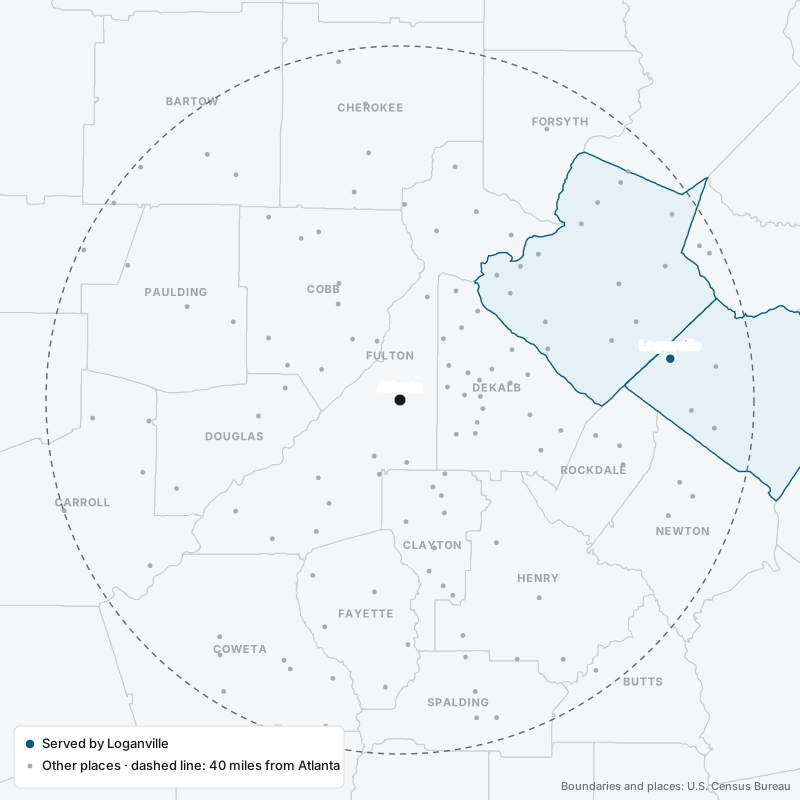
To start water, sewer and garbage service, you apply in person at City Hall, and the services are billed together on your city utility bill (Utilities). The city limits extend into both Gwinnett and Walton counties (U.S. Census Bureau), but the city's sewer serves only areas inside those limits (Sewer Collections), so check your bill if you live near the city line; the guide to telling septic from sewer lists other checks.
Where your responsibility ends
Loganville's code says that when a property connects, the city runs a sewer service line from its collection line to the property line, and that the customer's own sewer piping is installed and maintained at the customer's expense (Code § 34-25; Code § 34-26). The sewer use ordinance linked from the city's Sewer Collections page goes further: it makes building sewers and connections, all the way to the city's collector line, the landowner's property and responsibility (sewer use ordinance, § 6.15). Because the two documents read differently for the stretch near the street, ask Public Utilities where your responsibility ends before you pay for work there.
Loganville adds a rule for new homes and buildings: all new construction must install backflow protection on the customer's lateral connection to the sewer, with corrosion-resistant parts and service access to its working parts. An owner who doesn't want it can appeal to the superintendent and city council, but must sign a release waiving protection from blockages and overflows from the city system (Code § 34-192). See backwater valves explained for how these devices work. The code also requires a separate water and sewer connection for each premises (Code § 34-26).
For how Loganville compares with other Georgia providers, see who is responsible for your sewer line. This page is general information, not legal advice; the city or an attorney can tell you how the code applies to your property.
If sewage backs up
The city's Utilities page lists an after-hours emergency number for utility problems, and issues that can wait can be filed through the city's online Report an Issue form. The city doesn't publish a step-by-step backup procedure or response times, so when you call, ask whether a crew will check the city main and service line before you hire a plumber, and note the date and the name of the person you spoke with.
For safety and cleanup inside the house, see what to do when sewage backs up.
Repairs, permits and inspections
Loganville's Planning & Development Department issues building permits and conducts building inspections inside city limits (Planning & Development), and residential plumbing permits can be applied for online (Permitting Information).
Service-line work has extra local rules. Contractors or plumbers installing water or sewer service lines must be registered at City Hall and licensed by the city, the work must follow city specifications, and the city must inspect and approve it before the pipe is covered with earth (Code § 34-26). Opening or connecting to a public sewer needs a written permit from the superintendent, and a new building-sewer connection is made and tested under city supervision (Code § 34-192).
Before anyone digs, Georgia 811 asks for a dig ticket at least three business days ahead, and state law requires one before digging with mechanized equipment; the sewer utility must help mark laterals up to the edge of the public right-of-way (Georgia 811; O.C.G.A. Title 25, Ch. 9). For vetting a plumber, see how to hire a drain cleaning company in Georgia.
Grease, wipes and rainwater
City code says sewer service is for wastewater from the city water system only; no wastewater from private wells, storm drains, roof drains or similar sources may go into it (Code § 34-26). The code also bars connecting roof downspouts, foundation drains or other surface runoff or groundwater to a building sewer unless the superintendent approves it for disposing of polluted drainage (Code § 34-192). Restaurants and other businesses with grease traps fall under a separate article of the city code on grease traps and sand and oil interceptors (Chapter 34, Article V).
For household habits, see what not to flush or pour and why drains back up when it rains.
Septic homes in this area
Septic permits and records depend on which county your home is in. Walton County's environmental health office is part of the Northeast Health District, which issues septic tank permits and repair permits, inspects both, and evaluates existing systems (Northeast Health District). Gwinnett homes fall under GNR Public Health, which has required a Level 3 soil report for new, repair and addition septic permits since February 7, 2022 (GNR Health).
When a home with a basement connects to city sewer, the code lets the basement alone stay on the existing septic system if the superintendent finds it will work satisfactorily (Code § 34-192).
Cities and communities served
This page covers the City of Loganville. Nearby places in Gwinnett and Walton counties are listed in the local directory.
| City or community | Sewer service | Plumbing permits | Local note |
|---|---|---|---|
| Loganville | Yes | City of Loganville Planning & Development Department | City sewer serves areas inside city limits only; new construction must have backflow protection on the customer's sewer lateral (Code § 34-192). |
Next step
Before anyone works on your sewer service line, confirm with City Hall that the plumber is registered with the city, and ask Public Utilities where your responsibility ends at your address.
Provider rules change. Every statement above links to the provider's own page or ordinance as checked in October 2026 — if a source and this page disagree, the source wins. All places within 40 miles of Atlanta and their providers are listed in the metro Atlanta sewer directory.
Sources
- City of Loganville Public Utilities Department: Sewer Collections
- City of Loganville Public Utilities Department: Water Quality Control
- City of Loganville: Utilities
- City of Loganville Code of Ordinances (Municode): Sec. 34-25. Responsibility and liability—City
- City of Loganville Code of Ordinances (Municode): Sec. 34-26. Same—Consumer
- City of Loganville Code of Ordinances (Municode): Sec. 34-192. Requirements for building sewers and connections
- City of Loganville: Sewer Use Ordinance for City of Loganville
- City of Loganville: Planning & Development
- City of Loganville Planning and Development: Permitting Information
- Northeast Health District (Walton County): Environmental Health
- GNR Public Health (Gwinnett, Newton and Rockdale): Septic Systems
- U.S. Census Bureau: 2020 Census FIPS codes for Georgia places