Cumming Sewer and Drain Guide for Homeowners
Sewer provider: Cumming Utilities (City of Cumming) · Forsyth County
At a glance
Cumming Utilities, the City of Cumming's utility department, collects and treats sewage for the city and a service area that reaches into surrounding Forsyth County, but sewer isn't available everywhere. Owners pay to install their building sewers and must repair them if they let in groundwater or rainwater; on low-pressure lines, the homeowner owns the grinder pump and its service line up to the city's main in the right-of-way. Report a sewer spill to the utility's Distribution and Collection Division.
On this page
The City of Cumming runs its own water and sewer utility, Cumming Utilities, and its sewer rules come from the city's utilities ordinance, Chapter 111 of the city code, rather than from Forsyth County's. That matters for homes outside the city limits too, because the utility's service area extends into the county.
This page covers what Cumming Utilities and the city publish for homeowners and renters: who can get sewer, where the owner's part of the line ends, permits, what may go down the drain, and septic.
Who provides sewer service here
Cumming Utilities treats wastewater at its Bethelview Road Advanced Water Reclamation Facility, designed to treat an average of 8 million gallons a day, and discharges the treated water to Big Creek (Sanitary Sewer). Its Distribution and Collection Division maintains water and sewer lines and manholes, handles utility locates, and jets and unclogs sewer pipes for customers in Cumming and Forsyth County (Distribution and Collection).
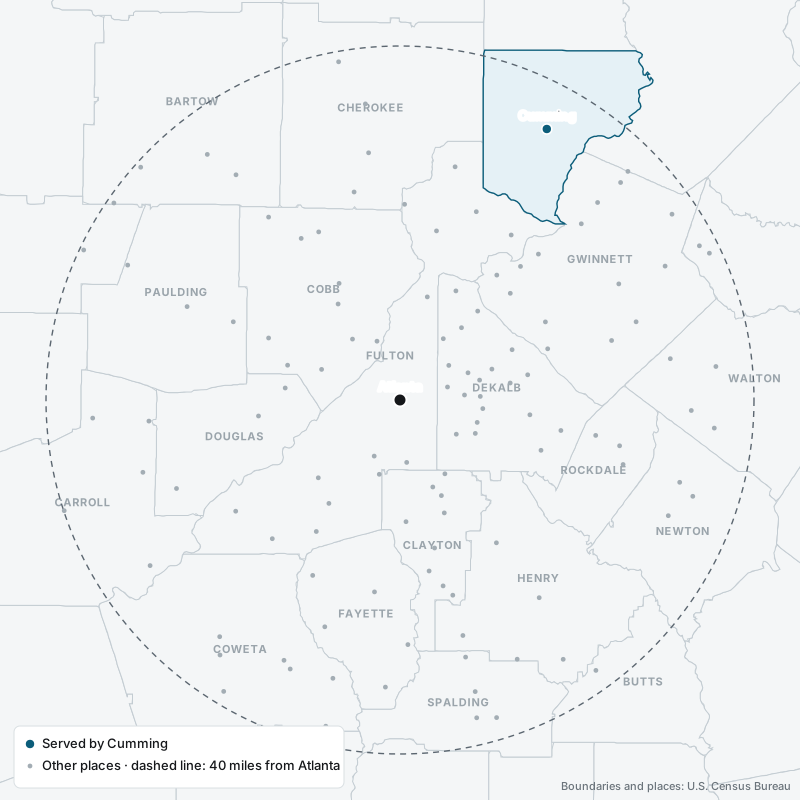
The utility's Water and Sanitary Sewer Service Area map shows that area reaching well beyond the city limits into surrounding Forsyth County (service area map). Even inside it, sewer is available only to a limited number of customers; some locations can connect by gravity, while others need a grinder pump (Connect to Sewer). Homes outside the service area are covered on the Forsyth County page.
Where your responsibility ends
The city ordinance defines the building sewer as the pipe from the building drain to the public sewer. The owner pays all costs of installing and connecting it and must protect the city against losses the installation causes (Utilities Ordinance, Secs. 111-128 and 111-133). Each building needs its own building sewer, and the city takes no responsibility for damage from an allowed shared connection to a rear building. If a house sewer lets in groundwater or rainwater, the city may require the owner to repair it, charge a higher sewer rate or require disconnection.
On low-pressure sewer lines, the split is spelled out. Each homeowner buys and installs a grinder pump and connects its service line to the city-owned force main at the street right-of-way; the city owns and operates the common force main in the right-of-way, and the homeowner owns and operates the pump and its service line (Grinder Pumps). The same page lists the streets and subdivisions where low-pressure sewer is available.
For gravity sewers, the ordinance doesn't say which part near the street the city maintains, so ask before paying for work there. The statewide responsibility guide explains the common arrangements.
If sewage backs up
Cumming Utilities' contact page directs anyone reporting a sewer spill to its Distribution and Collection Division. The main office is open weekdays from 8 a.m. to 5 p.m., except most holidays, and the page lists an after-hours number (Contact Cumming Utilities). If you have a grinder pump, remember that the pump and its service line are yours, so a problem there is a job for your own contractor.
For what to do inside the house and cleanup safety, see the sewer backup guide.
Repairs, permits and inspections
Inside the city, the Planning & Zoning Department reviews development plans, issues construction permits, inspects trade work and issues certificates of occupancy; its forms include a plumbing permit and a self-work permit affidavit (Planning and Zoning). Required inspections include under-slab plumbing and plumbing rough-in and final, and requests must be made no later than the day before (Inspection Information).
The utilities ordinance requires a written city permit before anyone uncovers, connects to or alters a public sewer. Building sewers go in by open trench unless the director approves otherwise, no backfill may be placed until the work is inspected and approved, and the connection is made and tested under the director's supervision (Utilities Ordinance, Sec. 111-133). Homes in the service area outside the city limits get building permits from Forsyth County; see the Forsyth County page.
Before digging, Georgia 811 asks everyone to request a locate ticket at least three business days ahead (Georgia 811), and the state dig law requires one before excavating with mechanized equipment. Under that law, the sewer owner helps locate laterals only up to the edge of the public right-of-way (Georgia Dig Law).
Grease, wipes and rainwater
The ordinance bars connecting roof downspouts, foundation drains, areaway drains or other sources of surface runoff or groundwater to a building sewer, and it bans stormwater, surface water, groundwater, roof runoff and subsurface drainage from the sanitary sewer. Food service establishments must install and maintain grease interceptors (Utilities Ordinance, Secs. 111-133 and 111-134).
At home, Cumming Utilities calls grease a solid waste that belongs in the trash, not the sink or a septic tank, and warns that grease can harden in drain lines (Septic Tanks). For wipes and other household items, see what not to flush or pour.
Septic homes in this area
Cumming Utilities says septic tanks are regulated by the Forsyth County Environmental Health Department (Septic Tanks). Under the city ordinance, private systems are permitted by the Forsyth County health department, existing homes on septic may stay on it unless it causes a public health problem, and the city or the health department can order a failing system connected to the public sewer within 30 days. An owner must also connect within 30 days of official notice when a public sewer is within 100 feet of the property line (Utilities Ordinance, Secs. 111-131 and 111-132).
Forsyth County's environmental health office and the county's septic pump-out program are described on the Forsyth County page. For upkeep, see septic tank pumping in Georgia.
Cities and communities served
Cumming Utilities serves the City of Cumming and the parts of surrounding Forsyth County inside its service area map. If your address is near the edge of that area, check the map or ask the utility before assuming who your provider is; the local directory lists the nearby places.
| City or community | Sewer service | Plumbing permits | Local note |
|---|---|---|---|
| Cumming | Yes | City of Cumming Planning & Zoning Department | Cumming Utilities' sewer service area reaches beyond the city limits, but sewer isn't available everywhere; some areas need a homeowner-owned grinder pump. |
Next step
If your home is on septic inside the service area, ask Cumming Utilities whether sewer is available at your address and whether it would be gravity or grinder-pump service, before the septic system needs major work.
Provider rules change. Every statement above links to the provider's own page or ordinance as checked in October 2026 — if a source and this page disagree, the source wins. All places within 40 miles of Atlanta and their providers are listed in the metro Atlanta sewer directory.
Sources
- Cumming Utilities: Sanitary Sewer
- Cumming Utilities: Distribution and Collection
- Cumming Utilities: City of Cumming Water and Sanitary Sewer Service Area map
- Cumming Utilities: Connect to Sewer
- Cumming Utilities: Grinder Pumps and Low Pressure Sewer Systems
- City of Cumming: Cumming Utilities Ordinance, Chapter 111 (updated December 7, 2021)
- Cumming Utilities: Contact Us
- Cumming Utilities: Septic Tanks
- City of Cumming: Planning and Zoning
- City of Cumming: Inspection Information
- Georgia 811: The 811 Process
- Georgia 811: Georgia Dig Law