Forsyth County Sewer and Drain Guide for Homeowners
Sewer provider: Forsyth County Department of Water & Sewer · Forsyth County
At a glance
Forsyth County's Department of Water & Sewer runs the county's public sewer, while the City of Cumming's own utility serves the city and a surrounding service area. The county doesn't publish a written split for the sewer lateral, so ask it where your part ends before paying for work near the street. Report sewer overflows to the department's main line, which an answering service covers after hours.
On this page
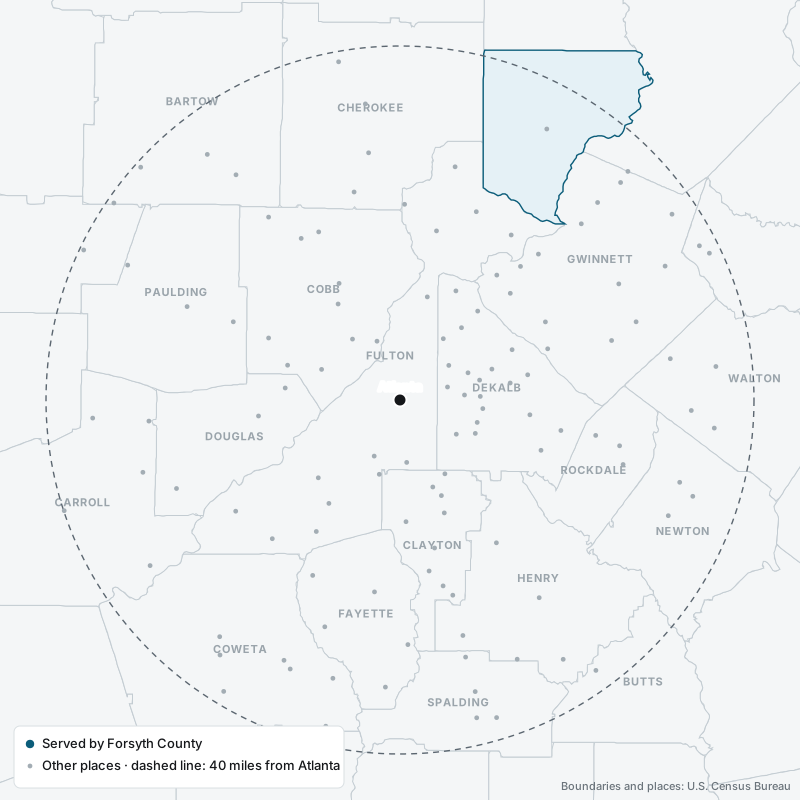
If you live in Forsyth County outside the City of Cumming's water and sewer service area, your public sewer, if you have one, comes from Forsyth County's Department of Water & Sewer. Its published rules say a lot about easements, what may go down the drain and septic upkeep, and little about who owns the lateral, so this page gathers what it does publish.
Homes in the City of Cumming and the area its utility serves follow different rules, covered on the Cumming page.
Who provides sewer service here
Forsyth County says some homes treat wastewater on site with septic systems, while most homes, schools and businesses send it through the county's sanitary sewer to one of five water reclamation facilities (About Wastewater).
County customers get a monthly statement for water and sewer use, and sewer charges are based on water meter readings (Billing Information). A sewer charge on your county bill is the simplest sign that you're connected; if your county bill has none, ask the department whether your home is on septic.
Where your responsibility ends
The county hasn't published a statement of where the owner's part of the lateral ends. Its construction notes for new development require each lateral to have a capped 6-inch cleanout, placed one foot behind the right-of-way or on the sanitary sewer easement line (Construction Notes). Ask the department where its responsibility ends at your address before paying for work near the street; the statewide responsibility guide explains the common arrangements.
Where a county sewer line crosses private land, the county holds an easement to inspect, maintain and repair it. Its easement guidelines say buildings, walls, fences, trees, shrubs, water features and pet enclosures in the easement are encroachments that may be removed, that the owner may have to move them at the owner's expense, and that the county won't replace them or pay for them (Utility Easement Guidelines). The construction notes likewise bar fences, structures and trees from sanitary sewer easements.
If sewage backs up
The department asks residents to report water and sewer emergencies, including sanitary sewer overflows, to its main line. Outside office hours and on holidays, an answering service takes the report and passes it on for dispatch (Report a Problem).
The county's grease flyer warns that residents may be held liable for all damage and cleanup costs when they cause a sewer backup (Fats, Oils and Grease flyer). For the first steps inside the house, follow the sewer backup guide.
Repairs, permits and inspections
In unincorporated Forsyth County, the Department of Building & Licensing issues permits. Its guide says plumbing work that adds or replaces fixtures with piping changes needs a permit, fixture repairs without piping changes don't, and a water heater replacement does, although an emergency replacement can be permitted and inspected afterward (Do I Need a Permit?).
If the property is on septic, Forsyth County Environmental Health must approve plans to build, remodel, or add a building or pool before a building permit can be issued (Forsyth County Environmental Health). Inside Cumming, the city issues its own permits; see the Cumming page.
Before digging, Georgia 811 asks everyone to request a locate ticket at least three business days ahead (Georgia 811), and the state dig law requires one before excavating with mechanized equipment. Under that law, the sewer owner helps locate laterals only up to the edge of the public right-of-way (Georgia Dig Law). For repair choices, see sewer line repair options.
Grease, wipes and rainwater
The county's grease flyer, produced with the regional Clean Water Campaign, calls fats, oils and grease the number one cause of sewer blockages in metro Atlanta. It asks residents to pour cooled grease into a sealable container for the trash, scrape and dry-wipe pans, and use a sink strainer, and notes that a garbage disposal only chops grease into smaller pieces (Fats, Oils and Grease flyer).
The county code bars stormwater, groundwater, roof runoff, subsurface drainage, swimming pool drainage and condensate from the sewer unless the director authorizes it (Forsyth County Code § 82-57). The construction notes also prohibit roof drains, pool drains and air-conditioning condensate drains from the sanitary sewer (Construction Notes). See what not to flush or pour for wipes and other household items.
Septic homes in this area
Forsyth County Environmental Health's land use section issues septic system permits and does final inspections, and the office notes that an application or review may take 20 business days or more (Forsyth County Environmental Health).
The Department of Water & Sewer also runs a septic pump-out program. Owners of single-family homes on septic who are county water customers can get a credit on their water bill after a pump-out, once every five years per address, if the system is at least 36 months old, the pumper is approved by the state health department, and the application arrives within 90 days of the work. Renters aren't eligible, and credits depend on available funding (Septic Tank Pump-Out). For upkeep, see septic tank pumping in Georgia.
Cities and communities served
This page applies to unincorporated Forsyth County outside Cumming Utilities' service area. Cumming and the area around it are on the Cumming page, and the local directory lists every place within 40 miles of Atlanta.
| City or community | Sewer service | Plumbing permits | Local note |
|---|---|---|---|
| Unincorporated Forsyth County | Part of the area | Forsyth County Department of Building & Licensing | County sewer serves areas outside Cumming Utilities' service area; some homes use septic systems, which Forsyth County Environmental Health permits. |
Next step
If your lot has a county sewer easement, find the utility easement agreement that came with your title report and keep that strip clear of structures, fences and new trees before the county needs to reach the line.
Provider rules change. Every statement above links to the provider's own page or ordinance as checked in October 2026 — if a source and this page disagree, the source wins. All places within 40 miles of Atlanta and their providers are listed in the metro Atlanta sewer directory.
Sources
- Forsyth County Department of Water & Sewer: About Wastewater
- Forsyth County Department of Water & Sewer: Pay Water Bill & Billing Information
- Forsyth County Department of Water & Sewer: Water and Sewer Construction Notes
- Forsyth County Department of Water & Sewer: Utility Easements (Utility Easement Guidelines)
- Forsyth County Department of Water & Sewer: Report a Problem
- Forsyth County Department of Water & Sewer: Fats, Oils and Grease (F.O.G.) flyer
- Forsyth County Department of Building & Licensing: Do I Need a Permit?
- Forsyth County Environmental Health: Sewage Disposal
- Forsyth County Code of Ordinances (Municode): Sec. 82-57. Harmful discharges
- Forsyth County Department of Water & Sewer: Septic Tank Pump-Out
- Georgia 811: The 811 Process
- Georgia 811: Georgia Dig Law