Senoia Sewer and Drain Guide for Homeowners
Sewer provider: City of Senoia Public Works (wastewater system) · Coweta County
At a glance
The City of Senoia's Public Works Department manages the city's wastewater system. City code makes the owner responsible for the building sewer up to the point of acceptance, the city tap, where the city's lateral begins; report a suspected sewer problem to City Hall, or to the police department after hours.
On this page
The City of Senoia runs its own water and sewer system, and its code includes a rule that reaches into new kitchens: new residential developments may not include garbage disposals (Sec. 70-101). The code is equally direct about where the owner's pipe ends.
The city-page details below come from archived copies of Senoia's website made in 2024 and 2025, and the rules come from the city code on Municode. Confirm current contacts with City Hall.
Who provides sewer service here
The City of Senoia's Public Works Department manages the city's wastewater system (City of Senoia), and city crews also maintain the water lines, flushing them when residents report discolored water (Public Notice). The city's sewer use rules apply to its residents and to all users of the city's water and wastewater systems, including people outside the city who use them by agreement, and a director of the water and wastewater department enforces them (Sec. 70-76).
If your home is outside the city limits and not on the city system, the Coweta County Water and Sewerage Authority is the county's public sewer utility.
Where your responsibility ends
Senoia's code answers the ownership question in a single definition. Proper maintenance of the building sewer is the owner's responsibility from the building drain to the "point of acceptance," and from there the service line, or lateral, becomes the city's responsibility as it continues to the trunk line (Sec. 70-77). The same section defines the point of acceptance as the place where the city's piping connects with the customer's, commonly called the tap.
Where the tap sits varies by lot, so ask Public Works before you pay for digging near the street; the ownership guide lists what to ask. Every building and structure meant for occupancy needs its own building sewer unless the director issues a written permit allowing a shared one (Sec. 70-83). This is general information rather than legal advice, so confirm the details with the city.
If sewage backs up
Senoia publishes a simple procedure. If you suspect a problem with the sewer at your home, call City Hall during business hours or the police department after hours; they contact a member of Public Works, who identifies the source of the problem. If the problem turns out to be outside the city's area of responsibility, the city says it can offer guidance on correcting it (City of Senoia).
Under the point-of-acceptance rule, a blockage on the house side of the tap is yours to fix with a licensed plumber. For safety steps while you wait, see the sewer backup procedure.
Repairs, permits and inspections
The city's Building Department issues permits, checks plans and inspects work for code compliance, including electrical, plumbing and mechanical permits, single-family homes and residential remodels; City Hall staff help with fees, requirements and inspection questions and keep permit records by address.
Before connecting, the code requires buildings that can reach public water and sewer to be connected before a certificate of occupancy is issued (Sec. 70-80). Before a trench is opened, Georgia 811 asks for a locate request at least three business days ahead (Georgia 811); the law requires one whenever machines do the digging (dig law).
Grease, wipes and rainwater
Senoia's grease ordinance targets fats, oils, grease, grit and other solids that can block the sewer and cause overflows. Most of it governs restaurants, which must install permitted grease interceptors and clean them on schedule, but one clause applies to homes: to reduce the organic load entering the sewer and keep the plant's discharge within state guidelines, new residential developments may not include garbage disposals (Sec. 70-101).
Rainwater is kept out as well. No user may send stormwater, surface water, groundwater, roof runoff, subsurface drainage, swimming pool drainage or condensate into the city system unless the director specifically authorizes it (Sec. 70-91). For wipes, paper towels and other bathroom items, see what not to flush or pour.
Septic homes in this area
Where a building cannot be served by public sewer, the city issues no construction permit or certificate of occupancy until the Coweta County Board of Health has issued a septic permit (Sec. 70-80). If public sewer later becomes accessible and an existing septic system fails, the system may not be repaired; the owner must connect and remove or fill the old tank (Sec. 70-82). The Coweta County environmental health office, which the Department of Public Health lists at 28 East Washington Street in Newnan, keeps septic permits and records (DPH).
Cities and communities served
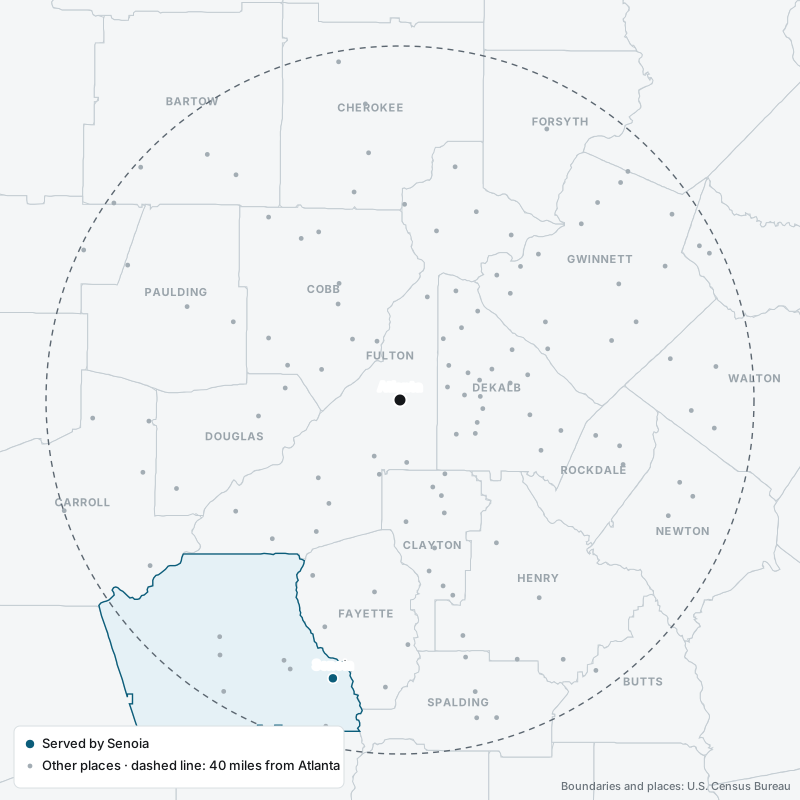
The city system serves Senoia. Because its rules also cover people outside the city who use the system by agreement, a Senoia sewer bill means these rules apply even beyond the city limits. Nearby towns and unincorporated areas are listed in the directory.
| City or community | Sewer service | Plumbing permits | Local note |
|---|---|---|---|
| Senoia | Yes | City of Senoia Building Department | City code makes owners responsible for the building sewer up to the city's tap, where the city's lateral begins. |
Next step
If you are building in Senoia, tell your designer and plumber about the garbage disposal ban for new residential developments before the kitchen is planned.
Provider rules change. Every statement above links to the provider's own page or ordinance as checked in October 2026 — if a source and this page disagree, the source wins. All places within 40 miles of Atlanta and their providers are listed in the metro Atlanta sewer directory.
Sources
- City of Senoia (archived September 13, 2024): Waste Water and Sewer Management
- City of Senoia (archived February 8, 2025): Building Inspections
- City of Senoia (archived August 4, 2025): Public Notice: Water Discoloration
- Senoia Code of Ordinances (Municode): Sec. 70-77. Definitions
- Senoia Code of Ordinances (Municode): Sec. 70-80. Connection to public water and wastewater systems required
- Senoia Code of Ordinances (Municode): Sec. 70-82. Connection to public sewer required upon failure of septic tank
- Senoia Code of Ordinances (Municode): Sec. 70-83. Separate building sewers required
- Senoia Code of Ordinances (Municode): Sec. 70-91. Prohibited discharges
- Senoia Code of Ordinances (Municode): Sec. 70-101. Fats, oils and grease/BOD ordinance
- Georgia Department of Public Health: County Environmental Health Offices
- Georgia 811: The 811 Process