Sewer Line Belly: What a Sag in the Pipe Means and How It's Fixed
My sewer camera inspection found a belly in the line. What does that mean, and does it need to be fixed?
Short answer
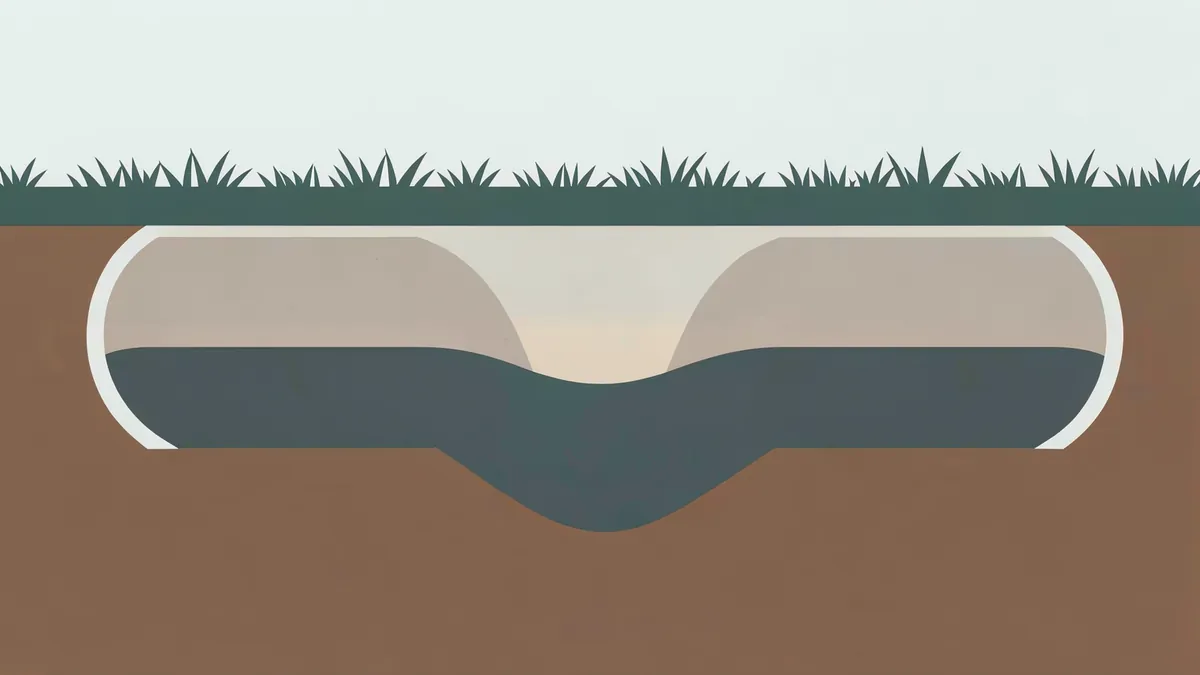
A belly is a stretch where the sewer pipe has lost its steady downhill slope, so water and solids collect in a low spot. A shallow sag may be managed with periodic cleaning, but a deep or long one that keeps catching clogs usually has to be dug up and re-laid on firm bedding, because a liner can't restore slope.
On this page
A sewer camera report that mentions a "belly" or a "sag" is describing a low spot: a stretch of the buried line that dips instead of running steadily downhill, so water stays in it after the house stops draining. A shallow one may cause little trouble. A deep or long one can trap paper, grease and other solids until the line clogs at the same spot again and again.
This guide explains what a sewer line belly is, what makes a pipe sag, how a belly looks and is measured on video, how much sag matters, and which repairs can actually fix one.
What a belly in a sewer line is
Sewer lines run on gravity, so slope is everything. Georgia builds its plumbing code on the International Plumbing Code (IPC), and the 2024 IPC wants horizontal drainage piping laid straight and at a constant slope, falling at least 1/8 inch per foot when the pipe is 3 to 6 inches in diameter; smaller drains, 2 1/2 inches or less, need 1/4 inch per foot (2024 IPC, Section 704.1). House sewer lines are typically 4 to 6 inches in diameter (EPA), so a 4-inch line should drop at least an inch every 8 feet.
A belly interrupts that steady fall. The pipe runs downhill into a low point and then uphill out of it, and the uphill half slopes against the flow, which plumbers call backgrade. Water fills the dip up to its downstream lip and sits there after the flow stops. Solids settle where the water slows, so a deep or long belly can become the place where clogs keep forming.
Georgia has adopted that 2024 edition, along with state amendments, but the Department of Community Affairs has published two start dates for it: January 1, 2026 in an earlier memo, and January 1, 2027 in its December 2025 announcement (Georgia DCA). Your city or county building department can say which edition it enforces; the slope, support and relining rules quoted here are from the 2024 text.
What causes a sag in a sewer pipe
A buried pipe keeps its slope only as long as the soil under and beside it holds. The 2024 IPC requires buried piping to be supported along its entire length, with solid, continuous bearing between joints, and it doesn't allow a pipe to be propped on blocks to set its grade. A trench dug too deep must be brought back up with sand or fine gravel compacted in layers no thicker than 6 inches, and soft, poor-bearing soil at the bottom must be dug out at least two pipe diameters deeper and replaced with gravel, crushed stone or concrete (2024 IPC, Sections 306.1 and 306.2).
Georgia's version of the backfill rule calls for earth free of rocks and broken concrete, tamped in 6-inch layers until at least 6 inches of tamped earth sits over the top of the pipe, compacted under and beside the pipe and brought up evenly on both sides so the pipe stays aligned (Georgia DCA, Section 306.3). The same amendments set a building sewer's minimum depth at just 6 inches below grade (Section 305.4.1), so a line can legally run quite shallow.
When that support fails, the pipe settles. EPA's report to Congress on sewer overflows lists bedding or backfill that no longer supports the pipe among the most common problems in house laterals, and adds that changing groundwater levels, variable soils, traffic, erosion and washouts all stress laterals and their joints. Not every slope problem comes from settling, either: EPA's guidance for sewer utilities lists insufficiently sloped sewers, a design flaw, among the problem areas to track (EPA).
How a belly shows up on camera, and how other defects look
On video, a belly looks like water getting deeper as the camera moves forward, sometimes until the lens goes under, then falling back to its normal level. NASSCO, whose certification program trains camera operators to code defects the same way, teaches them to record three things about a sag: where it begins, how deep the water gets at its lowest point, and where it ends (NASSCO). A sag shorter than 3 feet is recorded at its deepest point, and depth is given as a percentage.
Not every rise in the water is a sag. The same NASSCO article warns that debris or an obstruction under the water, or simply extra flow from other connections or groundwater, can look like one, and that water reading 60 percent or more while the lens stays dry suggests the camera is riding over a deposit. That's why it stresses recording where the water returns to normal. InterNACHI's sewer scope standard has inspectors report more than 1 inch of standing water as a condition needing correction (InterNACHI).
A camera inspection finds more than sags. Here is how the common defects tend to look on screen:
| On the video | What it usually means |
|---|---|
| Water deepening, then returning to its normal level | A belly or sag |
| A step or gap where two pipe sections meet | An offset or separated joint; InterNACHI's standard reports offsets over 1/4 inch |
| Hair-like masses at joints or cracks | Roots, which can fill the pipe at each point where they enter (Traverse City) |
| A line or opening in the pipe wall | A crack, fracture or break; see signs of a broken sewer line |
| A caved-in or flattened wall, soil in the pipe, or a camera that can't pass | A possible collapsed sewer pipe |
For locating marks, defect codes and what to get in writing, see what a sewer camera inspection shows.
How much sag is too much?
The plumbing code sets the slope for laying new pipe; it doesn't set a tolerance for an old line that has settled. Three things decide how much a belly matters:
- Depth. The deeper the water compared with the pipe, the more of the opening is lost and the more it can hold.
- Length. Because NASSCO has operators record where a longer sag begins and ends, a good report tells you how long it is.
- History. A belly sitting right where your clogs keep forming matters more than one in a line that drains fine.
One public program shows how inspectors weigh it. The City of San Mateo, California's sewer lateral inspection form scores a sag 3 points if it is shallow (under 30 percent), 4 if medium (30 to 50 percent) and 5 if deep (over 50 percent). A structural defect scored 5 fails the lateral on its own, while shallower sags add to a total that fails the line once it reaches 13 (City of San Mateo). That's one California city's rule, not a Georgia standard, but the logic travels: how deep the sag is, plus whatever else is wrong with the line.
Repair options for a sagging sewer line
Cleaning, digging and replacement can each be the right answer. Lining is the one that can't help.
- Scheduled cleaning. A cable machine or water jetter clears what collects in the low spot but leaves the dip in place, so the buildup returns. EPA's guidance asks sewer utilities to identify problem areas, sags among them, and tie them to a preventive cleaning schedule. For a shallow belly in an otherwise sound line, the same approach can work at home; drain cleaning methods explained compares the tools.
- Dig up and re-lay the low section. The pipe is exposed, the bedding rebuilt so the pipe is supported along its length, and the section re-laid at grade. Before an excavator arrives, Georgia law requires a locate request through Georgia 811 for any digging with powered equipment (O.C.G.A. § 25-9-6), and Georgia's plumbing amendments keep a building sewer trench open until the new piping has been inspected, tested and approved (Section 306.5).
- Replace the line. Several sags, or a line that never had enough fall, may call for new pipe along the whole run.
- Not lining. Under the 2024 IPC, the code official who reviews the video taken before a relining job can't permit relining of pipe with backgrade or too little slope; those sections have to be excavated and re-laid with new pipe and fittings (2024 IPC, Sections 717.4 and 717.5). A liner cures against the old pipe's wall, so it keeps the old pipe's dip.
- Ask how bursting would handle it. Pipe bursting drags a bursting head through the old pipe and pulls the new pipe in right behind it (EPA), so ask how the contractor will lift the new pipe out of the low spot instead of tracing it.
Sewer line repair options compares the methods, permits and digging rules in more detail.
Questions to ask, and what not to do
Before you agree to any repair for a belly, ask the company that ran the camera:
- For each sag, where does it start, how deep is the water at its lowest point as a percentage of the pipe, and where does it end?
- Was the line cleaned before the video, and was anyone running water in the house?
- Does the sag sit where the clogs have been happening?
- How deep is the pipe at that spot, and is it in your section of the line or your sewer provider's?
- For a re-lay or replacement, will you get video of the new pipe before the trench is filled?
Don't accept lining as the fix for a sag, and don't let a single shallow belly in an otherwise sound line become the reason for a whole new line without a second opinion on the video.
Frequently asked questions
Is a sewer line belly an emergency?
Rarely by itself. It becomes urgent when the line backs up. If sewage comes up through a floor drain or tub, stop using water and call a licensed plumber, or your sewer provider if neighbors have the same problem.
Can a newer sewer line have a belly?
Yes. Slope depends on how the trench was dug, bedded and backfilled, and EPA traces many lateral defects to improper construction. If a recently installed line shows a sag, ask the installer about its workmanship warranty and the inspection record for the permit.
Does a remodel require checking the sewer line's slope?
The code addresses it directly for one kind of project. When a home's entire drainage system is replaced, the 2024 IPC requires the existing building sewer, and any drains under a concrete slab that will serve the new system, to be examined internally to confirm that they slope the right way and aren't broken or blocked (Section 703.4). For smaller remodels, a camera look before new fixtures go in is a sensible way to avoid tying them into a sagging line.
Will hydro jetting fix a belly?
No, but it helps you see it. Jetting flushes out grease and solids, and because NASSCO warns that debris under the water can pass for a sag, a video after cleaning gives a truer picture of how deep the dip really is.
Can a belly get worse?
It can if whatever caused it is still at work, such as soil that keeps settling or washing out. The practical way to know is to compare two videos of the same line taken months apart, with the start, deepest point and end of the sag recorded the same way. This guide offers general information, not plumbing advice; for a verdict on your own line, ask a licensed plumber to go through the video with you.
Next step
Ask the company that scoped your line for the full video and a written note of each sag's start, deepest water level and end, then compare every repair quote against that record.
Sources
- International Code Council: 2024 International Plumbing Code, Chapter 7: Sanitary Drainage
- International Code Council: 2024 International Plumbing Code, Chapter 3: General Regulations
- Georgia Department of Community Affairs: Georgia State Amendments to the International Plumbing Code (2024 Edition)
- Georgia Department of Community Affairs: New Georgia Codes and Amendments - Effective January 1, 2027
- NASSCO: Identifying and Classifying a True Miscellaneous Water Level Sag (Tech Tips, February 2019)
- International Association of Certified Home Inspectors (InterNACHI): InterNACHI's Sewer Scope Inspection Standards of Practice
- City of San Mateo, California: Sewer Lateral Inspection Form (rev. June 17, 2024)
- U.S. Environmental Protection Agency: Guide for Evaluating Capacity, Management, Operation, and Maintenance (CMOM) Programs at Sanitary Sewer Collection Systems (EPA 305-B-05-002)
- U.S. Environmental Protection Agency: Report to Congress on the Impacts and Control of CSOs and SSOs, Appendix L: Technology Descriptions (2004)
- U.S. Environmental Protection Agency: Water Technology Fact Sheet: Pipe Bursting (EPA 832-F-06-030)
- City of Traverse City, Sewer and Water: Tree Root FAQ
- Georgia 811: Georgia Dig Law (Georgia Underground Facility Protection Act, O.C.G.A. Title 25, Chapter 9)
Guides that pick up where this one stops.
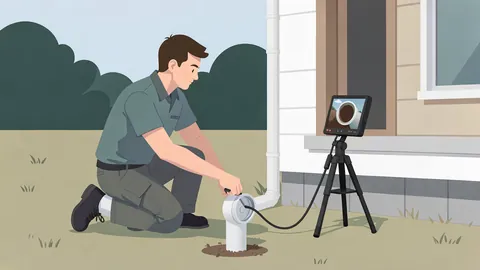
Sewer Camera Inspection: What It Shows and What to Ask For
What a sewer camera inspection shows and misses, how a sonde marks the problem spot, what NASSCO defect codes mean, and what to get in writing.
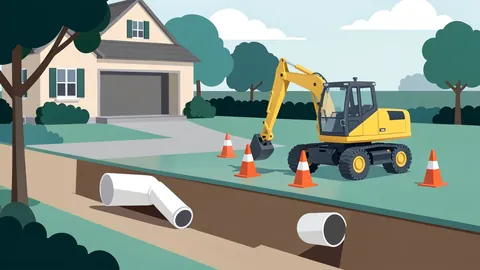
Sewer Line Repair: Spot Repair, Lining, Bursting or Replacement
How spot repair, cured-in-place lining, pipe bursting and open-trench replacement compare for a Georgia sewer line, plus permits, 811 and safety.
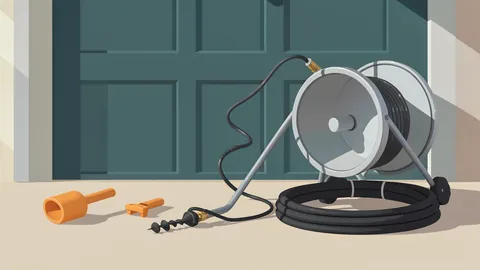
Snaking, Hydro Jetting or a Camera? Which Drain Service You Need
How plungers, augers, drum and sectional machines, hydro jetting, camera inspection and excavation differ, and how to match the method to your clog.