East Point Sewer and Drain Guide for Homeowners
Sewer provider: City of East Point Water & Sewer Department · Fulton County
At a glance
East Point runs its own sewer system, and its Water & Sewer Department maintains the mains and responds to overflows and backups around the clock. City code says the city won't clean or repair sewer lines on private property unless it caused the problem, so the line from your house is yours to keep clear and repair.
On this page
East Point runs its own utilities, including water, sewer, electricity and solid waste (Customer Care), so the city's code, not Fulton County's or Atlanta's, decides who handles a sewer problem at your house. Here is what that code and the city's Water & Sewer Department say.
Who provides sewer service here
The city code commits East Point to providing water, electricity, sanitation and sewer services to its residents and businesses (§ 8-2001). The Water & Sewer Department's field operations staff of about 55 serves more than 11,000 customer accounts, and the system includes more than 153 miles of sewer mains (Water & Sewer). Its Sewer Line Maintenance Division installs, repairs and maintains the mains and manholes, locates and installs taps and stubs, and runs closed-circuit TV inspections of new and existing lines.
To confirm you're a city sewer customer, check your utility bill. The Customer Care Department handles electric, water, sewer and solid waste accounts, and new service is set up through its office (Customer Care). City code charges a monthly sanitary sewer maintenance fee to every water customer whose property has sewer service available (§ 8-2312).
The department also posts public notices of major spills. In September 2025 it reported that a collapsed 18-inch trunk line sent about 18,800 gallons of untreated wastewater into the South River (Water & Sewer).
Where your responsibility ends
East Point's code draws a firm line at private property. The city won't install, enlarge, extend, repair, clean out, open up, relocate or remove any sewer on private property, other than trunk sewers, for the property owner (§ 8-2320). The only exception is when the city, without prompting by the owner, violated a specific duty it owed and that violation created or substantially contributed to the problem; even then, the city's governing authority decides each case on its merits and limits the work to the extent of the breach.
The street is the city's to open. Only the city may cut into a street for sewer service, the city's construction department makes those cuts at the applicant's expense, and the fee covers a six-inch house connection from the wye at the main to the property line (§§ 8-2307 to 8-2309).
Two more rules affect older lots. An owner may connect a second house to the first house's service line only with a public works permit and a perpetual easement to the city, and the same section disclaims any city duty to maintain or repair sewer lines beyond the usual building line from the street (§ 8-2304). And a service sewer may run under a building only where public works allows it under the building it serves (§ 8-2313).
The code doesn't say in plain terms who maintains the street section of a house connection after the city installs it, so ask the Water & Sewer Department before you hire anyone to dig near the street. The guide to who is responsible for the sewer line compares other providers' rules.
If sewage backs up
The Water & Sewer Department responds to on-call emergencies 24 hours a day, seven days a week, for water, sewer, meter and stormwater problems, and its Sewer Line Maintenance Division handles 24-hour response to sewer overflows and backups (Water & Sewer). The department's contact section lists an office line and a separate after-hours number; save both before you need them.
Because the city doesn't clean private lines unless it caused the problem (§ 8-2320), a blockage in your own lateral is a job for your plumber. The sewer backup guide covers the first steps inside the house and how to tell a main-line problem from a single clogged drain.
Repairs, permits and inspections
Plumbing permits come from the city's Planning & Community Development department. Applications go through the city's BS&A online permitting portal, no work may start before the permit is issued, and the permit holder is either the homeowner, who must provide a tax bill or deed, a homeowner's affidavit and a state-issued ID, or a contractor with a current business license and state certification (plumbing permit application). Walk-in application hours are Monday through Friday, 8:30 a.m. to 3:30 p.m. (Permits), and next-day inspections must be scheduled by 3:30 p.m. (Building Inspections).
Any sewer work that requires opening the street goes through the city, which alone may make the cut (§ 8-2307). Georgia 811 asks for a free locate request at least three business days before any digging, and state law requires one before digging with powered equipment (Georgia 811; law).
Grease, wipes and rainwater
East Point's Water & Sewer page says about 85 percent of grease-related sewer blockages and overflows start in residential areas, and that grease buildup leads to backups that can overflow into homes and streets (Water & Sewer). Its advice: pour cooled fats, oils and grease into a jar and put it in the trash, keep foods such as dairy and meat out of the kitchen drain and garbage disposal, or take used grease to one of several Fulton County transfer and recycling centers.
The city's grease ordinance covers commercial kitchens and other commercial generators, not residential users (§ 8-2352). For wipes and other things that shouldn't go down a drain, see what not to flush or pour.
Claims and reimbursement
The city's Applications & Forms page links a Report and Proof of Claim form that lists sewage as a claim type and asks for the amount and a description of the claim (Applications & Forms; claim form). The form says the city doesn't admit liability by accepting it, and that you must keep damaged items in case city staff or an insurance adjuster needs to inspect them.
Georgia law sets the deadline for claims against any city: a written claim to the city's governing authority within six months of the event, stating the time, place and extent of the injury and the specific amount of damages sought, served on the mayor or council chair in person or by certified mail or statutory overnight delivery (O.C.G.A. § 36-33-5). The city then has 30 days to act on it. This is general information, not legal advice; an attorney can tell you how it applies to your case, and the sewer backup insurance guide covers your own policy.
Cities and communities served
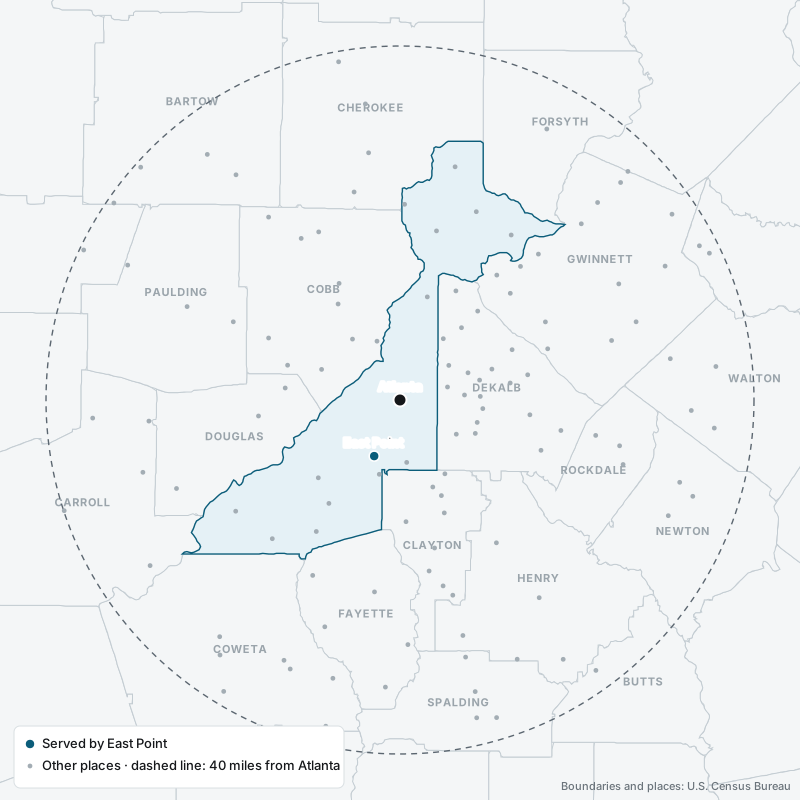
This page covers homes in the City of East Point, in Fulton County. Neighboring College Park and Hapeville run their own sewer systems, and Atlanta has its own page; the local directory lists the rest.
| City or community | Sewer service | Plumbing permits | Local note |
|---|---|---|---|
| East Point | Yes | City of East Point Planning & Community Development | City code bars the city from cleaning or repairing private sewer lines unless it caused the problem; sewer crews answer overflows and backups 24 hours a day. |
Next step
Find the Water & Sewer Department's after-hours number on its page and save it now. If sewage backs up, call the department to check the city's main before you pay a plumber to dig near the street.
Provider rules change. Every statement above links to the provider's own page or ordinance as checked in October 2026 — if a source and this page disagree, the source wins. All places within 40 miles of Atlanta and their providers are listed in the metro Atlanta sewer directory.
Sources
- City of East Point: Water & Sewer
- City of East Point Code of Ordinances (Municode): Sec. 8-2320. Liability of city resulting from sewer malfunctioning; limitation; investigation
- City of East Point Code of Ordinances (Municode): Sec. 8-2309. Fees to include property connections
- City of East Point Code of Ordinances (Municode): Sec. 8-2304. Sewer cross-connections
- City of East Point: Customer Care
- City of East Point Planning & Community Development: Plumbing Permit Application
- City of East Point: Permits
- City of East Point: Applications & Forms
- City of East Point: Report and Proof of Claim
- FindLaw: O.C.G.A. § 36-33-5 (notice of claims against municipal corporations)
- Georgia 811: The 811 Process