Fairburn Sewer and Drain Guide for Homeowners
Sewer provider: City of Fairburn Utilities Department · Fulton County
At a glance
The City of Fairburn provides sewer service to most homes in the city through its Utilities Department, though not every service reaches every area. The city maintains the sewer mains in the street, and the owner is responsible for repairs from the connection at the main into the house.
On this page
Fairburn runs its own electric, water and sewer utilities (Utilities Department), and its code sets a firm schedule for homes that aren't on the sewer: septic systems must be inspected and pumped at least every five years (§ 59-146).
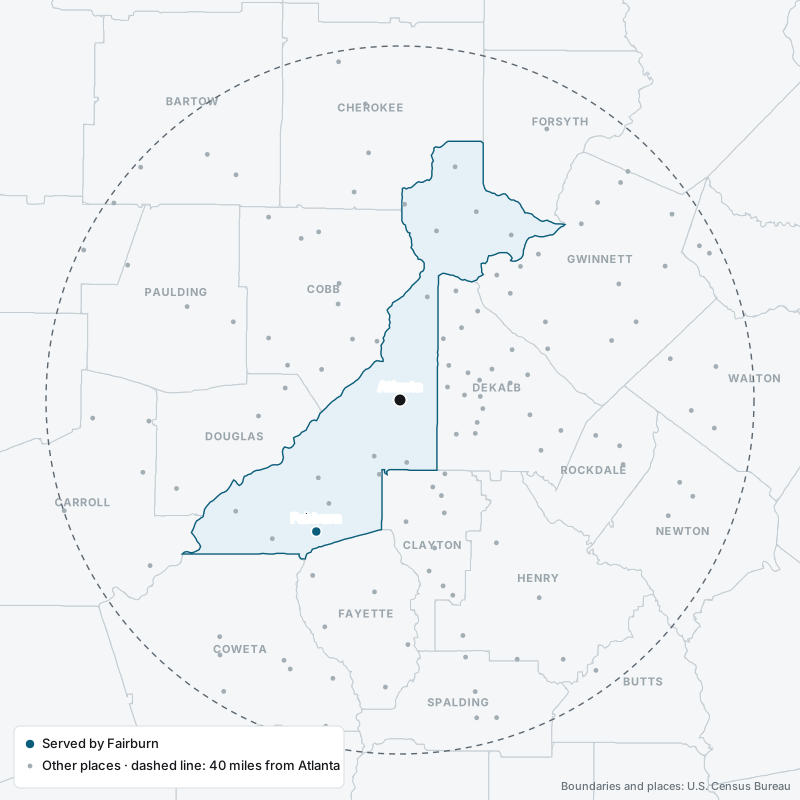
Who provides sewer service here
The city provides electricity, water, sewer and sanitation to most of its residential and business customers, directly or through agreements with outside contractors, but not all services are available in all areas (Utilities Department). The same page warns that a Fairburn mailing address doesn't necessarily mean you live inside the city limits. New service is started, and accounts paid, at City Hall, and the city mails monthly bills that cover sewer along with electricity, water, stormwater and sanitation (§ 59-59).
Fulton County, which runs sewer in much of south Fulton, hasn't permitted or inspected sewer projects that connect inside Fairburn since September 2022 (Fulton County), so connection questions in the city go to Fairburn.
Where your responsibility ends
The city's answer is short. It maintains the sewer mains in the street, and the property owner is responsible for repairs to the sewer from its connection to the main into the house (FAQ). Because the mains run in the street, that includes the part of your line under the street.
City code adds the usual owner obligations (§ 59-143):
- The owner pays all costs of installing and connecting the building sewer and must indemnify the city against any loss the installation causes.
- Every building needs its own building sewer, except a rear building on an interior lot with no other route.
- An old building sewer may serve a new building only after the city examines and tests it.
- A building drain too low for gravity flow must be pumped up at the owner's expense.
Cleanout locations vary with the age of the line. The city's 2015 water and sewerage standards say lateral cleanouts must be placed at the edge of rights-of-way and easements (standards), while an older standard detail, dated 2004, shows the cleanout two feet inside the property line (detail S013). Look in both places, and see the cleanout guide for what to look for.
Repairs, permits and inspections
Fairburn's Building and Inspection Division handles permits and inspections. Its permit list covers trade work: anything beyond minor repair work by the homeowner needs a permit, and any work by a licensed tradesperson requires one (Building Division). Plumbing permits use the city's electric, mechanical and plumbing permit application (application).
Work on the connection to the public sewer needs a separate written permit from the city, with a permit and inspection fee. The applicant must notify the city before any backfill, when the building sewer is ready for inspection, and the connection is made under the city's supervision (§ 59-143). For choosing between repair methods, see sewer line repair options.
Georgia 811 asks for a free locate request at least three business days before any digging, and state law requires one before digging with powered equipment (Georgia 811; law).
Grease, wipes and rainwater
The city's grease door hanger, from the regional Clean Water Campaign, calls fats, oils and grease the number one cause of sewer blockages in metro Atlanta (FOG information). It asks residents to let grease cool and pour liquids into a sealable container for the trash, scrape solids and dry-wipe pans into the trash, and use a sink strainer, and it notes that a garbage disposal only chops grease into smaller pieces. It also warns that residents may be held liable for the damage and cleanup costs of a sewer backup they cause.
The city's grease control program isn't only for restaurants: food service establishments and multi-residential complexes must both comply with its FOG Control Program manual (§ 59-144). Apartment and condo complexes are covered as well as restaurants. Rainwater stays out of the sewer: no one may connect roof downspouts, exterior foundation drains, areaway drains or other sources of runoff or groundwater to a building sewer or drain that leads to the public sewer (§ 59-143). The what not to flush guide covers wipes and other problem items.
Septic homes in this area
Where a public sewer is within 100 feet of the property line, the owner must connect within 90 days of official notice (§ 59-141). A new private system needs a written permit from the city, the city may inspect at any stage, a soil absorption system also needs county health department approval, and once sewer becomes available the home must connect within 60 days (§ 59-142).
Section 59-146 sets the maintenance rule (§ 59-146):
- Every septic system in the city must be serviced, meaning both an inspection of its components and a pump-out of its tanks, at least every five years from the last certified service.
- The work must be done by state-certified septic service personnel registered with the county health department, who certify that the system is in proper working order.
- Owners must keep records of installation, maintenance and inspections, including on the city's septic tank guide and maintenance record file.
- The city won't issue a building permit to renovate or modify an existing home whose septic system isn't in compliance.
The Fulton County Board of Health's environmental health program permits and inspects septic systems in the county (Board of Health). For pumping basics, see septic tank pumping in Georgia.
Cities and communities served
This page covers homes inside the City of Fairburn, in Fulton County. If your Fairburn mailing address is outside the city limits, check the Fulton County page and the local directory.
| City or community | Sewer service | Plumbing permits | Local note |
|---|---|---|---|
| Fairburn | Yes | City of Fairburn Building and Inspection Division | The city maintains the mains in the street; owners repair the line from the main to the house. Septic systems must be inspected and pumped at least every five years. |
Next step
If your home is on septic, find the date of its last certified inspection and pump-out. Fairburn requires one at least every five years, and a missing record can hold up a renovation permit.
Provider rules change. Every statement above links to the provider's own page or ordinance as checked in October 2026 — if a source and this page disagree, the source wins. All places within 40 miles of Atlanta and their providers are listed in the metro Atlanta sewer directory.
Sources
- City of Fairburn: Utilities Department
- City of Fairburn: Who is responsible for the repair to the water and sewer lines coming into my house? (FAQ)
- City of Fairburn Code of Ordinances (Municode): Sec. 59-143. Building sewers and connections
- City of Fairburn Code of Ordinances (Municode): Sec. 59-146. On-site sewage treatment system management
- City of Fairburn: Water & Sewerage Standards (2015)
- City of Fairburn: Standard Detail S013: Sewer Service Lateral and Cleanout
- City of Fairburn: Building Division
- City of Fairburn: Electric, Mechanical and Plumbing Permit Application
- City of Fairburn: FOG information (door hanger)
- City of Fairburn Code of Ordinances (Municode): Sec. 59-144. Regulation of use of the public sewers
- Fulton County Board of Health: Well and Septic Inspection
- Georgia 811: The 811 Process