Grantville, GA Sewer Line and Drain Guide for Homeowners
Sewer provider: City of Grantville Public Works and Utilities · Coweta County
At a glance
The City of Grantville runs its own water, sewer, natural gas and electric utilities. Its published diagram makes the property owner responsible for the private sewer line all the way to the connection at the city main, while the code has the city make the tap from the property line into the main. For after-hours emergencies such as sewer blockages, the city tells residents to dial 911.
On this page
Grantville, in Coweta County, runs its own utilities, sewer included, and it publishes diagrams showing who owns which part of the sewer line. They are worth studying before anything goes wrong, because they leave the whole pipe from the house to the city main with the homeowner.
This page covers what the City of Grantville publishes for households: the responsibility diagrams, what the code says about connections, the after-hours rule, permits, what the sewer can't take, and septic.
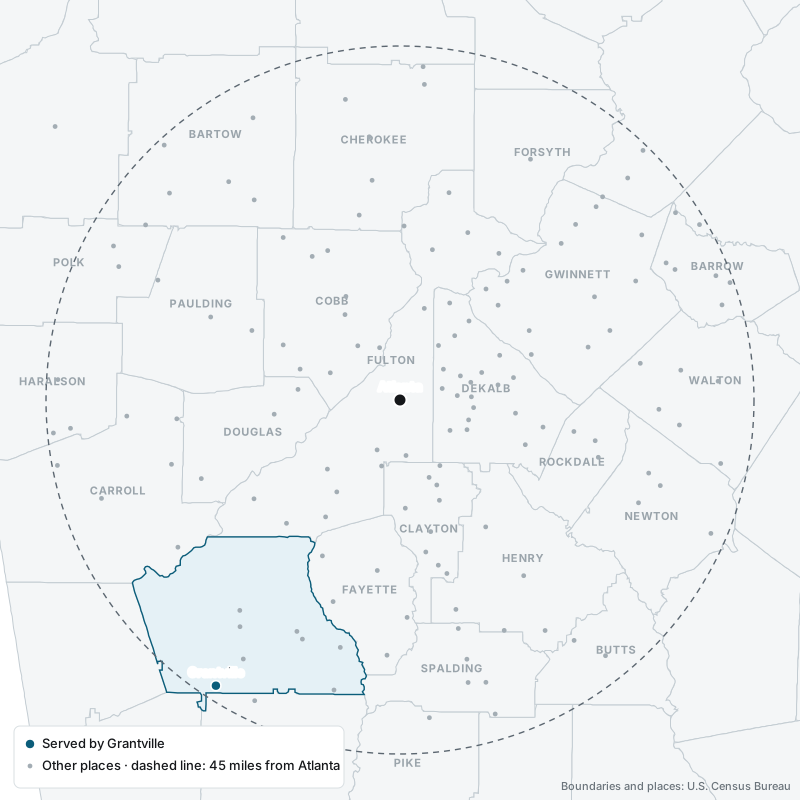
Who provides sewer service here
The City of Grantville's utilities page covers natural gas, electric and water service, and City Hall handles utility needs Monday through Thursday from 7 a.m. to 5:30 p.m. (Grantville Utilities). The Public Works page lists a Director of Public Works and Utilities and offers a pool-fill sewer credit request form for customers who fill a swimming pool (Public Works).
New buildings within 1,000 feet of a city water, sewer, gas or electric facility must connect to the city utility within 30 days after notice from the director of public works and utilities or the city manager; an owner who doesn't connect is charged a service availability fee (Grantville code, Sec. 38-6). A sewer line item on your Grantville utility bill confirms you are a customer.
Where your responsibility ends
Grantville's "Sewer Lines Only" diagram marks the city sewer main as the city's responsibility and labels the private sewer line, from the house to the sewer connection at the main, as the property owner's (Sewer Lines Only diagram). A second diagram covering both utilities ends the city's water responsibility at the meter and again draws the homeowner's sewer lateral all the way to the sewer main under the street (Sewer and Water Lines diagram).
The code adds a twist on installation. The owner pays all costs of connecting the building sewer from the building to the city property line, but any connection from the city property line into the public sewer is made by the city, for which the owner pays the standard tap fee (Grantville code, Sec. 38-32(c)). If a plumber finds a problem in the section under the street, ask the city in writing who will repair it before anyone digs. Who is responsible for the sewer line compares Grantville's approach with other Georgia providers.
If sewage backs up
During business hours, call City Hall. For after-hours emergencies such as water leaks, sewer blockages, natural gas leaks or electrical lines down, the city tells residents to dial 911 (Grantville Utilities; Public Works).
Because the diagram puts the whole private line on the owner, a backup that stays inside one house is usually a job for a licensed plumber, while sewage rising from a manhole or affecting neighbors points to the city main. Main sewer line clog signs helps sort out which you have, and what to do in a sewer backup covers cleanup safety.
Repairs, permits and inspections
Grantville issues its own permits. Its forms page posts building permit forms, a trade permit application and the city's 2026 construction and permit process (Forms, Permits, and Applications).
Sewer connections are regulated in Chapter 38. The owner or an agent applies for a residential building sewer permit on a city form and pays the permit and inspection fee; building sewers must meet the city's construction rules; and connections that would carry roof or yard drainage are barred unless the superintendent approves them (Sec. 38-32).
Since the owner's line runs to the main, a repair may mean digging near the street. Georgia 811 asks for a free ticket at least three business days ahead (Georgia 811); state law makes the ticket mandatory for mechanized digging, and the city's locating duty for a lateral stops at the edge of the public right-of-way (Georgia dig law). Sewer line repair options compares digging with trenchless methods.
Grease, wipes and rainwater
Grantville's code bars stormwater, groundwater, roof runoff and subsurface drainage from the sewer, except stormwater from limited areas that the superintendent allows (Sec. 38-33(a)). It also bans lubricating oils and greases, flammable liquids and solids such as rags, plastics, bones and paper cups, and it allows home garbage grinders but requires the superintendent's approval for any grinder with a motor over three-quarters horsepower (Sec. 38-33).
For kitchen grease, wipes and what belongs in the trash instead, see what not to flush or pour.
Septic homes in this area
Where public sewer isn't available, a private wastewater system needs a written permit signed by the city superintendent, with an inspection within 48 hours of the owner's notice and before anything is covered. No soil absorption system is permitted on a lot smaller than 24,000 square feet, and once public sewer becomes available the owner must connect within 90 days and fill the old tank with clean gravel or dirt (Sec. 38-31).
Coweta County Environmental Health, at 22 East Broad Street in Newnan, takes residential septic and septic repair permit applications (District 4 Public Health). If you are on septic, septic tank pumping in Georgia explains how often to pump and what to watch for.
Cities and communities served
Grantville's sewer serves no other place in this directory. Elsewhere in Coweta County, sewer comes from other providers; see the Coweta County page, the Newnan page and the local directory.
| City or community | Sewer service | Plumbing permits | Local note |
|---|---|---|---|
| Grantville | Yes | City of Grantville (building and trade permits) | The city's diagram puts the private sewer line, all the way to the city main, on the property owner; after-hours sewer blockages go to 911. |
Next step
Save the city's sewer responsibility diagram, then have a plumber camera your line from the house cleanout so you know its condition, since Grantville treats the whole run to the main as yours.
Provider rules change. Every statement above links to the provider's own page or ordinance as checked in October 2026 — if a source and this page disagree, the source wins. All places within 45 miles of Atlanta, plus Rome and their providers are listed in the metro Atlanta sewer directory.
Sources
- City of Grantville: Utilities
- City of Grantville: Responsibility of City and Property Owner - Sewer Lines Only
- City of Grantville: Responsibility of City and Property Owner for Sewer and Water Lines
- City of Grantville: Public Works
- City of Grantville (Municode): Code of Ordinances, Chapter 38, Article II: Sewer System
- City of Grantville (Municode): Code of Ordinances, Sec. 38-6: Mandatory connection to the city utility
- City of Grantville: Forms, Permits, and Applications
- District 4 Public Health, Georgia Department of Public Health: Coweta County Health Department and Environmental Health
- Georgia 811: The 811 Process
- Georgia 811: Georgia Dig Law (O.C.G.A. Title 25, Chapter 9)