Hapeville Sewer and Drain Guide for Homeowners
Sewer provider: City of Hapeville Public Works, Water and Sewer Division · Fulton County
At a glance
Hapeville's Water and Sewer Division maintains the city's sewer mains, and the city's wastewater goes to Atlanta's system for treatment. Hapeville treats your whole sewer lateral, from the house to the main under the street, as private property, so keeping it clear and repairing it are your job.
On this page
Hapeville maintains its own water and sewer lines (Water & Sewer). Its handout on sewer laterals spells out where your pipe ends, at the main under the street, and what the city expects when you repair it (Understanding Sewer Laterals).
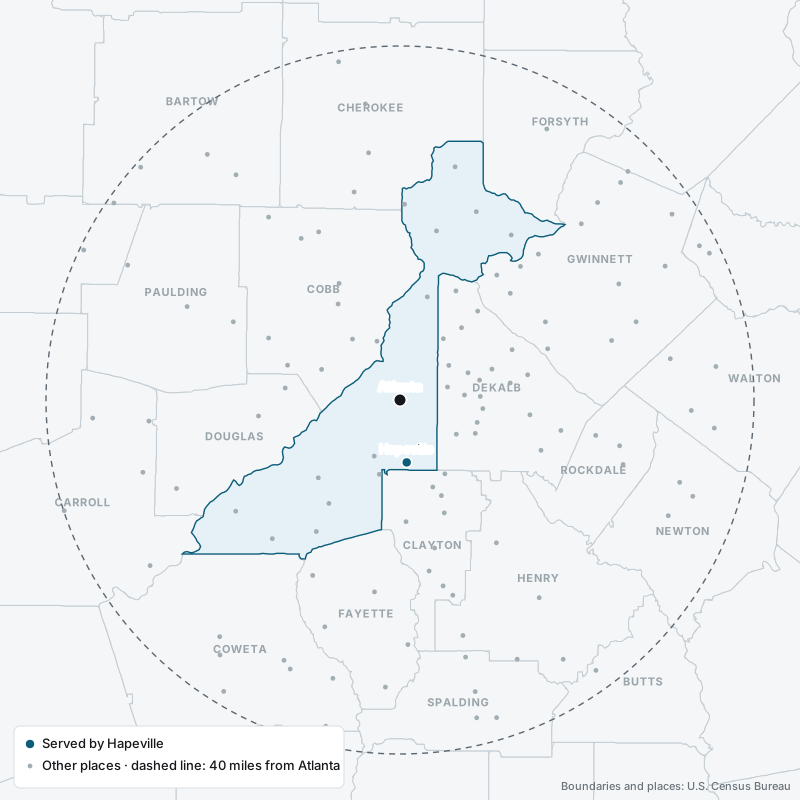
Who provides sewer service here
The Water and Sewer Division of Hapeville's Public Works Department maintains all water and sewer lines in the city and handles water, sewer and meter repairs (Water & Sewer). Public Works also manages the city's building permits (Public Works).
Treatment happens elsewhere. Hapeville's wastewater is discharged to the City of Atlanta's sewer system for treatment and disposal, and Hapeville shares the cost of operating and maintaining Atlanta's system, including capital improvement costs allocated to the city (Sewer Rate Increase). In September 2026 the city announced a sewer rate increase effective November 1, 2026, with another step in November 2027, to fund its own sewer improvements and its share of Atlanta's capital costs.
Sewer service is set up through the city along with water and sanitation. New accounts start with the City of Hapeville Utilities Application, and the city requires proof of ownership or a lease, a state-issued photo ID and a deposit (Water & Sewer).
Where your responsibility ends
Hapeville's handout defines the sewer lateral as the pipe connecting the sinks, drains and toilets in your home to the city sewer main, which usually runs in the street. It says the entire length of the lateral, from your home to its connection with the main underneath the street, is your private property, and that maintaining it, including keeping it clear of roots, grease and debris, is your responsibility (Understanding Sewer Laterals). The city's water department summary agrees: the city maintains the sanitary sewer mains, and owners are responsible for their laterals from the property all the way to the main (Water Department Responsibilities).
The handout also gives a sense of what to expect from your pipe. Newer plastic laterals with intact joints may work for years without trouble, while older laterals of concrete, clay or cast iron may have root intrusion or deteriorated sections and need regular inspection or more frequent cleaning. If you don't know your pipe material, the guide to old sewer pipe materials explains how to tell.
City code puts all costs of installing and connecting a building sewer on the owner, and requires a separate building sewer for every building, with a narrow exception for a rear building on an interior lot (§ 69-3-24).
If sewage backs up
Hapeville's handout says slow drains usually mean an obstruction in your lateral, which a licensed plumber or drain-cleaning specialist should be able to clear; if the lateral is broken, you'll have to repair it (Understanding Sewer Laterals). It adds that all city-related problems with sewer laterals must be inspected by city staff when they are first discovered. So if your plumber finds a problem that may involve the city's main, contact the city's Community Services staff before work goes further.
For other problems, the city's online Report a Concern form routes issues to the right department, and the form says urgent matters should go directly to Community Services (Report a Concern). The sewer backup guide covers safety and cleanup inside the house.
Repairs, permits and inspections
Building permits in Hapeville come from Public Works (Public Works), and the city's permit fee list includes a plumbing permit (Permits & Applications). Any connection to or opening of a public sewer needs a separate written building sewer permit, applied for on the city's form with a permit and inspection fee, and an existing building sewer can serve a new building only after the city examines and tests it (§ 69-3-24).
When a lateral is repaired, the handout asks you to contact Community Services before the repaired line is covered up, so the city can see it (Understanding Sewer Laterals). For the trade-offs between spot repairs, lining and replacement, see sewer line repair options.
Georgia 811 asks for a free locate request at least three business days before any digging, and state law requires one before digging with powered equipment (Georgia 811; law).
Grease, wipes and rainwater
The handout warns that fats, oils and grease can clog laterals and eventually block the sewer mains, and that being careful about what goes into drains, garbage disposals and toilets is the main way to avoid lateral problems (Understanding Sewer Laterals). Restaurants and other food service establishments must have grease-handling facilities approved by the city (§ 69-3-26). The what not to flush guide covers wipes and other problem items.
Rainwater has its own rule: city code bars connecting roof downspouts, foundation drains, areaway drains or other sources of surface runoff or groundwater to a building sewer that leads to the public sewer, unless the city approves it (§ 69-3-24).
Low-lying homes get specific advice. Hapeville's Water Department says any structure attached to a municipal sewer main at or below street level should have a sewer backflow preventer installed on its service lateral to help protect the property (Sewer Backflow Preventers). The backwater valve guide explains how these devices work and what the plumbing code requires.
Cities and communities served
This page covers homes in the City of Hapeville, in Fulton County. Because Hapeville's wastewater flows on to Atlanta's system, problems in Atlanta's mains are handled by Atlanta; see the Atlanta page and the local directory.
| City or community | Sewer service | Plumbing permits | Local note |
|---|---|---|---|
| Hapeville | Yes | City of Hapeville Public Works Department | The city says the entire lateral, up to the main under the street, is the owner's; call Community Services before covering a repaired lateral. |
Next step
If a plumber is about to repair or replace your lateral, call Hapeville's Community Services before the trench is backfilled. The city's handout says lateral problems must be inspected by city staff, and asks to see repaired laterals before they're covered.
Provider rules change. Every statement above links to the provider's own page or ordinance as checked in October 2026 — if a source and this page disagree, the source wins. All places within 40 miles of Atlanta and their providers are listed in the metro Atlanta sewer directory.
Sources
- City of Hapeville: Understanding Sewer Laterals
- City of Hapeville: Water Department Responsibilities
- City of Hapeville: Water & Sewer
- City of Hapeville: Sewer Rate Increase
- City of Hapeville: Sewer Backflow Preventers
- City of Hapeville: Public Works
- City of Hapeville: Permits & Applications
- City of Hapeville Code of Ordinances (Municode): Sec. 69-3-24. Building sewers and connections
- City of Hapeville Code of Ordinances (Municode): Sec. 69-3-26. Grease interceptor requirements
- City of Hapeville: Report A Concern
- Georgia 811: The 811 Process