Monroe, GA Sewer Line and Drain Guide for Homeowners
Sewer provider: City of Monroe Utilities Department (Monroe Utilities) · Walton County
At a glance
The City of Monroe's Utilities Department treats sewage at its Jack's Creek plant and runs more than 154 miles of sewer lines for about 6,700 customers. Monroe's code makes the owner pay for and maintain the building sewer, and it states that the city is not liable for damage from sewer backflow. Utility problems go to the department's 24-hour phone line.
On this page
Monroe sells nearly every utility a household uses, from electricity to internet service, and sewer is part of that package. Its sewer rules sit in Chapter 98, the utilities chapter of the city code, where some provisions apply to every city utility at once.
This page pulls together what the City of Monroe publishes on sewer for homeowners and renters: the system, what the code makes the owner maintain, how backups and damage are handled, the Code Department's permits, and the septic rules for homes without sewer.
Who provides sewer service here
The Monroe Utilities Department is a full-service municipal utility offering electric, natural gas, water, wastewater, cable television, internet and phone service. Its customer service office is at City Hall, 215 North Broad Street, and the department lists a 24-hour phone line on its page (Monroe Utilities). The utility began in 1904 as the Water, Light, and Gas Commission, which soon added wastewater service; the commission was abolished in 2005 and the utilities folded into city government.
Sewage is treated at the Jack's Creek Wastewater Treatment Plant, built in 1992 and upgraded in the early 2000s, which can treat 3.4 million gallons a day and serves about 6,700 customers. The collection system has more than 154 miles of sewer lines from 6 to 18 inches across, 1,500 manholes and eight lift stations (Wastewater Collection and Treatment).
The city can serve some properties outside its limits, but it makes no taps or connections there until the premises have been inspected and approved (Monroe code, Sec. 98-5). Your Monroe utility bill shows whether wastewater service is part of your account.
Where your responsibility ends
Under Monroe's code, the consumer of any city utility must maintain and keep in good repair all connections and apparatus used with that service (Sec. 98-23). For sewer, the owner pays every cost of installing and connecting the building sewer and indemnifies the city against damage the installation causes (Sec. 98-144(c)).
The code also lets the city act when a house sewer leaks. If a house sewer lets in groundwater or rainwater, the city may order the owner to repair it, charge a higher sewer rate to cover the extra treatment, or require the owner to disconnect from the city system (Sec. 98-144(m)). Where no wye fitting is available on a public sewer 12 inches or smaller, the city cuts the connection into the main at the owner's expense (Sec. 98-144(f)(7)).
The code doesn't spell out where city maintenance begins between your foundation and the main, so ask the Utilities Department before paying for digging near the street. The statewide responsibility guide explains the usual arrangements.
If sewage backs up
Call the Utilities Department's 24-hour line listed on its page if sewage is coming up from a manhole or you suspect the city's main (Monroe Utilities). If the cause is in the building sewer, Sec. 98-23 makes that the owner's repair, so a licensed plumber is the next call.
Monroe's code is blunt about damage: the city is not liable for damage to any utility customer caused by backflow of the sewerage system, a failure of supply, an interruption of service or any other cause outside its direct control (Sec. 98-8). That makes your own insurance and a working backwater device more important; see sewer backup insurance in Georgia and the backwater valve guide. For cleanup safety, follow what to do in a sewer backup.
Repairs, permits and inspections
Monroe's Code Department processes building permit applications and inspects building sites for compliance with safety and building codes (Code Department). It posts a plumbing permit application for residential and commercial work that asks for the plumber's license number and lists sewer systems and repairs among permitted items; a homeowner can check a box to apply as the owner rather than a contractor, and permitting hours are 8 a.m. to 4 p.m. (Plumbing Permit Application; Code Department Permits). Inspections are requested through an online form (Permit Portal).
The sewer code adds its own requirements. A written city permit is needed before anyone uncovers, connects to or alters a public sewer. Building sewers must be cast iron, ductile iron or PVC, at least 4 inches across with a slope of at least one-eighth inch per foot, and must not share a trench with the water service. Excavation is open trench unless approved otherwise, no backfill goes in until the work is inspected, and the connection is tested under the utilities director's supervision (Sec. 98-144).
Georgia 811 asks anyone planning to dig to submit a free ticket at least three business days ahead (Georgia 811), and the dig law requires one before mechanized digging. A sewer owner's locating help stops at the edge of the public right-of-way (Georgia dig law).
Grease, wipes and rainwater
Roof downspouts, foundation drains, areaway drains and other sources of surface runoff or groundwater may not be connected to a building sewer or building drain that reaches the public sewer (Sec. 98-144(h)). The code's list of banned solids reads like a household warning: rags, feathers, plastics, unground garbage, paper dishes, cups and paper towels, whether whole or ground in a garbage grinder (Sec. 98-146).
Monroe's grease control article is aimed at fats, oils and grease from industrial and commercial establishments, particularly kitchens that prepare and serve food (Article V, Sec. 98-200). At home, what not to flush or pour covers grease and wipes.
Septic homes in this area
Monroe's code sets a high bar for new septic systems. No permit may be issued for a subsurface absorption system on a lot smaller than 40,000 square feet, no septic tank may go in where a public sewer is accessible, and building, repairing or enlarging a septic tank needs a health officer's permit and inspection before it is covered (Sec. 98-143). When public sewer becomes available, the owner must connect within 30 days of notice and clean out and fill the old tank; owners of property within 200 feet of a city sewer can be required to connect within 30 days of official notice (Secs. 98-142 and 98-143).
Walton County Environmental Health, part of the Northeast Health District, is at 1110 East Spring Street, Suite 200, in Monroe (Northeast Health District). The septic pumping guide covers maintenance intervals and trouble signs.
Cities and communities served
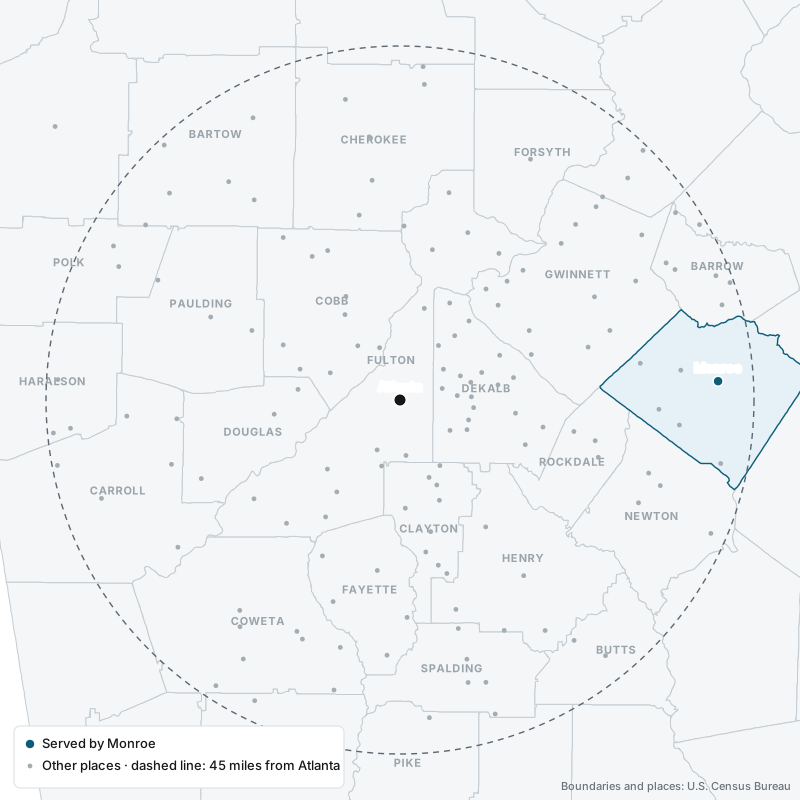
Monroe is the only place in this directory served by Monroe Utilities' sewer. Social Circle, also partly in Walton County, runs its own system and has its own Social Circle page; the local directory covers the county's other towns.
| City or community | Sewer service | Plumbing permits | Local note |
|---|---|---|---|
| Monroe | Yes | City of Monroe Code Department | Monroe's Jack's Creek plant serves about 6,700 customers; the city code says the city isn't liable for damage caused by sewer backflow. |
Next step
If your Monroe home has ever had sewage come up a floor drain, ask a licensed plumber whether a backwater valve fits your building sewer, since the city's code disclaims liability for backflow damage.
Provider rules change. Every statement above links to the provider's own page or ordinance as checked in October 2026 — if a source and this page disagree, the source wins. All places within 45 miles of Atlanta, plus Rome and their providers are listed in the metro Atlanta sewer directory.
Sources
- City of Monroe: Utility Department
- City of Monroe Utilities: Wastewater Collection and Treatment
- City of Monroe (Municode): Code of Ordinances, Chapter 98, Article I: Utilities in General
- City of Monroe (Municode): Code of Ordinances, Chapter 98, Article IV: Sewer Use
- City of Monroe (Municode): Code of Ordinances, Chapter 98, Article V: Sanitary Sewer Grease Control
- City of Monroe: Code Department
- City of Monroe: Code Department - Permits
- City of Monroe Code Department: Plumbing Permit Application (revised February 18, 2025)
- City of Monroe Code Department: Permit Portal & Payments
- Northeast Health District, Georgia Department of Public Health: Walton County Health Department and Environmental Health
- Georgia 811: The 811 Process
- Georgia 811: Georgia Dig Law (O.C.G.A. Title 25, Chapter 9)