Social Circle, GA Sewer Line and Drain Guide for Homeowners
Sewer provider: City of Social Circle Utilities Department · Newton, Walton counties
At a glance
The City of Social Circle provides water and sewer service through its Utilities Department at City Hall. Its code treats the sewer stub, the line from the house to the city main, as the owner's, and says owners should call a private plumber first and contact Public Works only once the problem appears to be in the city line. The code also tells every owner to install a backflow prevention device.
On this page
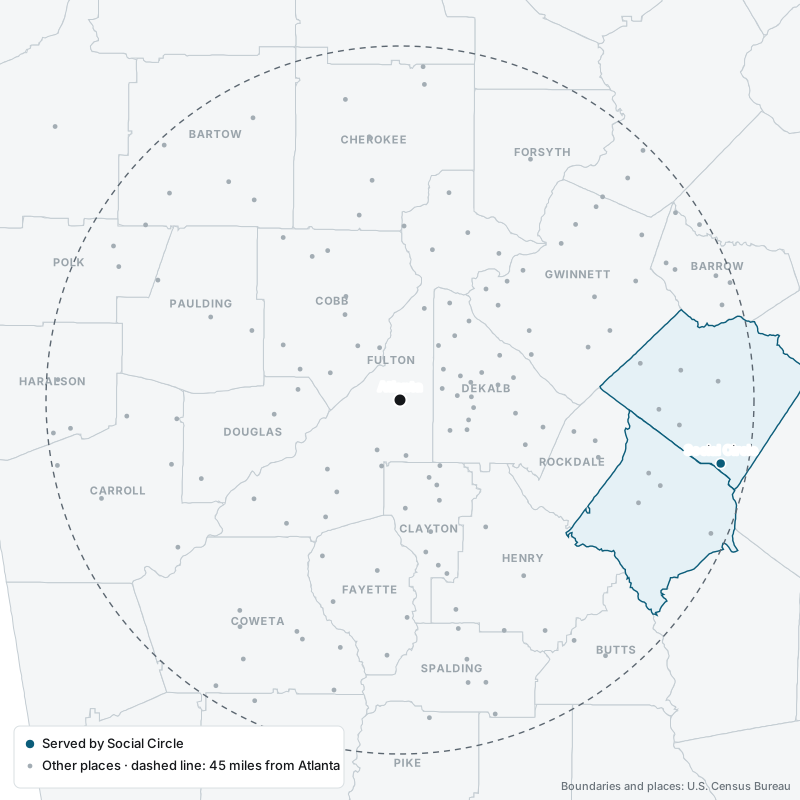
Social Circle straddles the Walton and Newton county line, and its public sewer belongs to the city. What stands out in Social Circle is how plainly its code describes a backup, down to who should get the first phone call.
This page walks through what the city publishes for homeowners and renters: how service is set up, the owner's sewer stub, the backup procedure written into the code, permits, what the sewer can't take, and septic rules for homes beyond the lines.
Who provides sewer service here
The City of Social Circle provides water and sewer service through its Utilities Department, which sets up accounts at the City Hall drive-thru at 166 North Cherokee Road; service can't be started online, and leak questions go to City Hall's Utilities Department. The city publishes a water and sewer leak adjustment policy for customers who have repaired a leak, and it says it plans a new wastewater treatment plant of 3.0 million gallons a day that could be expanded for industrial growth (Water and Sewer Services).
The city lies in both Walton and Newton counties (Census Bureau place list), so the county line doesn't tell you much; your City of Social Circle utility bill is the place to confirm sewer service.
Where your responsibility ends
Social Circle's code draws the line clearly. The city does not accept responsibility for blockages in lines it doesn't own and maintain, including sewer stubs, which the code defines as the connection from the structure to the city main (Social Circle code, Sec. 11-53(e)). In other words, the pipe from your house to the main is yours to keep clear.
Section 11-55(c) adds that installation and connection costs are the owner's, along with any loss the work causes the city. Section 11-53(e) also says all property owners should install backflow prevention devices to keep raw sewage from flowing back into the house. The backwater valve guide explains how those devices work, and who is responsible for the sewer line compares other Georgia providers.
If sewage backs up
The code lays out the order of calls. Because most blockages occur in stubs rather than city lines, owners should normally contact a private plumbing company first, and the plumber or owner should call the city's Public Works Department only after deciding the problem appears to be in the city line (Sec. 11-53(e)).
Once called, Public Works sends a crew to find out whether the blockage is in a city line and, if so, to clear it. The superintendent or a designated representative normally decides whether the problem was in the city's line. If it wasn't, the code says the owner is responsible for correcting it and for all damages.
That procedure puts the cost of a backup in your stub on you, so keep a plumber's invoice and any camera video showing where the blockage was. For safety and cleanup inside the house, follow what to do in a sewer backup.
Repairs, permits and inspections
The Community Development Department handles planning, permitting and inspections for residential and commercial projects, and issues building, trade and development permits. Its FAQ says a permit is needed for any structural change, and that a building or trade permit can take up to five business days to issue (Community Development).
Sewer work also needs the superintendent. No one may uncover, connect to, alter or disturb a public sewer without the superintendent's written permit; the connection is made under the superintendent's supervision once the building sewer is ready; any deviation from the code's methods needs the building inspector's approval; and trenches must be guarded with barricades and lights, with streets and sidewalks restored (Sec. 11-55).
If the repair means a trench, Georgia 811 asks for a free locate ticket at least three business days before digging (Georgia 811); state law requires one before excavating with machinery, and it limits the sewer owner's locating help to the edge of the public right-of-way (Georgia dig law). Plumber licensing and quotes are covered in how to hire a drain cleaning company.
Grease, wipes and rainwater
The code prohibits connecting roof downspouts, exterior foundation drains, areaway drains or other surface runoff or groundwater to a building sewer, and bans stormwater, groundwater and roof runoff from the sanitary sewer (Secs. 11-55(h) and 11-56(a)). It also bars solids that obstruct sewers, such as rags, plastics, paper cups and unground garbage, and lets the superintendent refuse waste with more than 100 milligrams per liter of fats, wax, grease or oil or garbage that isn't properly shredded (Sec. 11-56).
Interceptors are a business requirement only; the code exempts private living quarters and dwelling units (Sec. 11-56(f)), so at home the protection is habit; see what not to flush or pour.
Septic homes in this area
Where no public sewer is within reach, a private system needs a written permit signed by both the city superintendent and a representative of the Walton County Health Department, an inspection before anything is buried, and a lot of at least 20,000 square feet for a soil absorption system. Once public sewer becomes available, the owner must connect within 60 days and abandon, clean and fill the old tank (Sec. 11-54). Owners of property abutting a street with a city sewer within 300 feet of the property line must connect to it (Sec. 11-53(d)).
For the Walton County side, the county's environmental health office is in Monroe on East Spring Street (Northeast Health District). On the Newton County side, septic permits go through GNR Public Health, which has required a Level 3 soil report for every new, repair and addition permit since February 7, 2022 (GNR Public Health). Georgia's public health department lists certified pumpers by county (DPH Onsite Sewage).
Cities and communities served
Social Circle's system serves only Social Circle among the places in this directory. Nearby Monroe has its own system; see the Monroe page and the local directory for the rest of Walton and Newton counties.
| City or community | Sewer service | Plumbing permits | Local note |
|---|---|---|---|
| Social Circle | Yes | City of Social Circle Community Development Department | City code says most blockages occur in the owner's sewer stub, so call a plumber first and contact Public Works once the city line looks at fault. |
Next step
Find your home's cleanout and ask a licensed plumber whether the house has a working backflow prevention device, which Social Circle's code tells every owner to install.
Provider rules change. Every statement above links to the provider's own page or ordinance as checked in October 2026 — if a source and this page disagree, the source wins. All places within 45 miles of Atlanta, plus Rome and their providers are listed in the metro Atlanta sewer directory.
Sources
- City of Social Circle: Water and Sewer Services (archived August 13, 2026)
- City of Social Circle (Municode): Code of Ordinances, Chapter 11, Article III: Municipal Sewer System
- City of Social Circle: Community Development Department (archived August 13, 2026)
- U.S. Census Bureau: 2020 Census place codes for Georgia (places and counties)
- Northeast Health District, Georgia Department of Public Health: Walton County Health Department and Environmental Health
- GNR Public Health: Septic Systems
- Georgia Department of Public Health: Onsite Sewage
- Georgia 811: The 811 Process
- Georgia 811: Georgia Dig Law (O.C.G.A. Title 25, Chapter 9)