Peachtree City Sewer and Drain Guide for Homeowners
Sewer provider: Peachtree City Water and Sewerage Authority · Fayette County
At a glance
The Peachtree City Water and Sewerage Authority (PCWASA) owns the public sewer in Peachtree City, while the Fayette County Water System supplies drinking water and sends one bill for both. Report sewer spills or service problems to the authority, which has a separate after-hours line and dispatches crews to the field.
On this page
In Peachtree City the water and the sewer come from two different public bodies, even though they arrive on one bill. The split matters most when something goes wrong: a water break or outage is a county water problem, but a sewage spill or an overflowing manhole belongs to the city's separate sewer authority (PCWASA).
This page covers the sewer side, from the authority's reporting lines to the cleanout it requires just inside your property line.
Who provides sewer service here
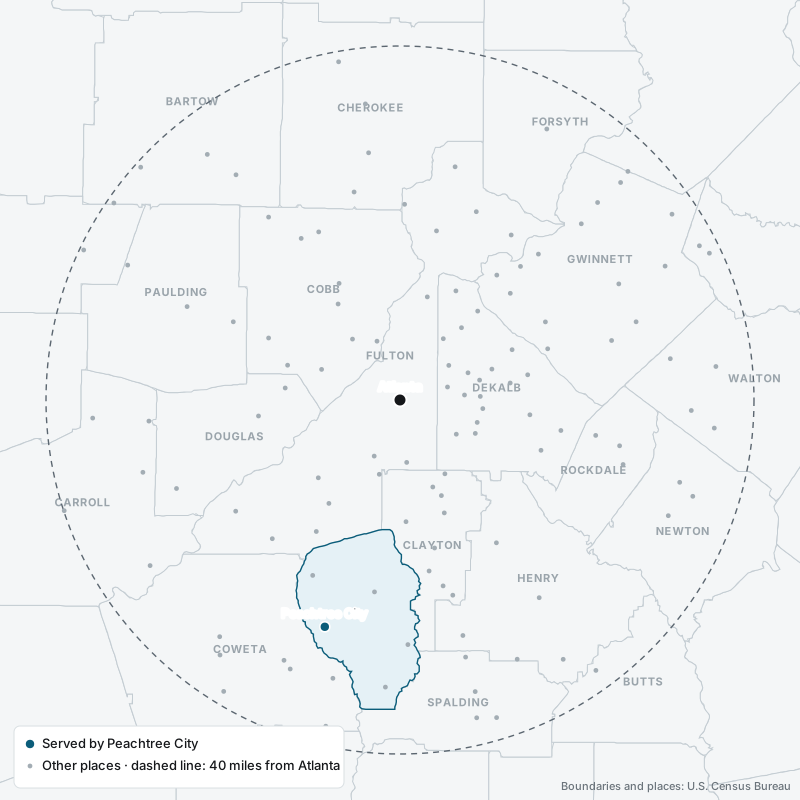
The Peachtree City Water and Sewerage Authority (PCWASA), governed by a five-member board, owns and operates two wastewater treatment plants, about 200 miles of gravity sewer and force main, and 38 pumping stations. It serves more than 11,000 customers across a service area of about 24 square miles in Peachtree City. Sewer service in the city dates to 1970, and the authority acquired the system from Georgia Utilities Company in May 1997.
Drinking water comes from the Fayette County Water System, which also administers the monthly bill for both services (PCWASA FAQs). The county water system confirms it provides no sewer service of its own and bills sewer on PCWASA's behalf (Fayette County Water System). A sewer charge on that county bill means you are a PCWASA customer.
Inside the authority, an operations division runs the treatment plants, a collections and conveyance division maintains the sewer lines and pump stations, and a support services division handles standards, plan review, permits, the grease program and utility locating (Our Sewer System).
Where your responsibility ends
PCWASA's sewer use ordinance puts all costs of installing and connecting the building sewer on the owner, requires a separate building sewer for every building except a rear building on an interior lot with no other route, and allows an old building sewer to serve a new building only after it is examined and tested.
The authority's standard detail 107 shows where newer laterals end: the 6-inch lateral runs from the main to a cleanout located two feet inside the property line, finished with a threaded cap at grade. That cleanout is your reference point when talking to the authority or a plumber. Neither document states in one line which side the authority maintains, so ask PCWASA before paying for work near the street; the ownership guide lists the questions to ask. This overview is general information; for advice about your own property, ask PCWASA, a licensed plumber or an attorney.
If sewage backs up
PCWASA asks customers to report any sewer service problem, including a spill or overflow, by calling the authority's main office during business hours or its after-hours line on evenings, weekends and holidays; it says it will respond and dispatch someone to the field (Report An Issue). Water problems, such as a break or an outage, go to the Fayette County Water System instead (PCWASA FAQs).
If neighbors are not affected, call a licensed plumber as well; the sewer backup procedure covers what to do until help arrives.
Repairs, permits and inspections
Two offices are involved in plumbing work here. The city's Building Department issues trade permits for mechanical, electrical and plumbing work through an online permit portal and asks applicants not to email applications. PCWASA, for its part, issues sanitary sewer permits after a plan review and capacity check, and a PCWASA sewer connection permit is required before the city will process a building permit application (Permits & Inspections).
The ordinance requires an authority permit before anyone uncovers, connects to or alters a public sewer, and the applicant must notify PCWASA when the building sewer is ready so the connection can be made under its supervision. Sewer work that encroaches on a Georgia Department of Transportation right-of-way also needs a permit through the state's utility permitting system (PCWASA). PCWASA marks its own mains and collection lines through Georgia 811 (Utility Location); Georgia 811 asks everyone to request a locate at least three business days before digging (Georgia 811), and the law requires it before digging with machines (dig law).
Grease, wipes and rainwater
PCWASA runs a residential cooking-grease program: pour used oil back into its original container or pick up a grease container from the authority, then swap the full one for an empty container at its office at 1127 Highway 74 South (Fog Program). The authority cites industry studies finding that grease causes more than half of sewer spills and overflows, and it suggests letting grease cool in a can for the trash and wiping food scraps off dishes before washing. Restaurants, salons, pet groomers, car washes and auto shops fall under its grease trap and interceptor inspections.
Rainwater stays out by ordinance. Roof downspouts, exterior foundation drains, areaway drains and other runoff may not be connected to a building sewer, and no one may discharge stormwater, groundwater, roof runoff or subsurface drainage into a sanitary sewer (ordinance). For other household habits, see what not to flush or pour.
Cities and communities served
PCWASA serves Peachtree City. Under its ordinance, a home on septic must connect within 90 days of notice once a public sewer lies within 200 feet of the property line, and the old tank must be cleaned out and filled.
| City or community | Sewer service | Plumbing permits | Local note |
|---|---|---|---|
| Peachtree City | Yes | Peachtree City Building Department (trade permits) | Sewer and water come from different utilities on one Fayette County Water System bill; sewer problems go to PCWASA. |
Next step
Check your Fayette County Water System bill for a sewer charge, then save PCWASA's after-hours number from its Report An Issue page alongside the county water emergency line.
Provider rules change. Every statement above links to the provider's own page or ordinance as checked in October 2026 — if a source and this page disagree, the source wins. All places within 40 miles of Atlanta and their providers are listed in the metro Atlanta sewer directory.
Sources
- Peachtree City Water and Sewerage Authority: About Us
- Peachtree City Water and Sewerage Authority: FAQs
- Peachtree City Water and Sewerage Authority: Report An Issue
- Peachtree City Water and Sewerage Authority: Our Sewer System
- Peachtree City Water and Sewerage Authority: Fog Program
- Peachtree City Water and Sewerage Authority: Sewer Use Ordinance (November 4, 2021)
- Peachtree City Water and Sewerage Authority: Standard Detail 107: Sewer Service Lateral and Cleanout Detail
- Peachtree City Water and Sewerage Authority: Permits & Inspections
- Peachtree City Water and Sewerage Authority: Utility Location
- City of Peachtree City Building Department: Permits
- Fayette County Water System: Sewer Providers
- Georgia 811: The 811 Process