Tyrone Sewer and Drain Guide for Homeowners
Sewer provider: Town of Tyrone Public Works (town sewerage system) · Fayette County
At a glance
Tyrone's Public Works Department maintains the town's sewerage system, and the Fayette County Water System bills sewer on the town's behalf. Town code makes the building sewer privately owned and maintained; new buildings within 250 feet of a public sewer must connect, while others need a county septic permit.
On this page
Tyrone has a town sewer system, but it does not reach every street, and the town's code is written for a place where some homes are on public sewer and others are on septic tanks (Sec. 38-59). Which group you are in decides almost everything on this page.
If you are on town sewer, the rules are clear about ownership: the pipe from your house to the public sewer is yours. If you are on septic, the code spells out when a sewer line nearby can force a connection.
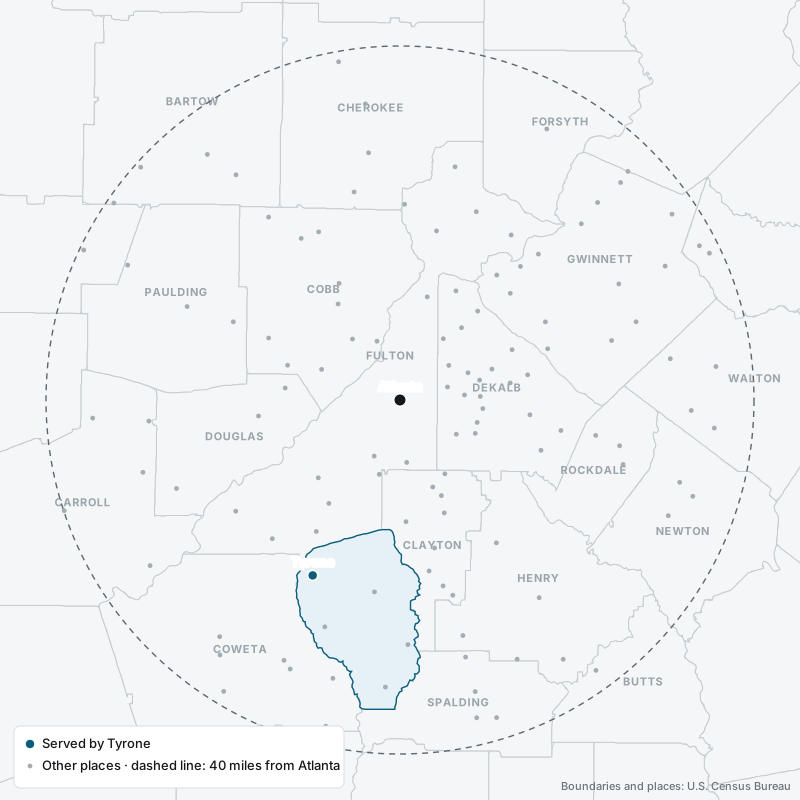
Who provides sewer service here
Tyrone's Public Works Department is responsible for the town's sewerage system along with its streets, buildings and stormwater pipes, and its environmental specialist oversees grease trap pump-outs and related programs. The town extended its sanitary sewer system in a 2019 construction project (Town of Tyrone).
Billing runs through the county. The Fayette County Water System says it does not provide sewer service but issues sewer bills on behalf of the Town of Tyrone, among others (Fayette County Water System). A sewer charge on that bill means you are on the town system; customers apply for sewer service in person at Town Hall and pay a cash security deposit set by the mayor and council (Sec. 38-58).
Where your responsibility ends
Tyrone's code defines the building sewer as a privately owned and maintained pipe that carries wastewater from a single property to a public sewer. When the town installs a sewer tap, it is not responsible for building or maintaining the owner's service connection, or for the digging needed to install the tap fitting (Sec. 38-60).
Another section draws the construction line at the town property line. The owner bears the cost of connecting the building sewer from the building to that line, and the town makes the connection from the property line into the public sewer for a tap-on fee that combines an impact fee with the town's actual connection cost (Sec. 38-82). Owners of existing buildings who choose to connect must also obtain, at their own expense, any easements needed between the sewer and the building (Sec. 38-59). This is general information; Public Works or a licensed plumber can confirm how it applies to your property.
If sewage backs up
Tyrone's Public Works page tells residents to call 911 to report an emergency, and the town's police department relays the information to Public Works as needed. For non-emergency concerns, Public Works asks residents to call or leave a detailed message with their name and street address, or to email staff through the town's contact page (Public Works).
Because the building sewer is privately maintained under town code, a blockage between your house and the public sewer is a job for your own plumber. The sewer backup procedure covers what to do inside the house first.
Repairs, permits and inspections
The town's Building Department issues residential building permits as well as plumbing, electrical, mechanical and low-voltage permits, reviews plans and performs inspections. Its forms list includes residential plumbing, a grease management form and a wastewater discharge survey.
Sewer work has its own requirements. Uncovering, connecting to or altering a public sewer takes a written permit applied for on a town form, with a permit and inspection fee (Sec. 38-81). Under Sec. 38-85, the building sewer must be at least 4 inches across at a slope of at least one-eighth inch per foot, any part within 10 feet of a water service must be cast-iron pipe, trenches stay open until the work is inspected, and connections are made at a Y branch, which the town installs on smaller mains that lack one. Every building needs its own building sewer, with an exception for a rear building on an interior lot (Sec. 38-83). Contact Georgia 811 at least three business days before digging, as it asks of everyone (Georgia 811); the law requires a locate request before digging with machines (dig law).
Grease, wipes and rainwater
The code keeps runoff out of the town's pipes. No one may connect downspouts, exterior foundation drains or other sources of surface runoff or groundwater to a building sewer that drains to a public sanitary sewer (Sec. 38-85), and stormwater, roof runoff and subsurface drainage must go to storm sewers or an approved natural outlet rather than the sanitary sewer (Sec. 38-114).
Grease interceptors are required where grease or other harmful wastes call for them, but the code exempts private living quarters and dwelling units. At home, the burden is on habits: keep cooking grease, wipes and paper towels out of drains, as described in what not to flush or pour.
Septic homes in this area
Tyrone's code requires buildings constructed after its effective date to connect, at the owner's expense and before a certificate of occupancy, when a public sewer line is within 250 feet and can be reached by gravity. Where sewer cannot serve the property, the town issues no building permit or certificate of occupancy until the Fayette County Board of Health has issued a septic permit (Sec. 38-59).
Existing septic homes face a trigger: once a public sewer line comes within 250 feet and the septic system fails, no permit will be issued to repair it, and the owner must connect and remove or fill the old tank. Septic permits and records for Tyrone homes are held by the Fayette County environmental health office on Stonewall Avenue West in Fayetteville, according to the Department of Public Health (DPH). See septic tank pumping in Georgia for maintenance that can delay a failure.
Cities and communities served
The town system serves parts of Tyrone; homes beyond its lines use septic systems permitted by the county health department.
| City or community | Sewer service | Plumbing permits | Local note |
|---|---|---|---|
| Tyrone | Part of the area | Town of Tyrone Building Department | New buildings within 250 feet of a public sewer must connect; others need a Fayette County Board of Health septic permit. |
Next step
If your septic system is struggling, ask Tyrone Public Works whether a public sewer line lies within 250 feet of your home before you pay for a septic repair.
Provider rules change. Every statement above links to the provider's own page or ordinance as checked in October 2026 — if a source and this page disagree, the source wins. All places within 40 miles of Atlanta and their providers are listed in the metro Atlanta sewer directory.
Sources
- Town of Tyrone: Public Works
- Town of Tyrone: Building Department
- Fayette County Water System: Sewer Providers
- Tyrone Code of Ordinances (Municode): Sec. 38-60. Sewer connection regulations, tap fees, service fees, and charges
- Tyrone Code of Ordinances (Municode): Sec. 38-82. Connection fees and expense
- Tyrone Code of Ordinances (Municode): Sec. 38-59. Connection to public sewer required
- Tyrone Code of Ordinances (Municode): Sec. 38-85. Construction specifications and requirements
- Tyrone Code of Ordinances (Municode): Sec. 38-114. Stormwater and other unpolluted drainage
- Tyrone Code of Ordinances (Municode): Sec. 38-81. Building sewers and connections; permit required
- Town of Tyrone: 2019 Sanitary Sewer System Expansion
- Georgia Department of Public Health: County Environmental Health Offices
- Georgia 811: The 811 Process