Union City Sewer and Drain Guide for Homeowners
Sewer provider: City of Union City Water and Sewer Division · Fulton County
At a glance
Union City's Water and Sewer Division runs the city's sewer collection system. City code makes the city responsible for sewer lines in the public right-of-way and leaves lines on private property to the owner, and some homes in the city use septic systems instead of the public sewer.
On this page
Union City runs its own sewer collection system, and its code divides responsibility for the line from your house at the edge of the public right-of-way (§ 15-214). Some homes in the city aren't on the sewer at all, so the first step is knowing which kind of home you have.
Who provides sewer service here
The city's Water and Sewer Division operates and maintains Union City's wastewater collection system. Its listed duties include repairing sewer line failures, maintaining sewer mains, service lines and manholes, running the wastewater lift stations and responding to water and sewer emergencies (Water and Sewer Division). Fulton County, which runs sewer in much of south Fulton, permits sewer projects inside Union City only when the city sends a letter saying it is aware of the project (Fulton County).
Sewer charges come from the city. The Utility Division processes water, sewer, stormwater and sanitation billing and handles new connections, transfers and disconnections (Utility Division). City code bases the sewer service charge on water used, with a minimum availability charge (§ 15-197), and a sewer customer who doesn't get city water is still billed, with the account held in the property owner's name when the customer doesn't own the property (§ 15-213). If your bill shows no sewer charge, ask the city whether your home is on septic; the septic section below covers that case.
Where your responsibility ends
Section 15-214 of the city code is short: the city maintains, repairs and replaces all sanitary sewer lines in the public right-of-way, and takes no responsibility for sanitary sewer lines on private property (§ 15-214). So the section of your lateral between your house and the right-of-way line is yours, and the section in the right-of-way is the city's. Ask the Water and Sewer Division where that line falls at your address before you pay anyone to dig.
The code's construction rules put the cost of building the private part on the owner (§ 15-199):
- The owner pays all costs of installing and connecting the building sewer.
- Every building needs its own building sewer, except a rear building on an interior lot with no other way to connect.
- Building sewers must be at least four inches in diameter, slope at least one-eighth inch per foot, and change direction only where a cleanout is installed.
- A building drain too low for gravity flow must be lifted by an approved means.
- A customer who needs sewer service beyond the existing lines pays for the line needed to reach the property.
The statewide picture is in who is responsible for the sewer line in Georgia.
If sewage backs up
For urgent problems after hours, the city's Report an Issue page lists an after-hours number for water and utility emergencies that need immediate attention, such as water main breaks or major leaks, and asks residents not to use it for routine requests (Report an Issue). Non-emergency issues go through the city's SeeClickFix system, online or by app, or by phone during business hours, with the location and a description of the problem.
If the backup comes from a septic system rather than the public sewer, and sewage is surfacing or creating a health concern, the city directs residents to Fulton County Board of Health Environmental Health Services (septic information). For what to do inside the house meanwhile, see the sewer backup guide.
Repairs, permits and inspections
The Building Permits Division of the Community Development Department handles construction permits and inspections in the city. Most projects need a permit obtained by the property owner or a licensed and bonded contractor, applications for building, electrical, plumbing and other permits go through the city's online iWorQ portal, and inspections are scheduled online with the permit number, by 4:00 p.m. for next-business-day service (Building Permits). Work must start within 180 days of the permit's issue date, or the permit expires.
Connecting to or opening a public sewer takes a separate written permit from the city, with a permit and inspection fee, and the connection is made under the city's supervision once the building sewer is ready for inspection (§ 15-199). Streets and sidewalks disturbed by the work must be restored to the city's satisfaction.
Georgia 811 asks for a free locate request at least three business days before any digging, and state law requires one before digging with powered equipment (Georgia 811; law).
Grease, wipes and rainwater
The city's fats, oils and grease page points residents to a regional flyer from the Metropolitan North Georgia Water Planning District, which calls grease the number one cause of sewer blockages in metro Atlanta (FOG Facts). It tells households to let grease cool and pour liquids into a sealable container for the trash, scrape solids and wipe residue into the trash, and use a sink strainer, and it notes that a garbage disposal only chops grease into smaller pieces. It also warns that residents may be held liable for the damage and cleanup costs of a sewer backup they cause.
The city's grease-trap rules apply to commercial kitchens and other commercial generators, not residential users (§ 15-215). Rainwater has its own rule: no roof downspouts, exterior foundation drains, areaway drains or other sources of runoff or groundwater may be connected to a building sewer or drain that leads to the public sewer (§ 15-199). The what not to flush guide covers wipes and other problem items.
Septic homes in this area
Some Union City properties use individual septic systems, and owners are responsible for operating and maintaining them (septic information). The city tells owners not to abandon, modify or replace a septic system without first finding out whether public sewer is available and whether city or county approval is needed, and it sends questions about septic repair and replacement requirements to Fulton County Environmental Health. Its septic page also asks owners not to flush wipes, diapers or paper towels, and to keep gutters and downspouts away from the drainfield.
City code ties septic to the sewer's reach. A septic permit comes from the county health department, and no system using soil absorption may be permitted on a lot under 20,000 square feet (§ 15-198). Once a public sewer is within 100 feet of the property line, the owner must connect within 90 days of official notice (§ 15-197). The Fulton County Board of Health permits and inspects septic systems in the county (Board of Health). See septic or sewer: how to tell.
Cities and communities served
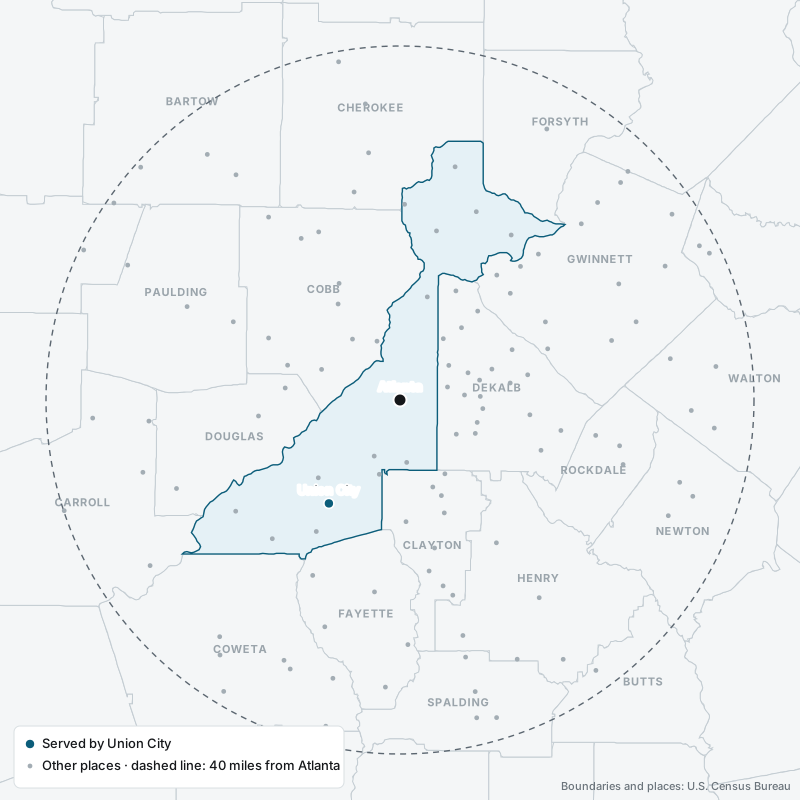
This page covers homes in Union City, in Fulton County. The neighboring City of South Fulton is on Fulton County's sewer system; see the Fulton County page.
| City or community | Sewer service | Plumbing permits | Local note |
|---|---|---|---|
| Union City | Yes | City of Union City Community Development, Building Permits Division | City code has the city maintain sewer lines in the public right-of-way; lines on private property are the owner's. Some properties use septic systems. |
Next step
Ask the Water and Sewer Division where the public right-of-way ends at your address. Under the city code, that line marks where the city's responsibility for your sewer line begins.
Provider rules change. Every statement above links to the provider's own page or ordinance as checked in October 2026 — if a source and this page disagree, the source wins. All places within 40 miles of Atlanta and their providers are listed in the metro Atlanta sewer directory.
Sources
- City of Union City: Water and Sewer Division
- City of Union City Code of Ordinances (Municode): Sec. 15-214. Responsibility for sanitary sewer lines
- City of Union City Code of Ordinances (Municode): Sec. 15-199. Building sewers and connections
- City of Union City: Report an Issue
- City of Union City: Utility Billing and Services
- City of Union City: Building Permits (Commercial & Residential)
- City of Union City: Septic System Homeowner Information
- City of Union City Code of Ordinances (Municode): Sec. 15-198. Private sewage disposal
- Metropolitan North Georgia Water Planning District: FOG Facts (Fats, Oils and Grease)
- Fulton County Board of Health: Well and Septic Inspection
- Georgia 811: The 811 Process