Low Water Pressure: Is Your Water Service Line the Cause?
My water pressure is low. How can I tell whether my water service line is the cause?
Short answer
When every faucet is weak, look upstream of the fixtures: the utility's side of the meter, a failing pressure-reducing valve (PRV), or the buried service line between the meter and the house. A pressure gauge on your outdoor spigots, the meter dial and a pressure check by your utility narrow it down; a single weak faucet or shower points to that fixture instead.
On this page
- Low water pressure symptoms and what they point to
- How low is too low? Georgia's rules and the plumbing code
- Possible causes, from the street to the faucet
- How to tell whether the service line is the cause
- Repair and service options
- Safe checks and what not to do
- When to call the utility or a plumber, and emergency signs
- Frequently asked questions
- Next step
A dribbling shower or a washing machine that takes forever to fill can have many causes, and only some involve the buried pipe that carries water from the meter to your house. That pipe, the water service line, is often the owner's to fix. Cobb County's water system, for example, maintains the pipes from the street main to the meter box and leaves the rest, from the meter box into the property, to the owner (Cobb County).
This guide covers what the symptoms point to, what Georgia's rules and the plumbing code require, the usual causes, and how to rule the service line in or out before anyone digs. For leak signs, pipe materials and replacement rules, see main water line repair.
Low water pressure symptoms and what they point to
The pattern of weak spots points to the source.
| What you notice | Where to look first |
|---|---|
| One faucet or showerhead is weak; the rest are fine | That fixture: its aerator or showerhead, or the pipe and valve feeding it |
| Every fixture is weak, but the front outdoor spigot is strong | The pressure-reducing valve (PRV) |
| Everything is weak, including the front spigot | The meter, the service line or the utility's side |
| The meter dial moves while no water is in use | A leak, possibly in the service line |
| Neighbors are affected too, or pressure dropped suddenly | The utility's main or system |
| Pressure has faded slowly over months or years | Corroded pipes, mineral buildup or a failing PRV |
Table sources: Gwinnett DWR (PRV, spigot and meter checks), ATL311 (area problems, leaks, closed valves, one-spot problems) and InterNACHI (fixtures, slow declines).
How low is too low? Georgia's rules and the plumbing code
Your utility has a floor to meet. Georgia's Rules for Safe Drinking Water require a public water system to maintain at least 20 pounds per square inch (psi) at each service connection under all conditions of flow, and make the supplier responsible for providing the required pressure and flow at all times (Rule 391-3-5-.10, current through filings of September 2, 2026).
Inside the house, the International Plumbing Code (IPC) sets both ends (2024 IPC, Chapter 6):
- Minimum at the fixture. At peak demand, the piping must deliver at least the flow pressures in Table 604.3: 8 psi at most household faucets, showers and hose bibbs, and 20 psi at tank toilets and at tub and shower valves with pressure-balancing or thermostatic controls (Section 604.3).
- Maximum in the house. Where static pressure, measured with no water running, exceeds 80 psi, an approved PRV with a strainer must reduce it to 80 psi or less. Lines to outdoor hose bibbs are exempt (Section 604.8), one reason a front spigot can read higher than the taps inside.
- A weak supply. Where the supply can't deliver the Table 604.3 pressures, a booster system is required (Section 604.7).
Those numbers are minimums, not comfort targets. EPA's WaterSense program recommends incoming service pressure of 45 to 60 psi (EPA), and InterNACHI, the home inspectors' association, says pressure below 40 psi makes showers unsatisfying and can keep washing machines and dishwashers from working properly (InterNACHI).
These pressure rules come from the 2024 IPC, which Georgia has adopted with its own amendments; DCA's December 2025 announcement puts the effective date at January 1, 2027, after an earlier memo had said January 1, 2026, so the building department that issues your permit can tell you which edition it applies (DCA). Georgia's amendments leave these pressure sections unchanged (DCA amendments), and the 2018 edition has them under the same section numbers.
Possible causes, from the street to the faucet
The utility's system. Atlanta's 311 service says low pressure may come from a problem in the pipeline serving your area (ATL311). Height matters too: the IPC's optional sizing appendix counts 0.433 psi lost per foot of rise, so a fixture 20 feet above the supply loses about 8.7 psi (2024 IPC, Appendix E). Marietta, for example, splits its system into three pressure zones because of elevation and serves two higher areas from elevated tanks (Marietta FAQ).
A valve that isn't fully open. ATL311 lists closed water valves among the causes. The code requires full-open valves on the service pipe near the curb, on the house side of the meter and where the line enters the house (Section 606.1); check yours after any plumbing work.
The service line. ATL311 also lists leaks and debris in the pipes. The service pipe must be sized for the house's needs and be at least 3/4 inch (Section 603.1), and under Appendix E, friction loss depends on a pipe's size, length and flow, so a long, narrow or partly clogged line loses more pressure when water runs. InterNACHI adds that corroded pipes and mineral buildup reduce flow so gradually that owners get used to it.
The pressure-reducing valve. Gwinnett County's Department of Water Resources (DWR) says low pressure is most commonly due to the home's PRV, which is the homeowner's responsibility; DWR doesn't send staff to investigate or repair one (Gwinnett DWR). The code requires a PRV to be repairable in place (Section 604.8.2) and designed to stay open if it fails (Section 604.8.1), so a failed valve can pass full street pressure, and EPA notes that supply mains can reach 100 psi or more.
Other devices and the fixtures. Appendix E lists filters, softeners, backflow preventers and pressure regulators among the devices that use up pressure. At the tap, InterNACHI calls clogged aerators and showerheads easy fixes, and newer fixtures use less water by design: Georgia's amendments cap showerheads at 2.5 gallons per minute at 60 psi and private bathroom faucets at 1.5 (Table 604.4).
How to tell whether the service line is the cause
- Check whether it's just your house. Ask a neighbor. If the area is affected, report it to the utility; in Atlanta, ATL311 says a specialist investigates within 24 hours, though further testing or repairs can take up to 14 days.
- Rule out a single fixture. If only one faucet or shower is weak, clean its aerator or showerhead. ATL311 says low pressure limited to one place may be an internal issue for a licensed plumber.
- Measure the pressure. Screw a pressure gauge onto an outdoor spigot or the washing machine's cold-water connection and open the valve fully (EPA). Cobb County notes that the PRV usually sits after the front spigot, so the front reading is usually higher, and a reading after the PRV, such as at a back spigot, should be 80 psi or lower (Cobb County).
- Compare the front spigot with the inside. Gwinnett's test: if pressure is good at the front spigot but low inside, the PRV is the likely problem and may need replacing by a plumber.
- Check the meter. If the front spigot is weak too, Gwinnett says to make sure the meter dial isn't spinning and the meter is on. A dial that moves while no water is in use points to a leak; the main water line guide has a step-by-step meter test.
- Ask the utility to check its side. Gwinnett will then run a flow test at the meter. If there is water on the county side, the owner pays a service charge, $145 for a standard 5/8- to 1-inch meter as of October 2026, and calls a plumber; if there isn't, the county's page says a new service line is installed. Marietta Water can likewise check pressure at the meter and leaves problems beyond it to the owner's plumber (Marietta FAQ).
- If the utility's side checks out, the problem lies between the meter and your fixtures, where a licensed plumber looks next: the service line, a valve, the PRV or the house piping.
Repair and service options
- PRV: Cobb says a PRV whose downstream reading tops 80 psi needs adjusting or replacing, and Gwinnett sends PRV problems to a plumber. A replacement needs a strainer and must hold static pressure at 80 psi or less (Section 604.8).
- Service line: a plumber can repair a leak or replace a leaking, corroded or undersized line with one sized for the house and at least 3/4 inch (Section 603.1). Materials, depth, valves and permits are covered in main water line repair. Georgia 811 asks for a free locate ticket at least three business days before any digging (Georgia 811).
- Booster system: where the supply itself falls short of Table 604.3, the code calls for an elevated tank, a hydropneumatic system or a booster pump (Section 606.5.1), and a pump needs a low-pressure cutoff so it can't create a vacuum when the pressure on its supply side drops to 10 psi or less (Section 606.5.5). Ask your utility first whether your street is in a low-pressure area.
Safe checks and what not to do
Reading a gauge, cleaning an aerator, watching the meter dial and making sure your own main shutoff is fully open are all safe. Avoid these:
- Don't operate the utility's valve at the meter. Some utilities restrict who may turn it; see main water line repair.
- Don't turn the PRV above 80 psi, or remove it, to make up for a weak supply. That's the code's limit (Section 604.8), and EPA warns that high pressure can damage pipes, fixtures and appliances and lead to leaks.
- Don't add a booster pump without a licensed plumber, or dig without a Georgia 811 ticket. A pump must meet the code's booster rules, including the low-pressure cutoff.
This is general information, not plumbing or legal advice; your water utility, your building department or a licensed plumber can tell you what applies to your home. Before hiring anyone for service line work, how to hire a drain cleaning company in Georgia shows how to look up the license and compare quotes.
When to call the utility or a plumber, and emergency signs
Call your water utility about anything on its side of the meter, and a licensed plumber for the PRV, the service line and the house piping, which the utilities cited here leave to owners. Act quickly if you see:
- No water, or a sudden drop across the area. Report it to the utility. Atlanta takes low-pressure reports 24 hours a day, and Gwinnett's pressure page points water emergencies to its 24/7 dispatch center.
- Water running in the street, the yard near the meter or the meter box. Report it to the utility.
- A meter that spins with everything off, especially with soggy ground along the line. Call a plumber and follow the main water line guide's leak steps.
Frequently asked questions
What is normal water pressure for a house?
EPA's WaterSense program recommends 45 to 60 psi coming in. The plumbing code caps static pressure in the house at 80 psi, and Georgia requires public water systems to keep at least 20 psi at each service connection.
Who fixes low water pressure, the utility or me?
Cobb County maintains the pipes up to the meter box, Marietta checks pressure at the meter, and Gwinnett leaves the home's PRV to the owner; in those systems, problems past the meter are the owner's.
Can a leaking service line cause low water pressure?
Yes. Atlanta's 311 service lists leaks among the causes. If the meter dial moves while no water is in use, test for a leak before replacing anything.
Will a new service line fix low pressure?
Only if the line is the bottleneck: leaking, corroded or undersized. If your utility finds low pressure at the meter, a new line won't help; the code's answer for a weak supply is a booster system.
Next step
Put a pressure gauge on your front spigot and on one after the PRV, note both readings and whether the meter dial moves with no water in use, and bring those numbers to your utility or a licensed plumber.
Sources
- International Code Council: Chapter 6 Water Supply and Distribution - 2024 International Plumbing Code (IPC)
- International Code Council: Appendix E Sizing of Water Piping System - 2024 International Plumbing Code (IPC)
- Georgia Department of Community Affairs: Georgia State Amendments to the International Plumbing Code (2024 Edition)
- Georgia Department of Community Affairs: New Georgia Codes and Amendments - Effective January 1, 2027
- Georgia Secretary of State, Rules and Regulations of the State of Georgia: Rule 391-3-5-.10 Distribution System (Rules for Safe Drinking Water)
- Gwinnett County Department of Water Resources: Water Pressure and Temperature
- City of Atlanta ATL311: Report Low Water Pressure
- Cobb County Water System: Home Water Basics: Pipes, Pressure & Protection
- City of Marietta (Marietta Power and Water): Frequently Asked Questions
- U.S. Environmental Protection Agency: Service Water Pressure (WaterSense Labeled Homes technical fact sheet, EPA-832-F-23-016)
- International Association of Certified Home Inspectors (InterNACHI): Water Under Pressure: Why Temperature, Pressure, and Flow Matter for Safety and Comfort
- Georgia 811: The 811 Process
Guides that pick up where this one stops.
Main Water Line Repair in North Metro Atlanta: Who Fixes What
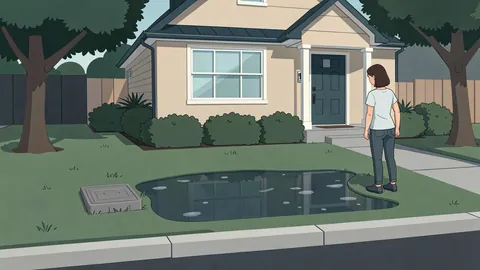
Main water line repair in Alpharetta, Marietta or Cumming: who owns the pipe from the meter to the house, leak signs, lead line maps, permits and valves.

How to Hire a Drain Cleaning Company in Georgia
How to check a Georgia plumber's license, compare estimates, spot red flags and storm chasers, and where to complain if a drain or sewer job goes wrong.

Sewer Line Warranty Plans in Georgia: What to Check First
What sewer line warranty plans sold to Georgia homeowners cover and exclude, how they differ from insurance, and how to check a mailer before you pay.