McDonough Sewer and Drain Guide for Homeowners
Sewer provider: City of McDonough Water Services (Public Works) · Henry County
At a glance
The City of McDonough runs its own sewer system and treatment plant and bills water and sewer from City Hall. City code makes owners pay for the building sewer up to the property line and keep downspouts and foundation drains off it; city crews maintain the mains and pump stations.
On this page
The Henry County Water Authority has its headquarters in McDonough, but the city's sewer service does not come from the authority. The City of McDonough runs its own collection system and treatment plant, writes its own sewer rules into the city code, and issues its own plumbing permits.
That makes your utility bill the first thing to check. Outside the city limits, the Henry County Water Authority is the county's sewer utility; if the city bills you for sewer, the rules below apply.
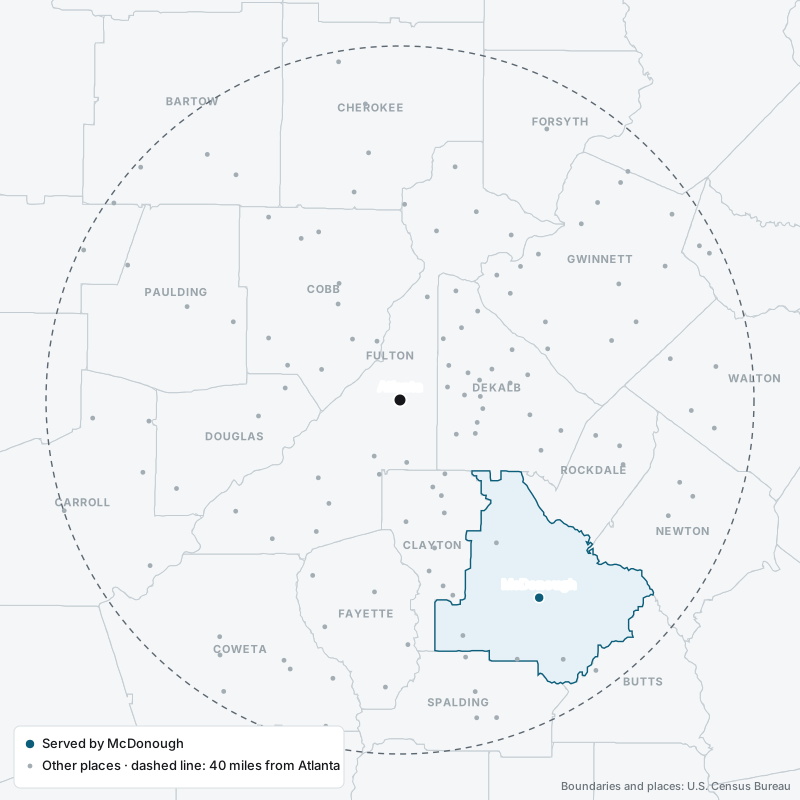
Who provides sewer service here
The City of McDonough bills water and sewer together. New customers apply at City Hall on a combined water, sewer and sanitation application and pay a deposit to establish water and sewage services, and bills go out monthly (Utility Billing).
Wastewater goes to the city's Walnut Creek Water Pollution Control Plant, north of town where Camp Creek meets Walnut Creek. The plant dates to 1971, can treat 2 million gallons a day and runs around the clock, with staff on site 12 hours a day and an on-call policy for emergencies. The same wastewater staff look after the city's 12 pump stations, which are checked daily (Wastewater Treatment). Despite the similar name, this is a city plant, separate from the water authority's much larger Walnut Creek facility.
Your water may come from a different utility than your sewer. The city code charges its sewer connection fee for each water meter in service "whether such meter is owned by the City or Henry County" (13.08.060), so a county water bill does not rule out city sewer.
Where your responsibility ends
McDonough's code puts the cost of installing and connecting the building sewer up to the property line on the owner, along with responsibility for any damage the installation causes (13.08.060). Each dwelling unit, including each unit in a multifamily building, must have its own separate building sewer. An old building sewer can serve a new building only if the city examines and tests it and finds it meets the code.
The code also sets placement rules that matter during a replacement: no building sewer may run parallel to, or within three feet of, a bearing wall, and the line must be deep enough to protect it from vehicle loads. It does not spell out in one sentence where the city's maintenance of the lateral begins, so ask the city's Sewer Collections Division before paying for work near the street. The ownership guide explains why that boundary matters. This is general information; the city or a licensed plumber can confirm how it applies to your lot.
If sewage backs up
The city's Sewer Collections Division maintains the public side of the system. Its listed duties include inspecting and repairing sewer piping, manholes and other wastewater components, running a sewer jetting maintenance program, and keeping the collection system in line with capacity, management, operation and maintenance (CMOM) requirements.
The division's page lists on-call numbers for water emergencies, and the wastewater plant keeps an on-call policy for any emergency situation. If only your house is affected, start with a licensed plumber; if neighbors have the same problem or a manhole is overflowing, report it to the city. For the first steps inside the house, follow the sewer backup procedure.
Repairs, permits and inspections
Inside city limits, plumbing permits come from the city's Building & Inspection Division, which reviews plans, issues permits and inspects construction. It publishes its own plumbing permit application and takes next-day inspection requests by phone before 4 p.m. Henry County's building department confirms that McDonough handles its own permitting rather than the county (Henry County).
Sewer connections add a city sign-off. No one may uncover, connect to or alter a public sewer without a written permit from the city maintenance engineer, the owner must notify the city when the building sewer is ready for inspection before any of it is buried, and only an authorized city representative may make the connection to the public sewer (13.08.060). Georgia 811 asks everyone to request a locate at least three business days before digging (Georgia 811), and the law requires it before digging with machines (dig law).
Grease, wipes and rainwater
Two parts of the city code keep rainwater out of the sewer. Section 13.08.060 bans connecting roof downspouts, exterior foundation drains, areaway drains or any other source of surface runoff or groundwater to a building sewer that drains to the public sewer, and section 13.08.070 forbids discharging stormwater, surface water, groundwater, roof runoff or subsurface drainage into the sanitary sewer at all.
The same section lists solids that may not go down the drain, including rags, plastics, sand, and paper dishes, cups or milk cartons, whether whole or ground up in a garbage grinder. Restaurants and other users with grease interceptors must have them pumped completely at least every 90 days and may not use enzyme or bacterial additives (13.08.110). At home, the habits in what not to flush or pour do the same job.
Cities and communities served
The city system serves properties inside McDonough's city limits. When a public sewer lies within 100 feet of the property line, the code can require an owner to connect within 90 days of written notice from the city maintenance engineer (13.08.020).
| City or community | Sewer service | Plumbing permits | Local note |
|---|---|---|---|
| McDonough | Yes | City of McDonough Building & Inspection Division | Sewage is treated at the city's Walnut Creek Water Pollution Control Plant; water may come from the city or Henry County. |
Next step
Check your bill: if the City of McDonough charges you for sewer, keep the city's Sewer Collections contacts handy and ask a plumber to locate your building sewer cleanout before you need it.
Provider rules change. Every statement above links to the provider's own page or ordinance as checked in October 2026 — if a source and this page disagree, the source wins. All places within 40 miles of Atlanta and their providers are listed in the metro Atlanta sewer directory.
Sources
- City of McDonough: Wastewater Treatment
- City of McDonough: Water Distribution & Sewer Collection
- City of McDonough: Utility Billing
- City of McDonough: Building & Inspection Division
- McDonough Code of Ordinances (Municode): 13.08.060 Building sewers and connections
- McDonough Code of Ordinances (Municode): 13.08.070 Use of the public sewers
- McDonough Code of Ordinances (Municode): 13.08.020 Use of public sewers required
- McDonough Code of Ordinances (Municode): 13.08.110 Grease, oil, and other substance interceptors
- Henry County: Building & Plan Review Department
- Georgia 811: The 811 Process