Henry County Sewer and Drain Guide for Homeowners
Sewer provider: Henry County Water Authority · Henry County
At a glance
The Henry County Water Authority (HCWA) is the county's public sewer utility, while McDonough, Stockbridge, Hampton and Locust Grove also run city systems. HCWA's FAQ sends clogged toilets and drains to a plumber for the private pipes on your property, and county code makes you pay for your building sewer up to the property line.
On this page
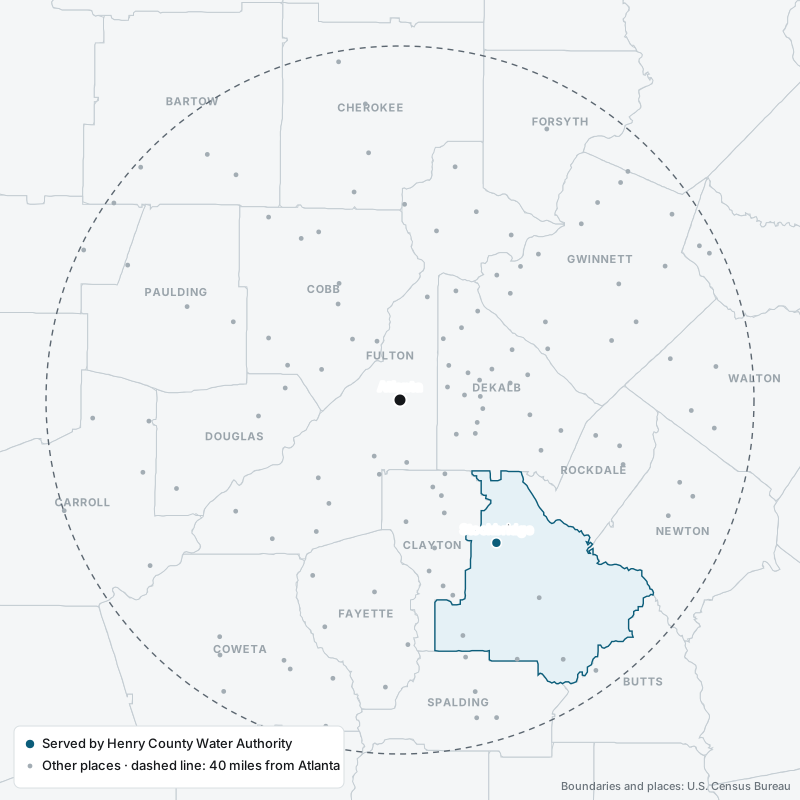
Henry County's sewer map is a patchwork. The Henry County Water Authority serves the unincorporated county, while McDonough, Stockbridge, Hampton and Locust Grove each run sewer systems of their own. Because of that split, the name on your sewer bill, not the town in your mailing address, tells you whose rules apply.
This page covers the authority's rules. If a city bills you for sewer, use its page instead: McDonough, Stockbridge, Hampton or Locust Grove.
Who provides sewer service here
The Henry County Water Authority (HCWA) was created by an act of the Georgia General Assembly in 1961, and that act lists establishing a sewer system among its duties. Its mission covers water supply plus wastewater collection and treatment for Henry County's homes and businesses, and the county's sewer-use ordinance names the authority as the body charged with building, operating and maintaining the county's water and sewerage system (Sec. 3-5-261). In 2025 the authority had about 69,000 metered customers, representing roughly 204,000 people in a county of more than 260,000 (2026 Water Quality Report).
Wastewater flows through about 455 miles of collection sewers and 32 lift stations to three treatment sites: Walnut Creek, the largest; Indian Creek; and Bear Creek, which serves Atlanta Motor Speedway. HCWA says it inspects every sewer line at least once every four years, using manhole checks and closed-circuit TV (HCWA).
To confirm you are on HCWA sewer, check your account. Its FAQ notes that new customers pay a separate sewer deposit only where sewer is present; if your account shows water service alone, ask HCWA whether your home is on septic. Inside cities the picture can be mixed: Stockbridge, for one, lists HCWA's plan review and inspection staff among the outside agencies that review building work there (Stockbridge).
Where your responsibility ends
HCWA does not publish its maintenance split in a single sentence, so read its documents together. The county's sewer-use ordinance, which HCWA administers, makes the owner pay all costs of installing and connecting the building sewer up to the property line (Sec. 3-5-267). HCWA's 2023 standards define a sanitary sewer lateral as the pipe running from the main to the street right-of-way or an easement. And its FAQ tells customers with clogged toilets or sewage coming up through drains to have a plumber clean the private sewer pipes on their property.
On newer homes, the handoff point is easy to spot. HCWA's standard details stub a 6-inch service line out to 17 feet behind the back of the curb, where the plumbing contractor ties on, and put a cleanout at the junction of the 6-inch service line and the 4-inch line from the house. The cleanout sits in a box with a lid embossed "HCWA SEWER," and the standards call for the box to be green. Older connections may differ, so ask HCWA where its responsibility ends at your address before you pay anyone to dig near the street; the ownership guide lists the questions to ask. This page is general information rather than legal advice.
If sewage backs up
HCWA's FAQ answers the most common backup question directly: if your toilets are clogged or sewage is coming out of your drains, contact a plumber to clean out the private sewer pipes on your property. Homes on septic should call a plumber or someone who works on septic systems.
The authority's contact page lists an after-hours emergency line, but describes it as being for water outages and leaks. Neither that page nor the FAQ describes a separate sewer-emergency procedure, so if sewage is spilling from a manhole or several neighbors are affected, ask customer service how it takes those reports. The sewer backup procedure covers what to do inside the house in the meantime.
Repairs, permits and inspections
In unincorporated Henry County, the county's Building and Plan Review Department issues permits, reviews plans and inspects work; each city has its own building department. HCWA adds its own layer for new connections: a written building sewer permit from the authority, with connection fees paid before the connection and on top of county permits, and an HCWA inspection before any buried pipe is covered (Sec. 3-5-267). Its standard detail also requires a sewer tap inspection by HCWA.
The same code section requires a separate building sewer for each building and for each unit of a multi-unit building, unless HCWA approves otherwise. Old building sewers can serve a new building only after HCWA examines and tests them. Before digging, Georgia 811 asks everyone to request a free locate at least three business days ahead (Georgia 811); the law requires it before digging with machines (dig law).
Grease, wipes and rainwater
HCWA's FAQ calls fats, oils and grease the number one cause of sewer blockages in metro Atlanta, warning that they can push sewage out of manholes or up through floor drains. It knocks down two common beliefs: garbage disposals often lead to more clogs, not fewer, and hot water with dish soap only moves grease down the pipe until it cools and hardens. Its advice is to scrape grease and food scraps into the trash, wipe plates with a paper towel, and use a sink strainer.
The authority's flushing advice is blunt: no wipes of any kind, including those sold as flushable. Its do-not-flush list also includes paper towels, hair, cotton swabs, kitty litter and disposable cleaning cloths.
Rainwater is barred from the sewer. County code prohibits connecting roof downspouts, exterior foundation drains, areaway drains or other surface runoff to a building sewer, and existing connections of that kind must be removed at no cost to HCWA when a building is hooked up (Sec. 3-5-268). For other habits that protect your line, see what not to flush or pour.
Septic homes in this area
Where public sewer is not available, the county code sends homeowners to the county health department's sanitarian for a written septic permit (Sec. 3-5-266). Once a public sewer comes within 100 feet of the property line, HCWA can require a connection within 90 days of written notice, and it may set a payment schedule for connection fees when an owner shows financial hardship (Henry County Code).
The Henry County environmental health office, which the Department of Public Health lists at 137 Henry Parkway in McDonough, holds septic permits and records (DPH). For upkeep, see septic tank pumping in Georgia.
Cities and communities served
HCWA is the county-wide utility; of the places covered in this directory, Stockbridge is the clearest overlap, since the city's own water system covers only its older core and the city lists HCWA among its reviewing agencies. McDonough, Hampton and Locust Grove residents should check their bills against the city pages linked above.
| City or community | Sewer service | Plumbing permits | Local note |
|---|---|---|---|
| Stockbridge | Part of the area | City of Stockbridge Building, Permitting and Inspections | The city's own water system covers only its older core; its permit page lists HCWA plan review and inspection contacts. |
Next step
Look at your HCWA bill or online account for a sewer charge. If you have one and your home is newer, find the green "SEWER" cleanout box near the street and keep it clear before you ever need a plumber.
Provider rules change. Every statement above links to the provider's own page or ordinance as checked in October 2026 — if a source and this page disagree, the source wins. All places within 40 miles of Atlanta and their providers are listed in the metro Atlanta sewer directory.
Sources
- Henry County Water Authority: About Us
- Henry County Water Authority: Frequently Asked Questions
- Henry County Water Authority: Water Reclamation Facilities
- Henry County Water Authority: Contact Us
- Henry County Water Authority: Standards and Specifications (2023)
- Henry County Water Authority: Standard Sewer Details (S18 and S20)
- Henry County Code (Municode): Sec. 3-5-267. Building sewers and connections
- Henry County Code (Municode): Sec. 3-5-268. General discharge prohibitions
- Henry County Water Authority: 2026 Water Quality Report
- Henry County: Building & Plan Review Department
- Georgia Department of Public Health: County Environmental Health Offices
- Georgia 811: The 811 Process