Stockbridge Sewer and Drain Guide for Homeowners
Sewer provider: City of Stockbridge (Public Works, sanitary sewer collection) · Henry County
At a glance
The City of Stockbridge collects and treats sewage from its own system, which is centered on the older part of the city. City code says the city owns the sewer up to and including the cleanout at the edge of the right-of-way; the line from there to your house is yours to repair.
On this page
Stockbridge has grown well past its original town limits, and its utilities have not grown evenly with it. The city runs its own water and sewer system in the older part of town, while newer areas may be served by a county water authority. Before you rely on any rule below, confirm that the City of Stockbridge is the one billing you for sewer.
If it is, the city code is specific about where the city's pipe ends and yours begins, down to the cleanout at the edge of the right-of-way.
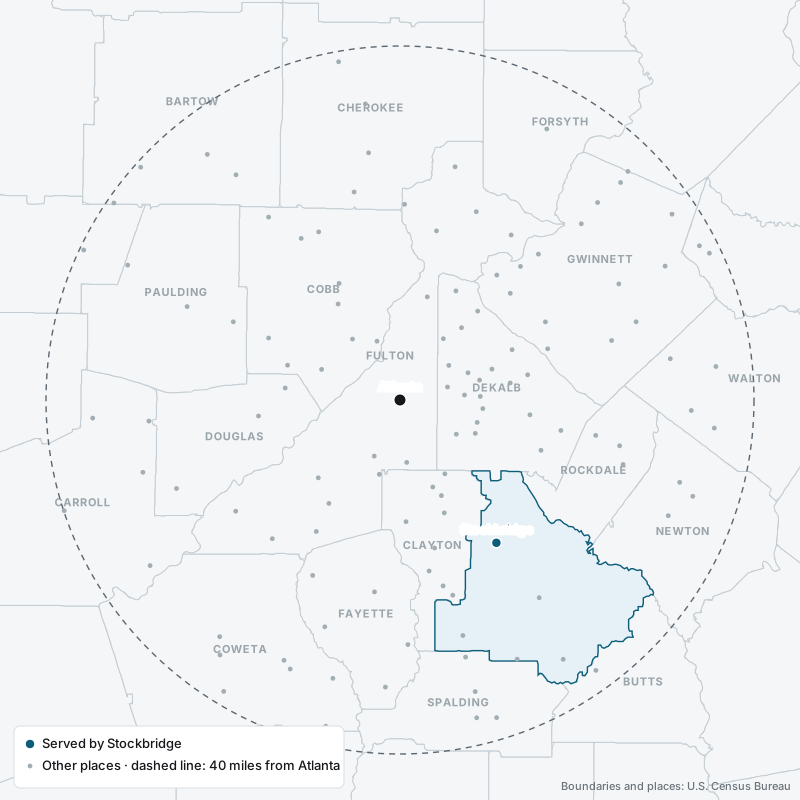
Who provides sewer service here
The city's Public Works Department handles water distribution, sanitary sewer collection and storm sewer repair, among other services. Its water and sewer page describes a water system covering the older portion of the city, about 3.2 square miles with roughly 2,500 service connections, supplied partly by city wells and partly by water bought from the county authority. The city's Water Reclamation Facility treats wastewater from the city system, up to 1.5 million gallons a day, and discharges to Brush Creek.
City code states the intent to offer sewer service to users within the corporate limits, not to add new users outside them (6.04.1280). Not every address in town is on the city system, though: the city's permit page lists both the Henry County Water Authority and the Clayton County Water Authority among the outside agencies that review building projects. If HCWA bills you, see the Henry County page instead.
Where your responsibility ends
Stockbridge answers the ownership question in one section of its code. The city retains ownership of the sewer system up to and including the cleanout, which is placed at the edge of the right-of-way; the city repairs and maintains only the part it owns, and repairs or defects beyond that point are at the user's sole expense (6.04.1480). Sewers and service laterals outside dedicated rights-of-way or public easements are privately maintained under the plumbing code the city has adopted (6.04.1260).
The cleanout is required. Each new service ends at the property line, normally within ten feet of the lot's lower corner, with a six-inch cleanout there; cleanouts may not sit in a driveway, and plumbers may connect only at the end of the service the city provided (6.04.1420). Owners must also keep their service lateral watertight; if it lets in groundwater or rainwater, the city can order a repair or replacement, or a disconnection (6.04.1230).
Backwater valves are part of the same section. Every new building must have one, the city can order one for an existing building after a backup, and the city does not accept responsibility for backup damage where a valve was required or ordered; owners maintain the valve. Backwater valves explained covers how they work. As with everything on this page, this is general information, not legal advice.
If sewage backs up
The city's sewer notice puts prevention on residents: each citizen is responsible for preventing sewer backups, and the city reminds residents that the cost of backup problems is passed on to customers (City of Stockbridge). That page does not describe a separate sewer emergency procedure. Public Works runs sanitary sewer collection from its office on Taylor Drive during weekday hours (Public Works), and the city homepage links a "Report a City Issue" tool.
Under the ownership rule above, a blockage between the house and the right-of-way cleanout is yours to clear, and the city's side begins at that cleanout. For what to do inside the home in the meantime, follow the sewer backup procedure.
Repairs, permits and inspections
Plumbing and building permits come from the city's Building, Permitting and Inspections division, which processes residential permits, reviews plans, inspects work and verifies contractor licenses. Applications go through the city's online portal, and an owner-as-contractor affidavit is on the forms list for homeowners doing their own work.
Connections to the public sewer need written approval from the city engineer or sewer superintendent after a permit application and fees, and the superintendent can require that work stay uncovered until inspected (6.04.1230). Every building needs its own building sewer, with a narrow exception for a rear building under the same ownership. Georgia 811 asks everyone, homeowners included, to request a locate at least three business days before digging (Georgia 811); the law makes it mandatory before digging with machines (dig law).
Grease, wipes and rainwater
The city's flushing rule is short: only human waste and toilet tissue in the toilet, and anything other than toilet tissue and water goes in the garbage (City of Stockbridge). Its grease brochure calls fats, oils and grease the number one cause of sewer backups in homes. It suggests pouring cooking oil into an old carton or other non-recyclable container for the trash, wiping greasy dishes before washing, and keeping meat trimmings out of the garbage disposal.
Roof downspouts, foundation drains, yard drains and other surface runoff may not be connected to a building sewer or service lateral (6.04.1230). For other habits that protect the line, see what not to flush or pour.
Septic homes in this area
Future buildings inside the city must connect to public sewer, but the code allows a case-by-case waiver for a single-family lot when the nearest sewer connection point is more than 200 feet from the property line, with documentation for local public health officials (6.04.1260). Septic permits and records in Henry County are kept by the county environmental health office, which the Department of Public Health lists at 137 Henry Parkway in McDonough (DPH).
Claims and reimbursement
The Public Works page links a city damage claim form that can be completed and signed online with attachments. No separate reimbursement policy for sewer backups appears on the city's water and sewer pages. For deadlines on claims against a city and how insurance fits in, see sewer backup insurance in Georgia.
Cities and communities served
The city system serves Stockbridge customers within the corporate limits, centered on the older part of town; other addresses in the city may be billed by a county water authority.
| City or community | Sewer service | Plumbing permits | Local note |
|---|---|---|---|
| Stockbridge | Part of the area | City of Stockbridge Building, Permitting and Inspections | The city's own water system covers the older part of town; the permit page also lists the county water authorities, so check your bill. |
Next step
Find the cleanout at the edge of your front yard: under city code, everything from that cleanout to the house is yours, so have a licensed plumber check that stretch if your drains run slow.
Provider rules change. Every statement above links to the provider's own page or ordinance as checked in October 2026 — if a source and this page disagree, the source wins. All places within 40 miles of Atlanta and their providers are listed in the metro Atlanta sewer directory.
Sources
- City of Stockbridge: Water & Sewer Services
- City of Stockbridge: Public Works
- City of Stockbridge: Building, Permitting, & Inspections
- Stockbridge Code of Ordinances (Municode): 6.04.1480 Ownership of system
- Stockbridge Code of Ordinances (Municode): 6.04.1420 Sanitary sewer services
- Stockbridge Code of Ordinances (Municode): 6.04.1230 Technical specifications
- Stockbridge Code of Ordinances (Municode): 6.04.1260 General policy and requirements
- Stockbridge Code of Ordinances (Municode): 6.04.1280 Sewer service area
- City of Stockbridge: F.O.G. - The #1 Cause of Sewer Backups in Homes
- City of Stockbridge: Damage Claim Form
- Georgia Department of Public Health: County Environmental Health Offices
- Georgia 811: The 811 Process