Hydro Jetting a Sewer Line in North Metro Atlanta: What to Expect
What happens when a company hydro jets my sewer line in north metro Atlanta, and when is it worth paying for?
Short answer
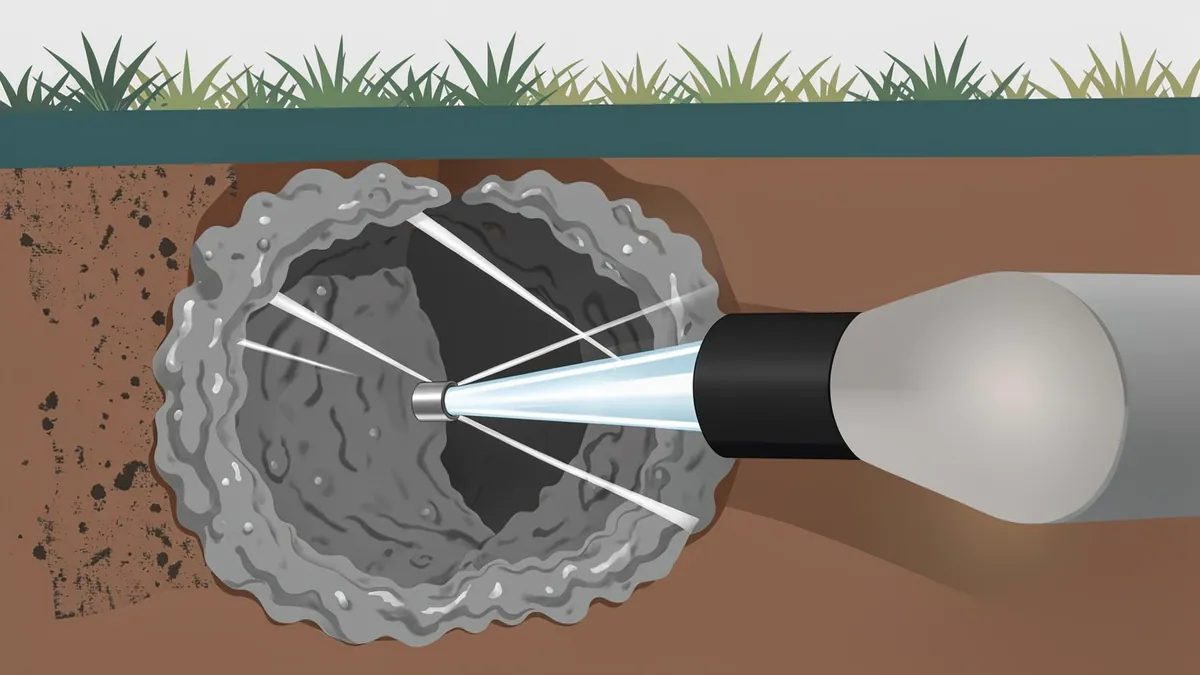
Hydro jetting scrubs grease, sludge and returning roots off the inside of a sewer line with high-pressure water, while a cable machine mostly opens a path through the clog. On an old, flattened or broken pipe a camera should look first, and afterward you should get video of the cleaned line. Who clears the stretch under the street depends on your sewer provider, so check its rule before paying anyone to work there.
On this page
- Hydro jetting vs. snaking: when jetting is the right call
- When a camera should come first
- How a sewer jetting visit works
- What to get afterward: before-and-after video
- Grease in the sewer line: how often jetting is needed
- What drives the cost of hydro jetting a sewer line
- Grease rules and public-side cleaning in north metro Atlanta
- Next step
Maybe a drain company has cleared your main line twice this year and now recommends hydro jetting, or a quote lists jetting next to snaking at a higher price. Jetting sends a hose with a high-pressure nozzle through the pipe to scour its walls. It can be exactly the right tool, and it can be the wrong first move on a line nobody has looked at.
This guide follows a jetting job from your side of the cleanout and ends with the grease rules and public-side cleaning of each north metro sewer provider. It explains the service so you can judge any pro's advice.
Hydro jetting vs. snaking: when jetting is the right call
Snaking, or rodding, turns a steel cable with a cutting head through the stoppage. EPA's 1999 sewer cleaning fact sheet, written for utilities, notes that rodding blades break up grease and cut roots but may only loosen sand and grit for later flushing (EPA). A jetter works on the pipe wall instead. One jetter maker's operator manual (an example, not a recommendation) describes rear-facing jets pulling the hose the full distance, then a slow pull back so the spray strips build-up from the walls (RIDGID manual). The drain cleaning methods guide compares every tool. Jetting fits these jobs best:
- Grease in the sewer line. Cobb County Water System explains that grease poured down a drain cools, clings to the pipe and narrows the flow until it blocks (Cobb County). Forsyth County's grease flyer adds that it sticks to the walls of your plumbing and the sewer and builds up over time (Forsyth County). The manual lists a nozzle with a forward jet for solid grease or sludge and a spinning nozzle for grease.
- Sludge and sediment, which the manual lists with grease and roots as what its jetters clear.
- Roots that grew back after cutting. Traverse City, Michigan's sewer department lists high-pressure flushers among the usual root-removal tools and recommends regular cleaning plus a structurally sound pipe (Traverse City); the manual's larger model has a root nozzle. Tree roots in sewer lines covers lasting fixes.
Heavy rust or scale in old cast iron, which InterNACHI's scope standard lists as reportable (InterNACHI), is less clear-cut: neither source above lists scale among what jetting removes, so ask what tool the company will use and whether the pipe can take it.
When a camera should come first
Jetting cleans a pipe; it doesn't repair one. The manual warns that a drain in poor condition may not clean well or could be damaged, and calls a camera the best way to check first. Get a camera look before jetting when:
- The pipe may be old fiber, cracked or collapsed. Ann Arbor, Michigan's building department says jetting is sometimes used on bituminized fiber (Orangeburg) pipe, but most blockages there need a round opening re-established, usually by cutting, and often only replacement works (City of Ann Arbor). A broken or flattened section needs a repair, not another cleaning.
- The blockage is out in the yard. Atlanta Gas Light asks homeowners and plumbers to assume any outdoor sewer obstruction could involve a cross bore (a gas line bored through the sewer), to call 811 so buried lines are marked before sewer work starts, to check the blockage with a camera, and then to use minimally invasive tools (Atlanta Gas Light). If you smell rotten eggs, leave at once without touching switches or phones, and call 911 and your gas utility from a safe distance.
- The line is full of standing water. The manual says jetting a full line is less effective and has operators pause to let it drain; EPA's fact sheet urges caution where homes have basement fixtures, so mention any floor drain or basement shower.
- A drain opener went down the line. The manual tells operators to find out what chemicals are in a drain before working and warns that spray can splash back. See chemical drain cleaner safety.
How a sewer jetting visit works
Companies differ, but the manual suggests a visit like this:
- You describe the history: past clogs, which drains back up first, basement fixtures, chemicals used, and recent gas, fiber or cable work in the yard.
- The technician picks the access point, usually an outdoor cleanout; see how to find your sewer cleanout. Without one, the manual says to remove a fixture such as a toilet rather than feed the hose through it.
- A gas-powered jetter stays outside, never indoors, even with the doors open, because the engine makes carbon monoxide. It can sit away from the opening if the hose reel is within about 3 feet of it or the opening is extended to the reel with pipe. Expect drop cloths and, if needed, barriers to keep children, pets and passers-by back.
- Your outdoor faucet supplies the water through a garden hose (3/4 inch inside at minimum, per the manual) and a backflow-prevention device. The technician may time how long the faucet takes to fill a 5-gallon bucket; if the flow is too weak, extra supply hoses or a tank make up the difference.
- The hose goes in before the water comes on. At least 3 feet of hose enters the line first, and a tape mark near the nozzle warns when it is nearly back out. One person runs both the hose and the foot valve that starts and stops the spray.
- The line is jetted out and back. The nozzle pulls itself toward the main; the operator draws it back slowly, about a foot a minute through heavy build-up, with several passes over trouble spots. Until the line flows, hold off on laundry, the dishwasher and showers.
- A camera confirms the result. Put that in the quote.
How much water it uses
The manual's two jetters are rated at 2.4 and 5.5 gallons per minute, and the larger one needs a faucet that fills the 5-gallon bucket in 55 seconds or less. Suppose a job involves 30 minutes of actual spraying on that model: about 165 gallons. The water goes through your meter, and where sewer charges are based on water meter readings, as in Forsyth County (Forsyth County), it can count toward both charges.
What to get afterward: before-and-after video
An invoice that says only "jetted main line" tells you little. Ask up front for video before jetting (or a note on why the camera couldn't go in first) and of the same stretch afterward, to see whether the walls are clean and whether anything is left that cleaning can't fix.
Some utilities build that check into their own work. Gwinnett County's procedure has crews put a camera into a sewer main within a few days of jetting it, to look for structural problems or further maintenance needs (Gwinnett County procedure). DeKalb County's code requires apartment complexes that trigger its grease rules to clean their private lines, capture the grease solids and, for lines 6 inches or larger, provide CCTV video verifying that all grease is gone (DeKalb Code § 25-265.22).
With the video, ask for a short note: the access point, how far the hose went, nozzle and passes, what came out and the distance to any defect, with recommendations kept separate. The sewer camera inspection guide covers full video reports.
Grease in the sewer line: how often jetting is needed
No source cited here sets a jetting schedule for a single home, so be wary of a fixed maintenance plan sold without video. EPA's guide for evaluating sewer maintenance programs notes that sewers in a restaurant district may need cleaning every six months to prevent grease blockages, while new PVC pipe with little grease and no sags may go five years without problems (EPA). Your lateral follows the same logic: frequency depends on how much grease goes down the drain, the pipe's material and condition, and whether it has sags.
Treat the after-jetting video as a baseline. If a later camera look shows grease building back quickly, the cheaper fix is in the kitchen, not more jetting; what not to flush or pour covers the trash-can habits local utilities recommend. Grease also costs more than your own cleaning bill: Cobb County Water System notes that part of every customer's water bill pays for cleanups and other costs of grease-related overflows (Cobb County). Roots return until the opening they used is repaired, so time the next look by the video.
What drives the cost of hydro jetting a sewer line
Angi's hydro jetting cost guide, updated in July 2026 and checked for this article in October 2026, puts a full professional jetting visit for a clogged sewer line at $350 to $600 (Angi). That is a national figure from a home-services marketplace, not a survey of Georgia prices, and quotes here vary by company and job. The guide names the clog's severity, how hard the line is to reach and its length as the main drivers. Ask each company:
- Does the price assume a usable outdoor cleanout, or a toilet pull?
- Are camera looks before and after included, and do you keep the video?
- If the line is backed up, will a cable open it first, and is that priced in?
- Who supplies the water if your faucet is weak?
- What are the after-hours rates, and does a guarantee cover a repeat visit?
What drives drain cleaning costs explains billing structures, and how to hire a drain cleaning company in Georgia explains how to look up a Georgia plumbing license. This is general information, not financial or legal advice; only a licensed plumber who has seen your line can price your job.
Grease rules and public-side cleaning in north metro Atlanta
Your jetting job ends where the sewer provider's pipe begins, and each north metro provider sets its own grease rules and cleans its own side of the line; some run their own jetting crews. Who answers a backup and where your part of the line ends are covered in the north metro unclogging guide. Check the provider named on your sewer bill, since service areas don't always follow city limits.
| City | Sewer provider | Grease rule, or how the public side is cleared |
|---|---|---|
| Cumming and unincorporated Forsyth County | Cumming Utilities in and around the city; Forsyth County for most other homes | Cumming's crews jet and unclog sewer pipes, and the utility calls grease solid waste that belongs in the trash (septic page). Forsyth's grease flyer says a garbage disposal only chops grease into smaller pieces (flyer). |
| Alpharetta | Fulton County Public Works | The county asks households to pour old cooking oil into a can, let it cool and put it in the trash (Fulton County). |
| Milton | Fulton County, only in some areas such as Crabapple (master plan) | Elsewhere homes use septic, and the city's septic guide says fats and greases don't go down toilets or drains (septic guide). |
| Johns Creek | Fulton County Public Works | The county asks households to put food scraps in the trash rather than the sink or garbage disposal (Fulton County). |
| Roswell | Fulton County handles all sewer lines, even where the city supplies water (FAQ) | The county suggests taking used cooking oil to a recycling center (Fulton County). |
| Sandy Springs | Fulton County maintains the sewer; Atlanta bills for it (city) | County code requires grease interceptors only where the director finds excess grease, and never of residential users (§ 82-238). |
| Dunwoody | DeKalb County Watershed Management (city) | County crews may rod or pressure-wash a blocked lower lateral (plan); at home, the county asks for cooled grease to go into a sealed container for the trash (DeKalb). |
| Marietta | Marietta Water or Cobb County Water System, by location (§ 732.03) | Marietta Water calls grease one of the major causes of sewer blockages, requires grease traps at food-preparation sites from restaurants to churches (Grease Control) and asks households to put grease in the trash (Marietta Water). |
| Kennesaw | Cobb County Water System; city code applies its rules (§ 6.12.01) | The county maintains more than 2,600 miles of mains with crews that use high-pressure water trucks and video inspection equipment (CCWS). |
| Acworth | Cobb County Water System; the city adopts Cobb's code (§ 106-1) | That code bars garbage that hasn't been properly shredded from the sewer, while allowing garbage grinders in homes (Cobb Code § 122-181). |
| Woodstock | City Water & Sewer Utility; CCWSA serves some nearby areas (minutes) | City code limits oils, fat and grease in sewer discharges to 75 mg/L unless the city approves more (§ 44-127). |
| Canton | City of Canton Water and Sewer Department | City code requires grease interceptors at commercial kitchens, but not in homes (§ 114-277). |
| Holly Springs | Cherokee County Water and Sewerage Authority, or CCWSA (minutes) | CCWSA's grease program targets restaurants and other heavy grease users; homeowners are harder to regulate, so it relies on public education (CCWSA FAQs). |
| Suwanee | Gwinnett County Department of Water Resources, or DWR (city) | DWR says one teaspoon of grease down the drain from every county resident adds up to 18 drums of 55 gallons each (DWR). |
| Sugar Hill | Gwinnett DWR (city code) | DWR says most grease-related overflows happen on residential sewer lines, so cutting grease can also cut homeowners' costs (DWR). |
| Buford | City of Buford Sewer Department, which enforces an oil and grease removal policy | The city's sewer-use ordinance limits oils, fat and grease in wastewater to 100 mg/L (§ 40-46). |
| Duluth | Gwinnett DWR (city FAQ) | Owners pay to repair damage to the public sewer from anything their lateral releases into it, roots included (procedure). |
| Lawrenceville | Gwinnett DWR; city code adopts its sewer rules (ch. 38) | DWR maintains the cleanout at the right-of-way; one nearer the house is yours, and both give access to inspect or clear the line (DWR). |
| Cartersville | City of Cartersville Water Department | City crews video sewer lines to check for blockages (Cartersville); grease interceptors are required at food businesses, not homes (§ 24-91). |
| Rome | City of Rome Water & Sewer Division | City code says the division spends crews and equipment clearing grease-clogged mains, manholes and pump stations, and it requires grease traps at food businesses (§ 22-193). |
For every other city within 45 miles of Atlanta, the local directory lists the sewer provider and who issues plumbing permits.
Next step
Before you approve jetting, get three things written into the quote: a camera look first (or the last visit's video), video of the same stretch afterward, and the access point. Then open your provider's guide from the table above to see what the utility handles on its side of the line, before anyone digs toward the street.
Sources
- U.S. Environmental Protection Agency (copy hosted by the Metropolitan Water Reclamation District of Greater Chicago): Collection Systems O&M Fact Sheet: Sewer Cleaning and Inspection (EPA 832-F-99-031, September 1999)
- U.S. Environmental Protection Agency: Guide for Evaluating Capacity, Management, Operation, and Maintenance (CMOM) Programs at Sanitary Sewer Collection Systems (EPA 305-B-05-002, January 2005)
- Gwinnett County Department of Water Resources: Standard Procedure for Clearing Sanitary Sewer Back-ups and Overflows
- Forsyth County Department of Water & Sewer: Fats, Oils and Grease (F.O.G.) flyer
- Cobb County Water System: Fat Oil & Grease (FOG)
- DeKalb County Code of Ordinances (Municode): Sec. 25-265.22. FOG requirements for existing multi-family dwelling units
- Atlanta Gas Light: Call 811 Before You Clear
- RIDGID (Ridge Tool Company): KJ-2200/KJ-3100 Water Jetting Machines: Water Jetter Manual
- International Association of Certified Home Inspectors (InterNACHI): InterNACHI's Sewer Scope Inspection Standards of Practice
- City of Ann Arbor, Building, Rental and Inspection Services: Orangeburg Sewer Piping
- City of Traverse City, Sewer and Water: Tree Root FAQ
- Angi: How Much Does Hydro Jetting Cost? [2026 Data]
Guides that pick up where this one stops.
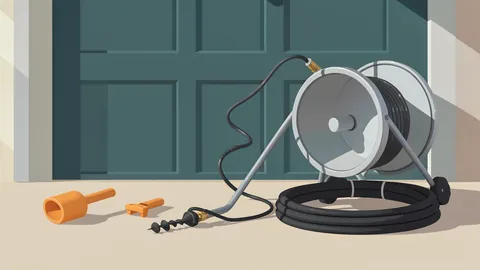
Snaking, Hydro Jetting or a Camera? Which Drain Service You Need
How plungers, augers, drum and sectional machines, hydro jetting, camera inspection and excavation differ, and how to match the method to your clog.
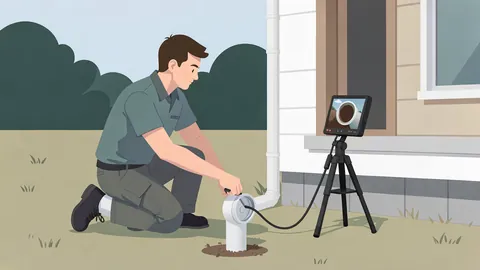
Sewer Camera Inspection: What It Shows and What to Ask For
What a sewer camera inspection shows and misses, how a sonde marks the problem spot, what NASSCO defect codes mean, and what to get in writing.

How to Hire a Drain Cleaning Company in Georgia
How to check a Georgia plumber's license, compare estimates, spot red flags and storm chasers, and where to complain if a drain or sewer job goes wrong.