Hydro Jetting in Metro Atlanta, GA
Hydro jetting cleans a drain or sewer line with high-pressure water instead of a spinning cable. A flexible hose with a jet nozzle travels down the pipe, and as it is drawn back the spray scours grease, sludge and debris off the pipe wall and flushes them downstream.
Georgia Sewer — Drain & Sewer Specialists · Operated by Alpha Plumbing and Sewer, LLC
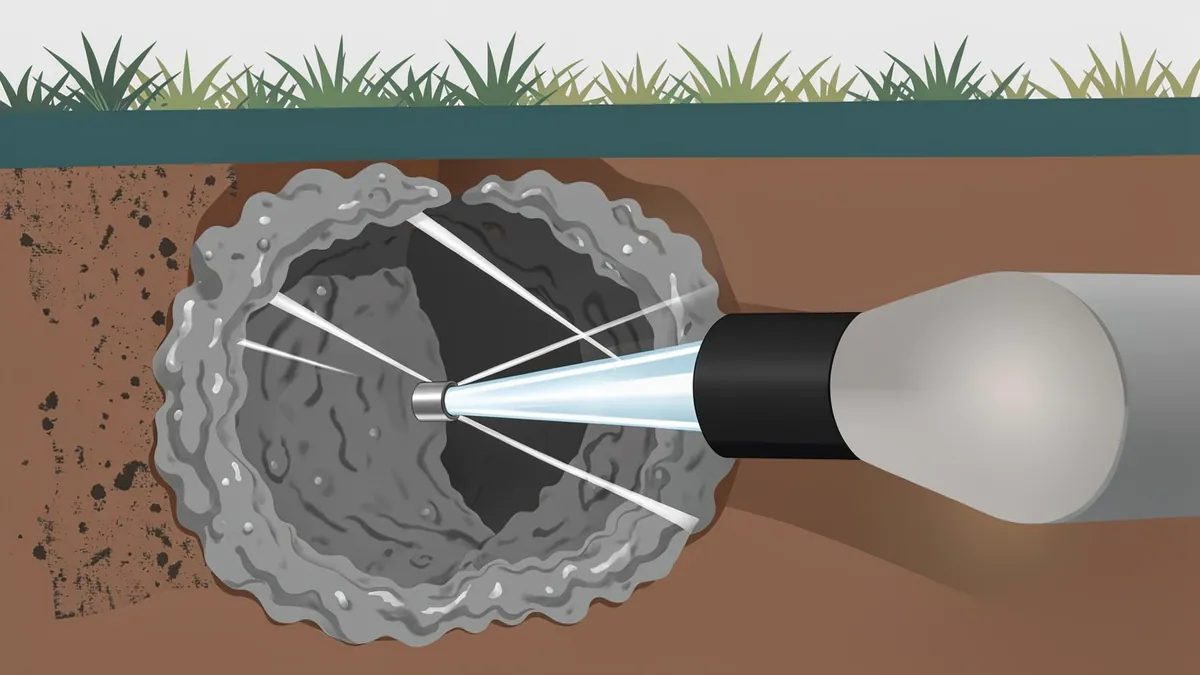
Georgia Sewer treats jetting as a method to match to the pipe, not a default add-on. It earns its place when buildup is the problem and the line is sound enough to take the pressure, which is why a camera look and a conversation about the pipe usually come first.
Common Problems & Warning Signs
Most requests for sewer jetting start with a line that keeps coming back rather than one dramatic clog. The patterns below are the ones where high-pressure water tends to help, followed by the ones where it doesn't.
- A kitchen or main line that clogs again weeks after snaking. A cable can punch a hole through a grease plug and leave the pipe wall coated. Cobb County Water System describes how grease poured down a drain cools, clings to the pipe and restricts flow until it blocks completely (Cobb County).
- Heavy buildup and slow drains throughout the house. Sludge and sediment narrow a line gradually, so drains slow over weeks instead of stopping overnight. One jetter maker describes its machines as using water pressure and flow together to clear grease, sludge, sediment and roots out of drains (RIDGID jetter manual).
- Roots that regrow after cutting. EPA's sewer-cleaning fact sheet, written for utilities, says jetting removes debris and grease build-up, clears blockages and cuts roots in small-diameter pipes (EPA). It clears the pipe but doesn't seal the joint the roots came through; see tree roots in sewer lines.
- Grease odor and gurgling at the kitchen drain. These often come with a coated line, and the habits in what not to flush or pour decide how soon it returns.
The jetter manual is just as clear about the limits: a drain in poor condition may not clean well and could be damaged, and a camera is the best way to check condition before cleaning. That matters for older materials. Ann Arbor, Michigan's building department notes that jetting is sometimes used on bituminous fiber (Orangeburg) pipe, but most blockages there need a round opening re-established, and in many cases replacement is the only workable option (City of Ann Arbor). The pipe materials guide covers clay and cast iron too. Basement fixtures matter as well, since the EPA fact sheet urges caution with jetting where homes have them.
Jetting fits grease, sludge, sediment and regrowing roots in a structurally sound line. A crushed, separated or collapsed section needs sewer line repair, and a line with an unknown cause needs a camera inspection before anyone picks a method.
A Diagnosis-First Approach
Cleaning is only one of five separate scopes we work with, alongside inspection, repair, excavation and replacement. With hydro jetting, the objective is high-pressure water cleaning only when the pipe's condition and the available access make it appropriate. Material, routing, depth, earlier repairs and the camera findings can each change the plan.
What the Service Visit Can Include
- A look at the pipe first. A camera run, or recent footage, shows the material, any breaks or flattening and where the buildup sits.
- An access point the hose can use. Usually an outdoor cleanout. The manual cited above calls for the hose reel to sit within 3 feet of the drain opening, or for the opening to be extended back to the reel with pipe of a similar size.
- Water supply and safety setup. The machine draws from an outdoor faucet through a hose of at least 3/4-inch inside diameter, and a connection to drinking water must be protected against backflow. Gas-engine jetters produce carbon monoxide, so the manual says to run them outside only, never in an enclosed area even with doors and windows open.
- Jetting out and back. The hose is usually fed the full distance to be cleaned and then pulled back slowly so the spray works on the pipe walls, with repeated passes through trouble spots. If the line fills up, the operator pauses, because jetting a full line is less effective than jetting an empty one.
- A camera look afterward. Video of the same stretch shows whether the walls are clean and whether anything remains that cleaning can't fix.
- A short written note. The access point, how far the hose went, what came out and the distance to any defect.
Who Owns Which Pipe in Metro Atlanta
Jetting stops where the sewer provider's pipe begins, and that point moves from one provider to the next. Gwinnett County maintains the service stubs running from its mains to the edge of the right-of-way; when an investigator finds the stub backed up at the right-of-way cleanout, the county calls a hydrojet to clear the section between that cleanout and the main (Gwinnett DWR procedure). DeKalb County's code makes the county responsible for building sewer connections within county street rights-of-way and sanitary sewer easements (DeKalb Code § 25-220). Fulton County's code keeps the lateral the owner's and allows emergency county help near the main only where a cleanout sits at the edge of the right-of-way or easement, at the owner's expense (Fulton County Code § 82-195). Our city pages for hydro jetting carry local notes, and the metro Atlanta sewer directory shows which provider serves each community within 45 miles of Atlanta.
Emergency Situations
A grease or sludge blockage that has turned into an active backup, with sewage at a floor drain, a tub filling from below or toilets that won't drain, needs the line opened before anything else. Stop using water and call (404) 482-2527, and describe the fixtures involved and whether sewage is still rising so the request can be prioritized correctly. Jetting may follow once the line is open and its condition is known.
Estimates and Site Conditions
Exact pricing can't responsibly be set from a generic web page. The written scope should identify the work, the access point, important exclusions and how unexpected conditions will be handled. For hydro jetting, cost follows the length of line to be cleaned, the access point, how heavy the buildup is and how many passes it takes, whether a cable has to open the line first, whether the site's water supply is adequate, and whether camera footage before and after is included. The north metro hydro jetting guide walks through what to ask for, and the drain cleaning methods guide compares jetting with snaking.
Request Hydro Jetting
For hydro jetting in metro Atlanta and surrounding Georgia communities, call (404) 482-2527 or reach us through the contact page.
Frequently Asked Questions
How do I know whether I need hydro jetting?
Jetting is worth discussing when a line clogs again soon after snaking, when the cable comes back coated in grease or sludge, or when roots keep regrowing after cutting. Whether it is the right tool still depends on the pipe's material and condition, the access point and what a camera shows.
Can you give an exact price before seeing the property?
No. Jetting depends on the length of line to be cleaned, the access point, how much buildup there is, whether a cable has to open the line first, the water supply at the site and whether footage before and after is part of the job. Those details belong in the written scope.
Is hydro jetting safe for every sewer line?
Not automatically. Pipe material, deterioration, access and the suspected obstruction should be considered first. A fragile, flattened or broken line may need a different approach, which is why a camera look before jetting is part of a careful visit.
What is the difference between hydro jetting and snaking?
A cable machine bores through a stoppage and mostly opens a path. A jetter sends high-pressure water against the pipe wall as the hose is drawn back, scouring grease, sludge and debris off the whole run. Many jobs use both: the cable to open the line and the jetter to clean it.
Will jetting stop grease from coming back?
No cleaning method does that on its own. If a later camera look shows grease building up again, the lasting fix is in the kitchen: cooled grease in the trash, scraps scraped off before washing and nothing greasy sent through a disposal.
Do you provide emergency hydro jetting?
Emergency requests can be prioritized when a grease or sludge blockage is causing an active backup. Call (404) 482-2527. Restoring flow comes first, and jetting is used when the pipe and the access point make it appropriate.
Learn More Before You Call



All articles by service: Sewer & Drain Advice Hub.
Hydro Jetting Service Areas
These city pages add the local rules that apply there — who owns which part of the line, how the utility handles a reported problem, and who issues permits. Every city we serve is listed under service areas.
- Acworth
- Alpharetta
- Atlanta
- Austell
- Canton
- Cartersville
- College Park
- Cumming
- Dallas
- Decatur
- Doraville
- Douglasville
- Duluth
- Dunwoody
- Ellenwood
- Emerson
- Hiram
- Holly Springs
- Johns Creek
- Jonesboro
- Kennesaw
- Lake City
- Lawrenceville
- Lilburn
- Lithia Springs
- Lithonia
- Mableton
- Marietta
- McDonough
- Milton
- Norcross
- Powder Springs
- Rex
- Riverdale
- Roswell
- Sandy Springs
- Smyrna
- Stone Mountain
- Suwanee
- Tucker
- Union City
- Vinings
- Woodstock
Need hydro jetting?
Call and describe what is happening, where, and since when. The service is selected from the condition found.
Georgia Sewer — Drain & Sewer Specialists · Operated by Alpha Plumbing and Sewer, LLC