Sewer Line Replacement in Metro Atlanta, GA
Sewer line replacement swaps out the run of pipe between the house and the public sewer when it has deteriorated too far, or failed in too many places, for spot repairs to make sense. It is a bigger and more disruptive job than a repair, which is exactly why the decision should rest on recorded evidence.
Georgia Sewer — Drain & Sewer Specialists · Operated by Alpha Plumbing and Sewer, LLC

Georgia Sewer approaches replacement the way it approaches every other scope: confirm the condition, map the route and depth, check who owns each part of the line, and only then put a written proposal in front of the owner.
Common Problems & Warning Signs
The case for replacement usually builds over time. These are the situations that most often lead there.
- Defects along the whole run, not at one spot. Cracks at joint after joint, several offsets or more than one sag show up on video as a pattern rather than a single finding. Fixing them one at a time can cost more than a new line, and a spot repair does nothing for the sections it doesn't touch.
- Repeated repairs and backups. A line that has needed a series of repairs, or keeps clogging between them, often has a material problem rather than one defect. Earlier videos and invoices help show whether the failures share a cause.
- Old fiber pipe. Ann Arbor, Michigan's building department describes bituminous fiber (Orangeburg) pipe that pulls apart at the joints, admits roots and flattens under the weight of the soil, and says that in many cases replacement is the only viable option (City of Ann Arbor). The same page notes that the pipe was made with asbestos fibers, which matters when the old line comes out of the ground.
- Older clay pipe. The National Clay Pipe Institute says clay pipe made before the 1950s may not be fully vitrified and may have laminations, both of which lower its strength, while clay pipe made since then has factory-applied flexible compression joints (NCPI).
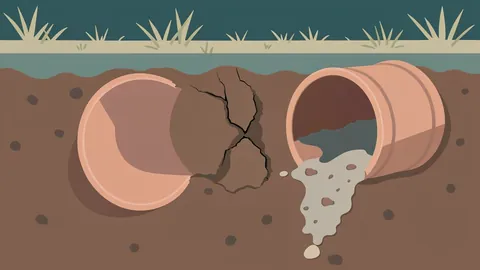
- A collapse. When a camera can't get past a section, or the video shows broken pipe with soil or a void visible behind it, the line has failed structurally. NASSCO's defect-coding system gives that condition its most severe grade, 5, while cautioning that grades alone can't decide whether a pipe should be replaced and can't take the place of an engineer's judgment (NASSCO).
The pipe materials guide explains how to tell clay, cast iron, fiber and plastic apart.
Replacement fits when the run as a whole has failed, not just one section. It isn't the right call for a single crack or offset in sound pipe, which sewer line repair addresses, or for a blockage that cleaning can clear. If you are comparing trenchless methods such as lining or pipe bursting, the repair options guide explains where the plumbing code allows them.
A Diagnosis-First Approach
Replacement is its own scope, separate from cleaning, inspection, repair and excavation, and it should never be the default answer. The objective is to replace the affected sewer run when its condition supports the larger job. Access, material, routing, depth, earlier repairs, the position of connections and whatever sits above the line all shape the recommendation.
What the Service Visit Can Include
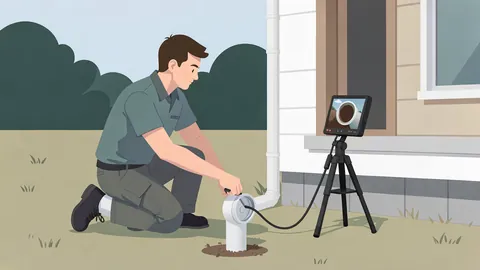
- A complete camera survey. Video of the whole run, with the location of each defect, connection and cleanout and an approximate depth along the route; the camera inspection guide lists what the findings should include.
- Route, ownership and restoration questions. Where the line runs relative to the property line and the right-of-way, who owns each part (see below), and which driveways, trees or patios sit on top.
- Permits and cleanouts. The local building department sets the permit process. Georgia's amendments to the plumbing code call for building sewer cleanouts no more than 100 feet apart, an additional cleanout within 10 feet of the public right-of-way, and a cleanout at or near the junction of the building drain and building sewer, outside the wall unless otherwise approved (Georgia DCA).
- Locates. A Georgia 811 ticket for the public utilities, plus a private locate for lines they don't mark. Under Georgia's dig law, the sewer system owner must help designate laterals only up to the edge of the public right-of-way, and that help doesn't make it the lateral's owner (Georgia 811).
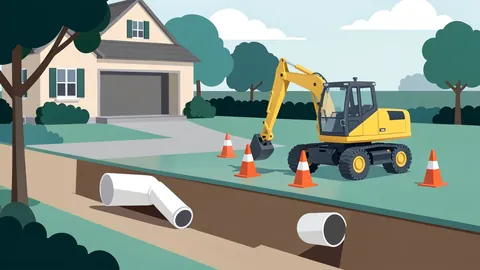
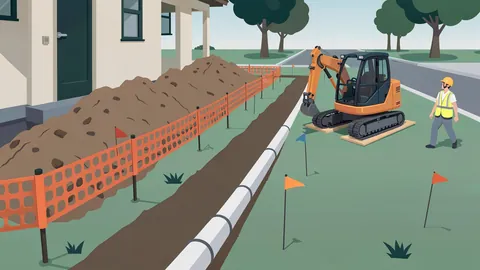
- Excavation, new pipe and inspection. OSHA requires a protective system for trenches 5 feet deep or more (OSHA), and under Georgia's amendments the trench stays open until the new piping has been inspected, tested and approved.
- Backfill, restoration and a final video. The agreed restoration, plus footage of the new line for the owner's records. Sewer line excavation in north metro Atlanta covers the permit and safety side in more detail.
Who Owns Which Pipe in Metro Atlanta
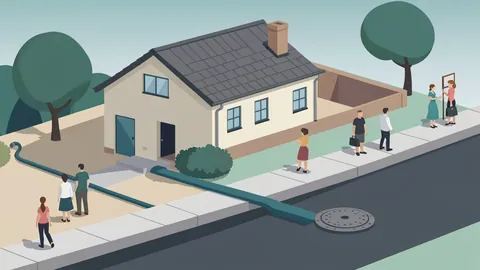
Replacing a lateral end to end raises the ownership question at the street. Atlanta's 311 service puts the maintenance and repair of the entire service lateral on the property owner (ATL311). Gwinnett County maintains its mains and the short service stubs that connect them to private laterals, but only within county rights-of-way and sewer easements, and the owner's part extends to the limits of the right-of-way or easement (Gwinnett DWR procedure). The Clayton County Water Authority owns and maintains the 6-inch line inside the right-of-way or its easement, while the owner's 4-inch lateral runs up to the connection with that system (CCWA). Local details are on our city pages for sewer line replacement, the metro Atlanta sewer directory lists the provider for every community within 45 miles of Atlanta, and the ownership guide compares the larger providers' rules side by side.
Emergency Situations
A collapsed or badly broken line can turn into an emergency before a planned replacement starts: sewage backing into the house, drains that stop entirely or a hole opening over the pipe. Stop using water, keep everyone away from sinking ground and call (404) 482-2527. Describe what is happening so the request can be prioritized correctly and the line can be kept usable until the full job.
Estimates and Site Conditions
A replacement price can't responsibly come from a generic web page. A sound proposal names the run being replaced, the expected access, the exclusions and the way unexpected conditions will be handled. Cost drivers for sewer line replacement include the length and depth of the run, the route and what lies over it, soil, rock and groundwater, the number of connections and required cleanouts, permits and inspections, any work in the right-of-way, the restoration, and handling of the old pipe, which needs care when it is asbestos-bearing fiber pipe. The guide to comparing drain and sewer quotes shows how to line proposals up side by side.
Request Sewer Line Replacement
For sewer line replacement in metro Atlanta and the surrounding Georgia service areas, call (404) 482-2527 or reach us through the contact page.
Frequently Asked Questions
How do I know whether I need sewer line replacement instead of repair?
Replacement becomes the better question when the camera shows defects along much of the run rather than at one spot, when the pipe material is failing throughout, when repairs keep following one another, or when sags and a collapse leave long sections unusable. One defect in otherwise sound pipe usually points to a repair.
Can you give an exact price before seeing the property?
No. Replacement depends on the length and depth of the run, the route and what lies over it, soil and rock, the number of connections and cleanouts, permits and inspections, any right-of-way work and the restoration. Those belong in a written scope with clear exclusions.
Does an old sewer line have to be replaced just because of its age?
No. Age raises the odds of trouble, but the decision should rest on the condition the camera actually shows. Some older lines are still sound, and some newer ones were installed poorly.
What happens if the line fails before the replacement is scheduled?
If a backup starts or drainage stops, call (404) 482-2527 and describe what is happening. Clearing the line, limiting water use or a temporary measure may be needed to keep the house usable until the planned work.
Will every problem require excavation or replacement?
No. Cleaning, inspection, targeted repair, excavation and replacement are separate scopes, and the recommendation should follow the confirmed condition instead of assuming the largest repair.
How long does a sewer line replacement take?
It depends less on the digging than on everything around it: permits, utility locates, the inspection that has to happen before backfill, the weather and the restoration. The schedule should be laid out in the written scope.
Learn More Before You Call

All articles by service: Sewer & Drain Advice Hub.
Sewer Line Replacement Service Areas
These city pages add the local rules that apply there — who owns which part of the line, how the utility handles a reported problem, and who issues permits. Every city we serve is listed under service areas.
- Acworth
- Alpharetta
- Atlanta
- Austell
- Canton
- Cartersville
- College Park
- Cumming
- Dallas
- Decatur
- Doraville
- Douglasville
- Duluth
- Dunwoody
- Ellenwood
- Emerson
- Hiram
- Holly Springs
- Johns Creek
- Jonesboro
- Kennesaw
- Lake City
- Lawrenceville
- Lilburn
- Lithia Springs
- Lithonia
- Mableton
- Marietta
- McDonough
- Milton
- Norcross
- Powder Springs
- Rex
- Riverdale
- Roswell
- Sandy Springs
- Smyrna
- Stone Mountain
- Suwanee
- Tucker
- Union City
- Vinings
- Woodstock
Need sewer line replacement?
Call and describe what is happening, where, and since when. The service is selected from the condition found.
Georgia Sewer — Drain & Sewer Specialists · Operated by Alpha Plumbing and Sewer, LLC