Sewer Line Repair in Metro Atlanta, GA
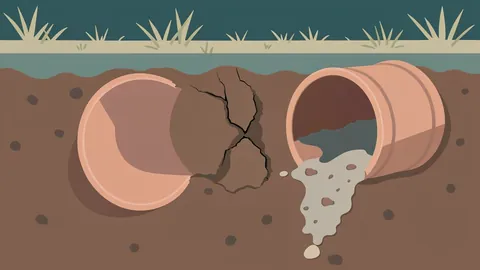
Sewer line repair fixes a specific, located defect in the pipe that carries wastewater from the house to the public sewer: a cracked section, a joint that has separated or shifted, a stretch damaged by roots, or a low spot that holds waste. The aim is to repair what is actually broken, at the place where it is broken.
Georgia Sewer — Drain & Sewer Specialists · Operated by Alpha Plumbing and Sewer, LLC
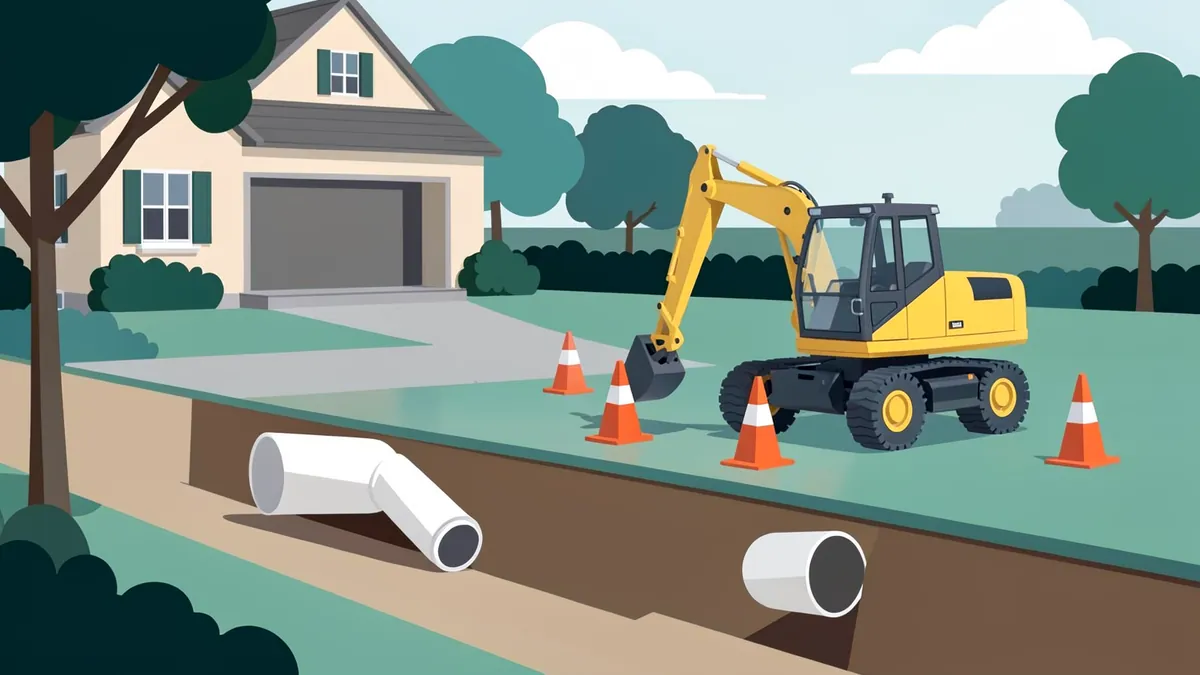
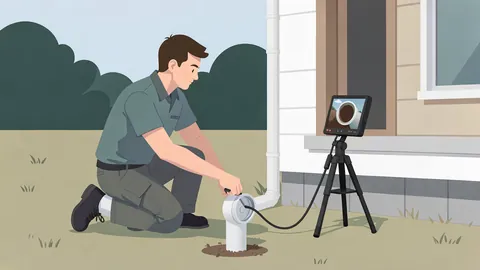
Georgia Sewer starts every repair conversation with evidence. A camera finding, a measured distance and a depth reading decide whether a targeted repair is realistic or whether the line has problems that call for a larger scope.
Common Problems & Warning Signs
A failing sewer line leaves clues inside the house, in the yard and on the camera screen. None of them proves a break on its own, but together they tell a fairly consistent story.
- Backups that return at the same spot. When cleaning restores flow but the clog keeps coming back, the camera usually finds the same distance on the counter each time, where a crack, an offset joint or roots are catching debris.
- A sag, or belly, in the line. InterNACHI's sewer scope standard treats more than an inch of standing water in the pipe as a condition needing correction (InterNACHI). Water and solids settle in the low spot, and no amount of cleaning changes the slope.
- Yard signs over the sewer route. A patch that stays soggy in dry weather, a sunken spot or a sewage smell outdoors can mean the pipe is leaking. Atlanta's Department of Watershed Management lists ruptured sewer lines and sinkholes among the sewer emergencies it wants reported (Atlanta DWM); on private property, a sinking spot over the house's own line deserves the same attention.
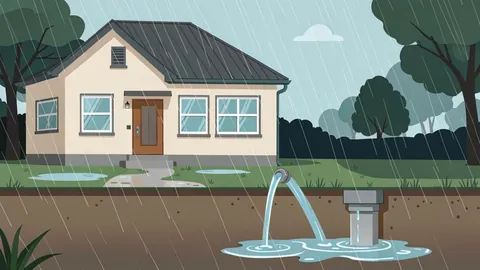
- Backups that follow heavy rain. Cracked laterals let groundwater in, and Gwinnett County cites national studies showing that more than 80 percent of the inflow and infiltration in a sewer system comes from faulty laterals (Gwinnett DWR). Why drains back up when it rains explains the mechanism.
- Indoor odors or drain flies with no dirty drain to blame. A break under a slab or in a crawlspace can produce both; the drain flies guide explains how to rule out the easy causes first.
Utilities find the same failures in their own pipes. Cobb County Water System lists broken pipes, offset joints, root intrusion and improperly installed service connections among the problems its camera crews often encounter, and describes fixing defects at discrete points with point repairs that expose the pipe (Cobb County).
Targeted repair fits when the damage can be isolated to one or a few sections of otherwise sound pipe. It doesn't fit fiber pipe that is flattening along its length, a run with defects at joint after joint, or a collapse that has left long stretches unusable; those lean toward sewer line replacement. The repair options guide compares spot repair with lining, pipe bursting and full replacement.
A Diagnosis-First Approach
Repair is one scope among several, and we keep it apart from cleaning, inspection, excavation and replacement. The objective is a targeted repair when the damaged section can be reasonably isolated, based on recorded video rather than a guess from the symptoms. Access, material, routing, depth, earlier repairs and the condition of the pipe on either side of the defect can change the recommendation.
What the Service Visit Can Include
- Video and a mark on the ground. A camera run documents the defect, its distance from the access point and its approximate depth, and a locator marks the spot; see what a sewer camera inspection shows.
- A check of whose pipe it is. If the defect sits in the right-of-way or an easement, the sewer provider's rules decide who may repair it (see below).
- Permits. Georgia's amendments to the plumbing code delete the model code's administration chapter and leave permit procedures to local governments (Georgia DCA), so the city or county building department sets the permit and inspection steps.
- Utility locates. Georgia law requires a locate request through Georgia 811 before anyone excavates with mechanized equipment (Georgia 811). The utilities it notifies mark only public lines, and the sewer line between the house and the public sewer is a private line that needs a private locator (Georgia 811).
- Excavation and the repair. The damaged section is exposed and replaced. OSHA requires a protective system for trenches 5 feet deep or more (OSHA), and Georgia's amendments call for a cleanout within 10 feet of the public right-of-way, so a missing one may be added.
- Inspection, backfill and a final look. Georgia's amendments keep a building sewer trench open until the piping has been inspected, tested and approved, then call for backfill placed in 6-inch layers and tamped. A camera run afterward documents the finished repair.
Who Owns Which Pipe in Metro Atlanta
Who repairs a broken lateral depends on where the break is and which provider serves the property. Fulton County keeps the lateral the owner's responsibility up to the public sewer, and its code says repairs within the public right-of-way or a county easement are made by the county or an approved contractor, at the owner's cost (Fulton County Code § 82-195). In DeKalb County, the owner maintains and repairs the connection on private property, while the county handles the part inside county street rights-of-way and sanitary sewer easements (DeKalb Code § 25-220). The Douglasville-Douglas County Water and Sewer Authority's rules put repairs of all private service laterals, regardless of location, on the owner (DDCWSA rules). Our sewer line repair pages for individual cities cover local details, the metro Atlanta sewer directory names the provider for every community within 45 miles of Atlanta, and the ownership guide compares the major providers.
Emergency Situations
A broken sewer line becomes urgent when it causes an active backup, when sewage surfaces in the yard, or when the ground over the line starts to sink. Keep people and pets away from any wet area or depression, stop using water in the house and call (404) 482-2527 with a description of what you see and where, so the request can be prioritized correctly.
Estimates and Site Conditions
A repair price can't be set responsibly from a generic web page. The written scope should identify the repair proposed, the expected access, important exclusions and how unexpected conditions will be handled. Sewer line repair costs follow the depth and location of the defect, what sits on top of it (lawn, driveway, patio or a tree), the number of defects, the pipe material, soil and rock, permit and inspection requirements, any work in the right-of-way, and the restoration included. Old sewer pipe materials explains how clay, cast iron and fiber pipe tend to fail.
Request Sewer Line Repair
For sewer line repair in metro Atlanta and nearby Georgia service areas, call (404) 482-2527 or send a request through the contact page.
Frequently Asked Questions
How do I know whether I need sewer line repair?
Repair is on the table when a camera shows a specific defect, such as a crack, a separated or offset joint, a root-damaged section or a sag, and the rest of the line looks sound. Symptoms alone, like recurring backups or a soggy spot in the yard, justify an inspection rather than a repair.
Can you give an exact price before seeing the property?
No. A repair price depends on where the defect is, how deep the pipe runs, what sits on top of it, the pipe material, how many defects there are, permit and inspection requirements and the restoration involved. The proposal should list the included work and the exclusions before anything starts.
Do you provide emergency sewer repair?
Emergency requests can be prioritized when a broken line is causing an active backup, sewage is surfacing in the yard or drainage has stopped. Call (404) 482-2527 and describe what is happening and where.
Will every problem require excavation or replacement?
No. Cleaning, inspection, targeted repair, excavation and replacement are different scopes. A single defect in otherwise sound pipe can often be fixed at that spot, while a run with defects all along it may be better served by a larger scope.
Does sewer line repair need a permit?
Work on a building sewer usually needs a plumbing permit and an inspection, but Georgia leaves the procedures to each city or county, so the details vary. The trench generally stays open until the new piping has been inspected.
Can one repair fix a line with several problems?
A spot repair fixes the section it covers and nothing else. If the video shows weak joints or cracks elsewhere, those remain, so the number and spacing of defects should be weighed before choosing between a targeted repair and a larger scope.
Learn More Before You Call

All articles by service: Sewer & Drain Advice Hub.
Sewer Line Repair Service Areas
These city pages add the local rules that apply there — who owns which part of the line, how the utility handles a reported problem, and who issues permits. Every city we serve is listed under service areas.
- Acworth
- Alpharetta
- Atlanta
- Austell
- Canton
- Cartersville
- College Park
- Cumming
- Dallas
- Decatur
- Doraville
- Douglasville
- Duluth
- Dunwoody
- Ellenwood
- Emerson
- Hiram
- Holly Springs
- Johns Creek
- Jonesboro
- Kennesaw
- Lake City
- Lawrenceville
- Lilburn
- Lithia Springs
- Lithonia
- Mableton
- Marietta
- McDonough
- Milton
- Norcross
- Powder Springs
- Rex
- Riverdale
- Roswell
- Sandy Springs
- Smyrna
- Stone Mountain
- Suwanee
- Tucker
- Union City
- Vinings
- Woodstock
Need sewer line repair?
Call and describe what is happening, where, and since when. The service is selected from the condition found.
Georgia Sewer — Drain & Sewer Specialists · Operated by Alpha Plumbing and Sewer, LLC