Main Sewer Line Cleaning in Metro Atlanta, GA
The main sewer line, meaning the building drain and the lateral that carry everything out of the house, serves every fixture at once. When it narrows or stops, toilets, tubs, showers and floor drains start acting up together, often beginning with the lowest fixture in the home.
Georgia Sewer — Drain & Sewer Specialists · Operated by Alpha Plumbing and Sewer, LLC
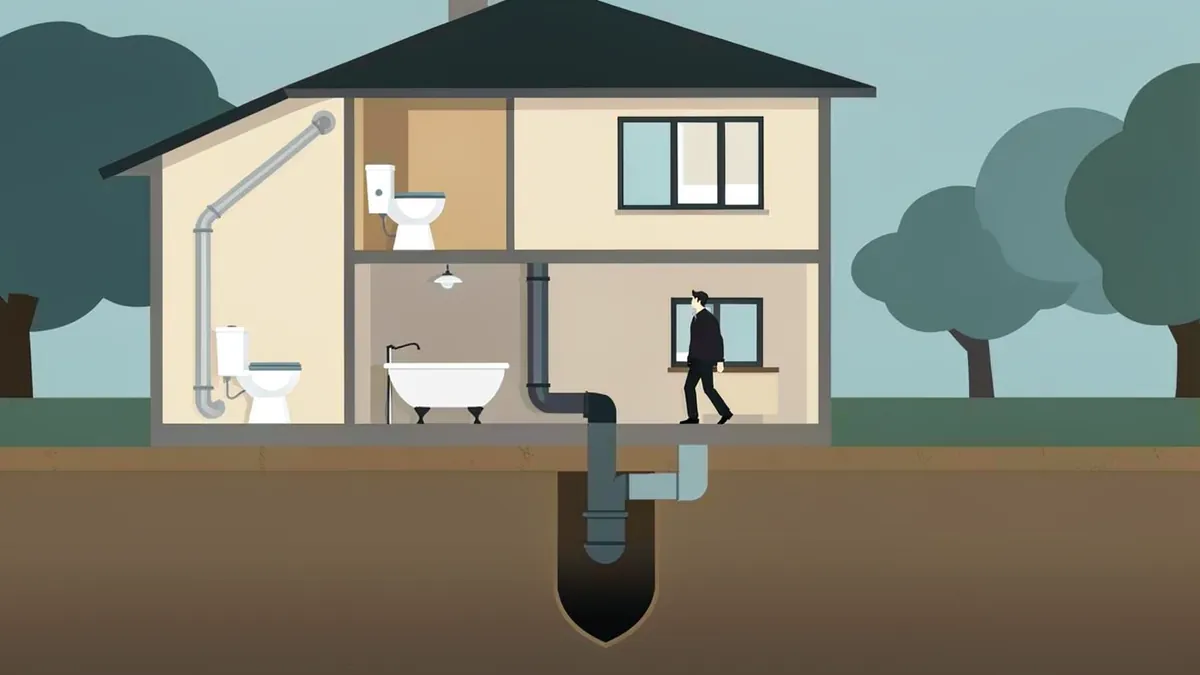
Main sewer line cleaning opens that shared path from a cleanout or another access point and, where it makes sense, follows up with a camera to show why it clogged. Georgia Sewer keeps those steps separate, so the line is cleaned when buildup or an obstruction is the problem and inspected when the cause isn't clear.
Common Problems & Warning Signs
Main-line trouble rarely begins with a dramatic overflow. It usually builds through a few recognizable signs, and each one points to a slightly different part of the system.
- Several fixtures slow or backing up at once. When drains on different floors misbehave together, the restriction is past the point where their branches join. The checklist in signs of a main sewer line clog walks through a safe way to confirm it.
- The lowest drain fills first. A basement floor drain or lower-level shower that rises while a sink runs upstairs is the classic main-line sign, because backed-up water escapes at the lowest opening it can reach.
- A toilet that gurgles when the washer empties, or a tub that fills when someone flushes. Water and air are being pushed past a partial blockage downstream of both fixtures. Why a toilet gurgles explains how to tell this pattern from a vent problem.
- Liquid around an outdoor cleanout cap. That usually means the line is blocked somewhere beyond the cleanout. Leave the cap on; the cleanout guide explains why.
- Backups that show up only in heavy rain. Stormwater seeping into cracked pipe or entering through connected downspouts can overload a line that copes in dry weather; why drains back up when it rains lists what to check.
- Neighbors with the same symptoms, or an overflowing manhole. Those point to the public main, which belongs to the sewer provider.
The causes are familiar. EPA's list of problems behind sewer overflows includes fats, oils and grease, wipes (some of them marked flushable), sanitary products, and tree roots growing in through defects or openings in the pipe (EPA). Grease deserves special mention: Cobb County Water System reports that 85 percent of its sewer blockages are grease-related and occur in residential areas (Cobb County), which is why what not to flush or pour matters as much as the cleaning.
Main sewer line cleaning fits when buildup or a soft obstruction is confirmed or strongly suspected. It isn't the answer for a cracked, sagging or collapsed pipe, which needs sewer line repair; for roots that return within months, where root intrusion removal and a camera come first; or for a home on septic, where similar symptoms can mean a full tank or a failing drain field (septic or sewer: how to tell).
A Diagnosis-First Approach
We separate inspection, cleaning, repair, excavation and replacement instead of treating them as interchangeable. The objective here is to clean the main sewer path when buildup or an obstruction is confirmed, then let what the cable, the jetter or the camera reveals decide whether anything more is needed. Access, pipe material, routing, depth and earlier repairs can each change that recommendation.
What the Service Visit Can Include
- Questions first. Which fixtures backed up and in what order, whether neighbors are affected, whether a drain opener was poured, and whether gas, fiber or cable lines were recently installed in the yard.
- An access point. An outdoor cleanout is the preferred way in; without one, the options are pulling a toilet or working from a roof vent, and each adds time.
- Underground utilities before a yard line is cut. Atlanta Gas Light explains that a gas pipe bored through a sewer line can be damaged during cleaning, and it discourages clearing a yard line with a rotary device without first locating utilities or inspecting the line with a camera (Atlanta Gas Light).
- The cleaning itself. A cable machine sized for the line opens the stoppage, and heavy grease or sludge may call for hydro jetting afterward. One sectional-machine manual says not to operate where the cutter could contact gas or electric lines, and calls a camera inspection of the drain good practice (RIDGID K-1500 manual).
- A camera look once the line flows. Video shows whether grease, wipes, roots, a sag or a break caused the stoppage, and how far from the access point it sits.
- Findings you can keep. The recording, the distance to any defect and a recommendation kept separate from the findings.
Who Owns Which Pipe in Metro Atlanta
Where the owner's responsibility ends depends on the sewer provider, and that decides who cleans which stretch of a blocked line. Gwinnett County's investigators check the manholes upstream and downstream, then look into the right-of-way cleanout; a dry stub there with a backup inside puts the blockage in the owner's part of the lateral or in the building, and the county says more than 70 percent of reported backups have historically been on the private side (Gwinnett DWR procedure). Marietta's Water and Sewer Department makes removing a service-line blockage the owner's job even under a road, helping only when the owner's plumber can't restore service and has the line exposed (Marietta FAQ). Clayton County Water Authority crews inspect only from the cleanout to the main and don't work on private property (CCWA). For local details, see our main sewer line cleaning page for your city where we have one, or look up your community in the metro Atlanta sewer directory, which covers every place within 45 miles of Atlanta.
Emergency Situations
A whole-house backup, sewage rising at a floor drain or tub, or toilets that won't take another flush need attention before the next load of laundry makes things worse. Hold off on the washer, dishwasher and showers, then call (404) 482-2527 and describe which fixtures are affected and whether sewage is still coming up. If a manhole or a cleanout near the street is overflowing, report it to your sewer provider as well; the sewer backup guide and the north metro unclogging guide explain who handles what.
Estimates and Site Conditions
Main line pricing can't be fixed responsibly from a web page. The written scope should identify the proposed work, the access point, the exclusions and how surprises will be handled. The biggest cost drivers for this service are the access point (a usable outdoor cleanout versus a pulled toilet or roof access), the distance from that point to the stoppage, what the blockage is made of, whether a cable alone opens it or jetting has to follow, whether a camera inspection and locate are included, and when the work takes place. What drives drain cleaning costs shows how to compare quotes.
Request Main Sewer Line Cleaning
To schedule main sewer line cleaning in metro Atlanta or a nearby Georgia community, call (404) 482-2527 or use the contact page.
Frequently Asked Questions
How do I know whether I need main sewer line cleaning?
Look at how many fixtures are involved. When toilets, tubs and floor drains on different levels act up together, when the lowest drain fills while water runs elsewhere, or when liquid seeps around an outdoor cleanout, the blockage is probably in the shared line. The right service still depends on access, pipe condition and what can be confirmed on site.
Can you give an exact price before seeing the property?
No. Main line work depends on the access point, how far out the blockage sits, what it is made of, whether a cable alone opens it and whether jetting or a camera look follows. The written scope should spell out what is included and what is excluded before the work expands.
Do you provide emergency main line service?
Emergency requests can be prioritized for active backups, overflowing fixtures and whole-house stoppages. Call (404) 482-2527 and explain which drains are affected, whether sewage is still rising and whether neighbors seem to have the same problem.
Will cleaning the main line fix the problem for good?
That depends on the cause. A grease or wipe blockage that is cleared tends to stay gone if habits change, while roots and sagging or broken pipe usually bring the clog back. A camera look after cleaning shows which of those situations the line is in.
Should I call my sewer provider or a plumber first?
If neighbors have the same trouble or a manhole is overflowing, call the provider first. If only your house is affected, it depends on the provider: some check their main and right-of-way section as soon as a backup is reported, while others leave the entire lateral to the owner's plumber.
Will every problem require excavation or replacement?
No. Cleaning, inspection, targeted repair, excavation and replacement are different scopes, and the recommendation should follow the condition that is actually confirmed rather than the largest possible repair.
Learn More Before You Call




All articles by service: Sewer & Drain Advice Hub.
Main Sewer Line Cleaning Service Areas
These city pages add the local rules that apply there — who owns which part of the line, how the utility handles a reported problem, and who issues permits. Every city we serve is listed under service areas.
- Acworth
- Alpharetta
- Atlanta
- Austell
- Canton
- Cartersville
- College Park
- Cumming
- Dallas
- Decatur
- Doraville
- Douglasville
- Duluth
- Dunwoody
- Ellenwood
- Emerson
- Hiram
- Holly Springs
- Johns Creek
- Jonesboro
- Kennesaw
- Lake City
- Lawrenceville
- Lilburn
- Lithia Springs
- Lithonia
- Mableton
- Marietta
- McDonough
- Milton
- Norcross
- Powder Springs
- Rex
- Riverdale
- Roswell
- Sandy Springs
- Smyrna
- Stone Mountain
- Suwanee
- Tucker
- Union City
- Vinings
- Woodstock
Need main sewer line cleaning?
Call and describe what is happening, where, and since when. The service is selected from the condition found.
Georgia Sewer — Drain & Sewer Specialists · Operated by Alpha Plumbing and Sewer, LLC