Washing Machine Drain Backing Up: Causes and Fixes
Why does my washing machine drain back up or overflow, and how do I fix it?
Short answer
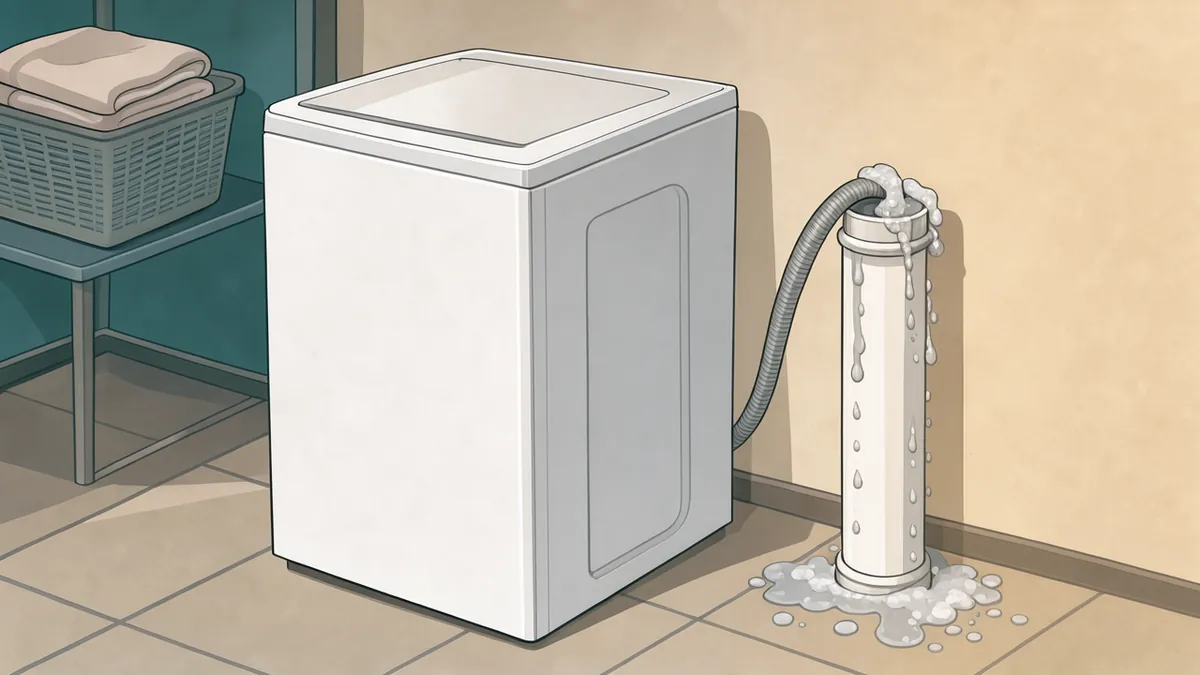
A washer pumps out water faster than most household drains ever see, so it exposes problems a sink never would: lint packed in the standpipe trap, a standpipe that is too short or too narrow, a weak vent, or a main sewer line that is already partly blocked. Water spilling at the standpipe usually points to the laundry drain itself; water coming up in a tub, shower or floor drain while the washer empties points to the main line. We find out which before we clear anything.
On this page
The washer hits the drain cycle and water spills over the top of the pipe behind it, soaking the laundry room floor. Or the washer drains fine, but a tub down the hall fills with gray water, a toilet bubbles, or the basement floor drain starts to rise. Both get called a washing machine drain backing up, but they usually have different causes and need different fixes.
When a customer calls Georgia Sewer about laundry-day backups, the first thing we sort out is where the water shows up. Below we explain what each symptom points to, the safe checks to make before you call us at (404) 482-2527, and how we fix the cause.
Why the washer is the drain's hardest test
A sink drains a few gallons at whatever pace gravity allows. A washer's pump pushes a full tub of water out in a hurry, and the drain has to keep up. Washer makers spell out how much flow the drain must handle: GE's installation instructions say the drain or standpipe must accept 16 gallons per minute (GE Appliances), and Whirlpool says the sink and drainpipe must carry away at least 17 gallons per minute, adding that water can back up from the drainpipe or sink if it is clogged or slow (Whirlpool).
So a partial blockage that a bathroom sink never reveals can show up on the first spin cycle. The washer is rarely the problem; it's the test the drain fails.
Two problems that look alike
Water spills at the standpipe or laundry sink. The standpipe is the open pipe the washer's drain hose hangs in. If it overflows while every other drain in the house works normally, the trouble is usually in the laundry drain itself: the standpipe, its trap, or the short pipe that carries it to a larger line.
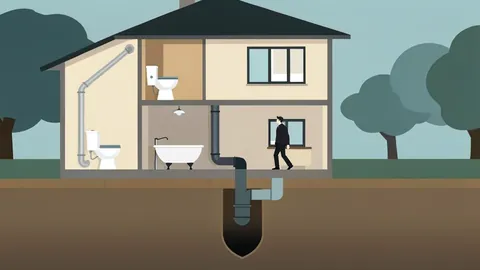
Water comes up somewhere else. If a tub, shower, toilet or floor drain gurgles or fills while the washer empties, the water is meeting a blockage further down, in a pipe those fixtures share with the laundry. HUD's residential rehabilitation inspection guide suggests running several fixtures at once and watching the lowest one in the building: boiling or backing up there indicates a clogged main building drain between the house and the public sewer, most often caused by tree roots (HUD). The main sewer line clog signs page covers that check in detail.
| What you see | What it usually means | What to do first |
|---|---|---|
| Standpipe overflows; every other drain is fine | Lint or debris in the standpipe trap or laundry branch, or a standpipe that can't take the flow | Stop the washer; run the checks below |
| Laundry sink fills and drains slowly | Sink drain partly blocked, or too small for the washer's discharge | Check the sink drain and strainer |
| Tub, shower or floor drain fills when the washer drains | Blockage in a shared line, often the main sewer line | Stop laundry and other heavy water use; call us |
| Toilet gurgles when the washer drains, drains run normally | Vent problem or partial blockage downstream | See the gurgling patterns |
| Water stays in the washer or drains back into it | Washer pump filter, kinked hose or hose set too deep | Check the washer first |
What causes a washer drain to back up
Lint and debris in the trap and branch
Lint, dirt and small items come off the laundry and leave with the drain water. Whirlpool tells owners that a front-loader's drain pump filter can clog with dirt, lint or other items and should be cleaned now and then (Whirlpool). Whatever gets past the washer can collect in the standpipe trap and the pipe beyond it, narrowing the opening until the drain can no longer keep up with the pump.
A standpipe that's too short, too tall or too narrow
The plumbing code sets the shape of the laundry drain. Under the 2024 International Plumbing Code, a washer must discharge through an air break into a standpipe or into a laundry sink, and the standpipe's trap and drain must be at least 2 inches in diameter (Section 406.2). Georgia's amendment to that section adds that the washer's drain must connect to a building drain, branch drain or stack at least 3 inches in diameter (Georgia DCA). The code's fixture table also lists a 2-inch minimum trap for a residential clothes washer (2024 IPC, Table 709.1).
Height matters too. Section 802.4.3 requires each standpipe to have its own trap, to rise at least 18 and no more than 42 inches above the trap weir, and to be reachable for rodding (2024 IPC, Chapter 8). A short standpipe has little room to hold a surge before it spills. Washer makers measure from the floor instead: GE calls for a drain height of 30 to 96 inches and a standpipe at least 1 1/2 inches across inside.
Georgia has adopted the 2024 International Plumbing Code with Georgia amendments. The Department of Community Affairs' latest announcement (December 2025) puts its effective date at January 1, 2027, though an earlier DCA memo said January 1, 2026, so your city or county building department is the one to ask which edition it enforces (Georgia DCA). Older laundry rooms were built under earlier codes, so treat these numbers as a yardstick, not a verdict on your house.
The drain hose itself
The hose can cause problems that look like a drain problem. GE says no more than 5 inches of hose should go into the drain pipe and there must be an air gap around it, because a snug fit can cause siphoning. Whirlpool sets the limit at 4.5 inches, says not to tape the hose into the drainpipe, and warns that with a drain lower than 30 inches from the floor, water starts flowing out of the machine by gravity. These mistakes usually show up as a washer that won't drain properly or keeps refilling, not as an overflow.
A vent that can't keep up
Drains need air to flow. HUD's guide says that water moving more than an inch in a fixture trap while several fixtures drain points to inadequate or obstructed venting, and that gurgling from a draining fixture usually means a venting problem. A restricted vent slows the laundry drain and can pull water out of nearby traps. The toilet gurgling page explains how to tell a vent problem from a clog.
The main sewer line
When the main line is partly blocked by roots, grease or a sag, the washer's surge is often the first thing to find it, because it sends more water at once than anything else in the house. Gwinnett County's Department of Water Resources tells owners with a sewer backup to stop high-discharge water use such as washing machines, dishwashers and showers until the backup is cleared (Gwinnett DWR).
Safe checks before you call us
None of these involve opening a pipe.
- Stop the washer and don't start another load. If water is on the floor near outlets or the machine, keep clear: Ready.gov says not to touch electrical equipment if it is wet or if you are standing in water, and to turn off the electricity only if it is safe to do so (Ready.gov).
- Walk the house. Look at the tubs, showers, toilets and any basement or floor drains. Water or gurgling anywhere besides the laundry points past the standpipe.
- Look at the hose. Make sure it isn't kinked, crushed behind the machine, taped into the standpipe or pushed in deeper than the maker allows.
- Clean the washer's filter if your model has one, following its manual.
- Run a test. With the washer off, slowly pour a bucket of water into the standpipe. If it backs up, the drain is restricted; if it disappears, the problem may only show at the washer's full flow.
- Check the laundry sink, if the washer drains into one. HUD's guide tells inspectors to check a laundry tub's plumbing and its capacity to handle the washer's discharge.
What not to do:
- Don't keep running loads to see if it clears. Each cycle sends more water toward the blockage.
- Don't pour chemical drain openers into the standpipe. If you already have, tell us before we start, and read the chemical drain cleaner safety page.
- Don't open the sewer cleanout to relieve a backup. Leave that to us.
How we diagnose and fix it
Our technician starts with where the water shows up, then tests the laundry drain on its own and with other fixtures running.
- A clog in the laundry branch. The code requires access to standpipes for rodding, so we run a cable through the standpipe and trap to the line it feeds, and we tell you what came out and how far in it was. A line packed with lint may need a full cleaning, not just a hole punched through it.
- A standpipe that doesn't fit the washer. If it is too short, too narrow or poorly vented, clearing it won't stop the overflows. We explain what would need to change, and if the job needs a permit, we tell you before work starts.
- A main line problem. If other fixtures react when the washer drains, we clear the main line from the cleanout and, when the cause isn't clear, run a camera through it. You get the video and our findings in writing.
When to call, and signs that can't wait
Call us at (404) 482-2527 if the standpipe overflows again after you've checked the hose and filter, if the laundry sink drains slowly, or if a toilet gurgles every time the washer empties.
These signs can't wait:
- sewage or dirty water comes up in a tub, shower or floor drain;
- several fixtures back up at the same time;
- water keeps rising after the washer has stopped.
When that happens, stop running water anywhere in the house, work through what to do during a sewer backup, and call us for emergency sewer and drain service. If neighbors have the same trouble or a manhole is overflowing, call your sewer utility as well; its number is on your bill.
Frequently asked questions
Why does my washer drain overflow only during the spin cycle?
The pump moves the most water fastest when the washer empties and spins. A drain that is partly blocked, too short or poorly vented can handle a trickle but not that surge, so the spill comes at the same point in every load.
Can I just raise the standpipe or use a bigger one?
Sometimes the standpipe is the problem, but a taller pipe over a clogged trap just overflows later. The code limits standpipe height to 42 inches above the trap weir and sets a 2-inch minimum size, so the fix has to fit those rules. Have the drain cleared and checked first.
My home is on septic. Does laundry make a difference?
Yes. EPA advises spreading washing machine use throughout the week, because doing all of a household's laundry in one day can harm a septic system (EPA). If every drain is slow on a septic home, the tank or drain field may be the cause; septic pumping is done by septic companies, not by us.
How Georgia Sewer can help
Before you call, note where the water appeared, at what point in the cycle, and whether any other drain reacted. That tells our technician whether to start at the standpipe or the main line. Then call Georgia Sewer at (404) 482-2527. A clogged standpipe or laundry branch is a drain cleaning job; a line coated with lint and buildup may need hydro jetting; water coming up in other fixtures points to main sewer line cleaning; and if it keeps coming back, a sewer camera inspection shows us why. For the steps you can safely take on a single slow fixture, see how to unclog a drain yourself.
Sources
- International Code Council: 2024 International Plumbing Code, Chapter 4: Fixtures, Faucets and Fixture Fittings (Section 406)
- International Code Council: 2024 International Plumbing Code, Chapter 8: Indirect/Special Waste (Section 802.4.3)
- International Code Council: 2024 International Plumbing Code, Chapter 7: Sanitary Drainage (Table 709.1)
- Georgia Department of Community Affairs: Georgia State Amendments to the International Plumbing Code (2024 Edition)
- Georgia Department of Community Affairs: New Georgia Codes and Amendments - Effective January 1, 2027
- GE Appliances: Washer Installation Instructions (31-3000302)
- Whirlpool Corporation: Not Draining - Front Load Washer
- Whirlpool Corporation: Leaking Water Underneath - Washer
- U.S. Department of Housing and Urban Development: Residential Rehabilitation Inspection Guide
- Gwinnett County Department of Water Resources: Sewer Lateral Policy
- U.S. Environmental Protection Agency: How to Care for Your Septic System
- Ready.gov (FEMA): Floods
Guides that pick up where this one stops.
Signs Your Main Sewer Line Is Clogged, Not Just One Drain
Georgia Sewer explains the signs of a main sewer line clog, a safe check to run before we arrive, and how we clear the line. Call (404) 482-2527.

Why Is My Toilet Gurgling? What Each Pattern Means
A gurgling toilet can mean a clog, a vent problem, a sewer line running full or septic trouble. What each pattern means, and how Georgia Sewer helps.

How to Unclog a Drain Yourself, Safely and Step by Step
The safe steps Georgia Sewer gives customers for one clogged drain: the right plunger, hair, the P-trap, a hand or toilet auger, and when to stop and call us.