Toilet Keeps Clogging: Causes and Lasting Fixes
Why does my toilet keep clogging, and how do I stop it for good?
Short answer
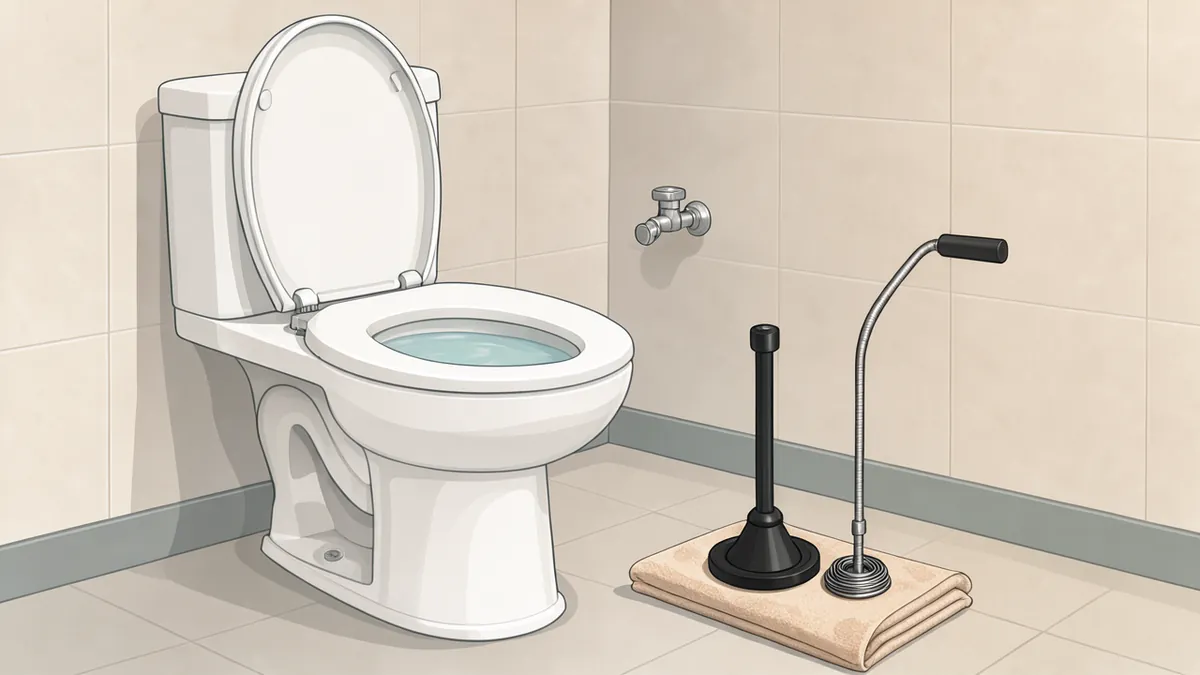
A toilet that clogs again and again usually has one of four causes: what goes into it, something wedged in its trapway, a flush that has lost its strength, or trouble past the toilet in the vent, the branch drain or the sewer line. Check them in that order, and skip straight to the main line if other drains react when you flush. We auger the toilet first and take it off the floor when the blockage is an object or sits past the bend.
On this page
You plunge it, it works, and a week later the water is creeping toward the rim again. One clog is bad luck. A toilet that keeps clogging has a cause still in place: what goes into it, something caught inside the porcelain, a flush that has lost its push, or a problem in the pipes past the floor. Plunging again doesn't touch any of those.
At Georgia Sewer, finding that cause is the point of a repeat-clog visit. Below is the order we check things in, what you can safely check yourself first, and when the toilet has to come off the floor. For sinks and tubs that keep clogging, see why a drain keeps clogging; to have us look at the toilet, call (404) 482-2527.
How a toilet flushes, and where clogs stick
A toilet has its trap built in: the curved channel cast into the porcelain behind the bowl, called the trapway. When you flush, tank water rushes through the holes under the rim and the jet near the bottom of the bowl, fills the trapway and pulls the bowl's contents over the bend into the drain. Anything that weakens that rush, or narrows the trapway, leaves waste behind.
Past the toilet, the pipe is larger. The 2024 International Plumbing Code says a building drain serving a toilet must be at least 3 inches, and 3- to 6-inch horizontal drains must slope at least 1/8 inch per foot (Tables 710.1(1) and 704.1, 2024 IPC, Chapter 7). Georgia has adopted the 2024 International Plumbing Code with Georgia amendments. DCA's newest announcement, from December 2025, sets January 1, 2027 as the effective date, and an earlier DCA memo said January 1, 2026; your city or county building department can tell you which edition it enforces (Georgia DCA).
A repeat clog sits in the trapway, the bend under the floor (the closet bend), the branch drain shared with the tub or sink, or the main line out of the house.
Signs that point to the cause
| What you notice | Where the trouble usually is | What to do first |
|---|---|---|
| The bowl rises, then slowly drains down | A partial clog in the trapway | Flange plunger, then a toilet auger |
| The plunger clears it, but it clogs again within days | An object in the trapway, or buildup | Have it augered or the toilet pulled |
| It clogs after ordinary use, and the flush looks weak | The tank, rim holes or jet, or an older low-flow toilet | Check the tank (steps below) |
| The flush stays weak or gurgles after the trapway is cleared | A restricted vent | Have the vent checked |
| A tub or shower fills when you flush, or other drains are slow | The shared branch or main line | Stop flushing |
| Every drain is slow, on a septic system | The septic tank or drain field | Call your septic company |
Why a toilet keeps clogging
What goes down it
American Standard says to flush only toilet paper, because tissues, cotton swabs, tampons and floss don't break down in water (American Standard). Cobb County's water system puts wipes that say "flushable" on its do-not-flush list (Cobb County). EPA lists household products "including some marked 'flushable'" among materials that block sewers (EPA), and Atlanta's Department of Watershed Management says wipes don't break down easily and are causing a crisis in residential sewer pipes (Atlanta DWM).
Even toilet paper varies: Kohler says additives can keep it from breaking down, and suggests a jar test to compare brands (Kohler). The full list of what to keep out is in what not to flush or pour.
Something wedged in the trapway
A toy, a toothbrush, a comb or a bottle cap can lodge in a bend of the trapway. A plunger may push water around it, so the toilet works for a while, but the object keeps snagging paper until the next clog. If the clogs started after something fell in, tell us; it changes how we clear it.
A flush that has lost its push
For a poor flush, Kohler's troubleshooting table says to set the tank water to the marked waterline, open the supply valve fully, and clear any obstruction in the trapway, jet, rim holes, soil pipe or vent pipe (Kohler homeowners guide). Kohler adds that hard water deposits can clog rim holes and trapways over time.
Older low-flow toilets are a known weak spot: EPA says the low-flow models of the 1990s sometimes needed a second flush (EPA WaterSense). It explains that when the Energy Policy Act of 1992 required new toilets to use 1.6 gallons per flush or less, down from 3.5 or more, some manufacturers simply shrank the tank and flush, which led to multiple flushes (EPA WaterSense). Toilets have been re-engineered since: WaterSense's test, clearing 350 grams of soybean paste and four balls of toilet paper in four of five flushes, is now part of the national standard that every toilet sold in the United States must pass.
A vent that can't breathe
Kohler's troubleshooting says that if nothing is blocking the trapway, or the toilet still won't flush properly after snaking, the vent pipe could be the culprit, because restricted venting prevents a proper flush (Kohler). Gurgling usually comes with it; why a toilet gurgles covers the vent checks.
Trouble past the floor
The code's load table rates a 1.6-gallon home toilet at 3 drainage fixture units, against 2 for a bathtub and 1 for a bathroom sink (Table 709.1), and a toilet releases its water all at once. A line partly blocked by roots or a sag can pass a sink's trickle and still choke on a flush.
Gwinnett County's water department says more than 70 percent of the backups reported to it have historically been in the private part of the lateral, most often from roots entering where the 4-inch lateral meets the 6-inch service stub (Gwinnett DWR). On septic, EPA lists sewage backing up from toilets and drains, very slow drains and gurgling among the signs of a failing system (EPA).
The order to check before you call us
None of these steps involves opening a pipe. Stop if water rises anywhere else in the house.
- Check the other drains. Run the bathroom sink and tub, then flush once while you watch the tub. If the tub fills or other drains are slow too, stop flushing: the clog is past the toilet. See the signs of a main sewer line clog.
- Think back. Did anyone flush wipes, a toy or a lot of paper? An object calls for a different fix than paper.
- Lift the tank lid. The water should reach the waterline marked inside the tank, and the shut-off valve behind the toilet should be fully open.
- Watch a flush. Water should come from under the whole rim, and the bowl should empty in one strong swirl. A thin or uneven rinse points to the tank, rim holes or jet.
- Plunge with a flange plunger seated in the outlet at the bottom of the bowl. Don't keep flushing to clear the clog, American Standard warns, and if the bowl is close to the rim, turn off the water at the valve behind the toilet. How to unclog a drain yourself has the technique.
- Use a toilet auger, not a sink auger. RIDGID describes its 6-foot toilet auger as made to clean toilet drains through the trap, with the guide tube kept in the drain so the cable doesn't damage the porcelain (RIDGID K-6P). Its handheld sink auger isn't recommended for toilets (RIDGID POWER SPIN+). If the auger hits something hard, binds or won't pass, stop and call us.
- Write it down. Each time it clogs, note the date, what you used and what came out.
What not to do
- Don't pour a chemical drain opener into the bowl. If you already have, tell our technician what you used before anyone plunges or augers.
- Don't open the outdoor sewer cleanout. On a blocked line it can be backed up with sewage; checking it is one of the first steps in Gwinnett's backup procedure. Leave the cap on for us.
Auger or pull the toilet: how we find and fix it
We work from the toilet outward:
- Auger first. What comes back on the toilet auger's cable (paper, a wipe or nothing) decides the lasting fix, and we tell you what we pulled out.
- The toilet comes off the floor when an object is wedged in the trapway, the auger passes but the toilet still clogs, or the clog is past the bend. RIDGID's drum machine manual says to remove a fixture such as a toilet when needed to reach the drain, rather than feed the cable through it (RIDGID K-400 manual), and the code counts a toilet that comes off without opening concealed piping as a cleanout equivalent (2024 IPC Section 708.1.6). With it off, we reach the trapway from below and run a larger cable or camera into the bend and branch.
- The main line from the cleanout. Georgia's amendments require a cleanout near where the building drain meets the building sewer, outside the wall unless otherwise approved (Georgia DCA). If an older house has none, a pulled toilet may be our way in, and we can talk about adding a cleanout.
- A camera when the cause isn't clear. RIDGID's auger instructions recommend a camera to see a drain's condition. We give you the video and put our findings and recommendation in writing.
- A new toilet only when everything else checks out. If the drain and vent are clear and an older toilet still needs the plunger, the toilet is the weak link. Georgia's amendments cap toilets at 1.28 gallons per flush and define a high-efficiency toilet as one listed to the WaterSense specification.
When to call us, and signs that can't wait
Call us at (404) 482-2527 when a toilet needs the plunger often, when the auger hits something hard, when something other than paper went down, or when the clog returns within days.
These signs can't wait:
- water or sewage rises in a tub, shower or floor drain when you flush;
- several fixtures back up at the same time;
- the bowl keeps filling toward the rim after a single flush.
Then turn off the toilet's water, stop running water in the house, follow what to do during a sewer backup, and call us for emergency sewer and drain service. If neighbors have the same trouble or a manhole is overflowing, call your sewer utility too.
Frequently asked questions
Are "flushable" wipes safe to flush?
No. Cobb County lists them among items not to flush, and EPA counts some products marked flushable among causes of sewer blockages. Use a lined trash can.
Will a new low-flow toilet clog more than my old one?
Not necessarily. EPA traces the 1990s problems to shrunken tanks, and every toilet sold in the U.S. must now pass a waste extraction test. A drain with a sag or roots troubles any toilet, so we check the line first.
My child flushed a toy. What now?
Stop flushing, turn off the water behind the toilet and call us. More flushing or plunging can push a hard object into the bend under the floor, where it's harder to reach. Depending on where it stopped, we retrieve it with an auger or by taking the toilet off the floor.
How Georgia Sewer can help
Before you call, check whether other drains react when you flush. Then call Georgia Sewer at (404) 482-2527. A toilet that keeps clogging on its own is a drain cleaning job: we auger it, pull it when needed and clear the bend and branch. Past the toilet, we clear the line with main sewer line cleaning and cut out roots with root intrusion removal. When the cause still isn't clear, a sewer camera inspection shows it, and the video is yours.
Sources
- U.S. Environmental Protection Agency (WaterSense): Residential Toilets
- U.S. Environmental Protection Agency (WaterSense): WaterSense Performance Overview: Tank-Type Toilets
- Georgia Department of Community Affairs: Georgia State Amendments to the International Plumbing Code (2024 Edition)
- Georgia Department of Community Affairs: New Georgia Codes and Amendments - Effective January 1, 2027
- International Code Council: 2024 International Plumbing Code, Chapter 7: Sanitary Drainage (Sections 704, 708, 709 and 710)
- Kohler Co.: Homeowners Guide: One-Piece Toilets K-3466, K-3467 (1013211-5-B)
- Kohler Co. (Kohler Assist): Toilet Water Not Leaving Bowl
- American Standard: How to Unclog a Toilet
- RIDGID (Ridge Tool Company): K-6P Powered Toilet Auger Instructions
- RIDGID (Ridge Tool Company): K-400 Drain Cleaning Machine Operator's Manual
- U.S. Environmental Protection Agency: Sanitary Sewer Overflow (SSO) Frequent Questions
- Gwinnett County Department of Water Resources: Sewer Lateral Policy
Guides that pick up where this one stops.
Why Does My Drain Keep Clogging? Causes and Lasting Fixes
Why one sink, tub or toilet keeps clogging after you clear it, how Georgia Sewer finds the cause on a service call, and the fixes that last.
How to Unclog a Drain Yourself, Safely and Step by Step
The safe steps Georgia Sewer gives customers for one clogged drain: the right plunger, hair, the P-trap, a hand or toilet auger, and when to stop and call us.
Signs Your Main Sewer Line Is Clogged, Not Just One Drain
Georgia Sewer explains the signs of a main sewer line clog, a safe check to run before we arrive, and how we clear the line. Call (404) 482-2527.